THE ADVENTURE COLLECTIVE® · Independent discovery and booking for outdoor travel

Drive from Avignon into the Luberon for a half-day of ochre cliffs, hilltop stone villages and the mysterious resurgence of the Sorgue at Fontaine-de-Vaucluse. Small groups, easy walks and photogenic panoramas make this an efficient taste of Provence.
Drive from Avignon into the Luberon for a half-day of ochre cliffs, hilltop stone villages and the mysterious resurgence of the Sorgue at Fontaine-de-Vaucluse. Small groups, easy walks and photogenic panoramas make this an efficient taste of Provence.
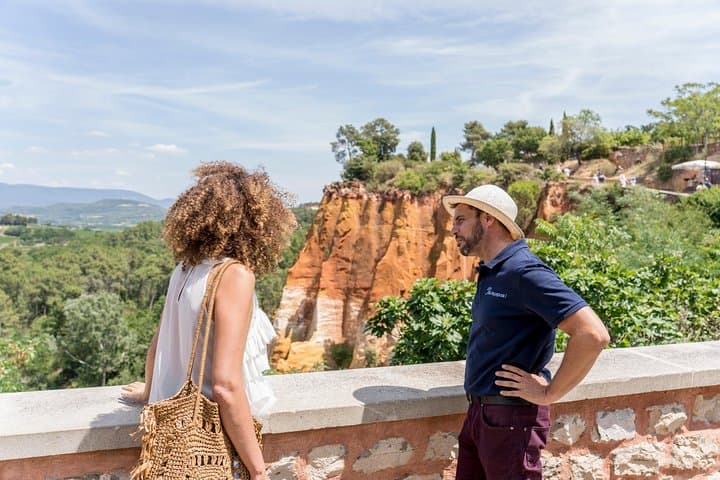
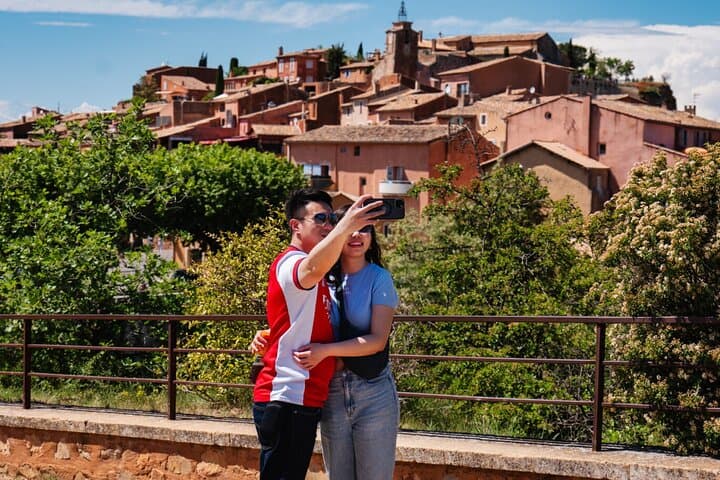
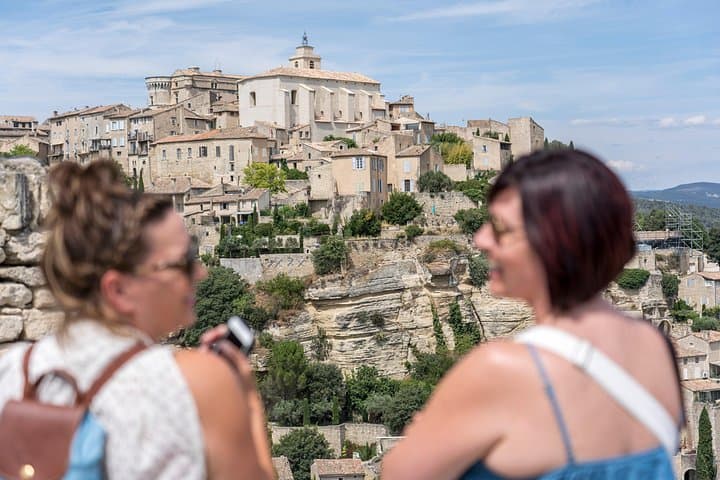
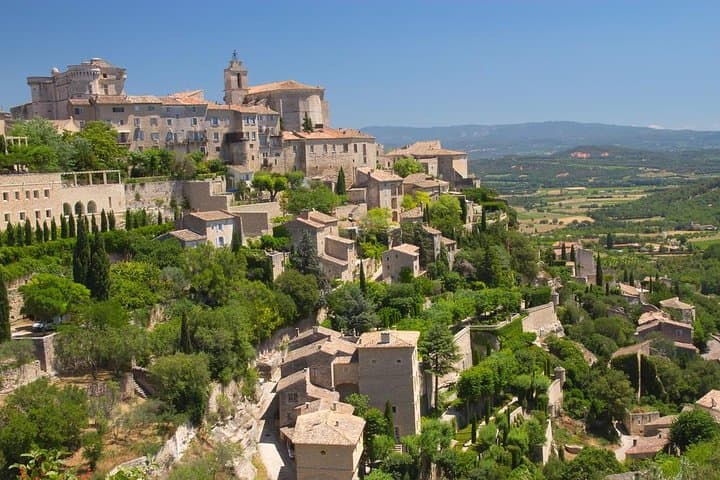
The minivan pulls out of Avignon at dawn and the air changes: vineyards thin into honey-colored scrub, and the road climbs toward the Luberon’s ochre cliffs. Roussillon announces itself in a flaring ribbon of red and orange soil that seems to warm the stone houses around it. Later, Gordes appears perched on limestone, terraces and dry-stone walls folding down the slope like steps.
Verified experiences and guided adventures in the surrounding area.
Operated by A la Francaise Tourisme · Fontaine-de-Vaucluse, Vaucluse
The minivan pulls out of Avignon at dawn and the air changes: vineyards thin into honey-colored scrub, and the road climbs toward the Luberon’s ochre cliffs. Roussillon announces itself in a flaring ribbon of red and orange soil that seems to warm the stone houses around it. Later, Gordes appears perched on limestone, terraces and dry-stone walls folding down the slope like steps.
This half-day loop blends geology and human habit: the ochre deposits around Roussillon are weathered remnants of iron-rich sediments once mined and traded, while Gordes’ stacked stone houses reflect centuries of Provençal building on a limestone escarpment. At Fontaine-de-Vaucluse you follow the Sorgue upstream to the spring; the resurgence bubbles from a karst throat whose depth has eluded speleologists and gives the river a cool, mysterious pulse.
Practical lines are clear. The tour runs about 5–5.5 hours with a maximum of eight people, transport in an air-conditioned minivan, and guided stops for photos and short walks. Expect cobbled streets, short uphill stretches and a riverside path to the source of the Sorgue. Bring sturdy shoes, sun protection and a refillable water bottle; there’s free time in each village for cafés and quick shopping.
Timing matters: spring and autumn offer milder walking and fewer crowds, while summer heats up quickly—start early and hydrate. The small-group format keeps the pace relaxed, letting you trade sweeping overlooks for neighborhood lanes and the quiet of a karst spring.
easy.
5–5.5 hours.
Suitable for most fitness levels; able to walk 30–60 minutes over cobbles and short inclines and stand for viewpoints.
Meet outside Avignon’s Tourist Office; be ready at least 15 minutes before the scheduled departure time to check in.
It’s a short, mostly flat riverside walk suitable for most people; there are steps and cobbles in village centers, but no technical climbs.
Children under 4 are not permitted on this tour; older children are welcome but should be comfortable walking on uneven surfaces.
Yes—operators may modify stops for safety or to avoid heavy crowds; the tour can be canceled for severe weather with refund policies applying.
The Luberon’s villages grew around limestone outcrops and water sources; ochre extraction shaped Roussillon’s economy from the 18th to 20th centuries while the Sorgue powered mills that supported local textile and paper industries.
Ochre quarries and the karst spring are ecologically sensitive—stick to marked paths, avoid removing ochre or stones, and minimize water pollution to protect the Sorgue resurgence.
A la Francaise Tourisme operates guided outdoor trips and adventures with an emphasis on safety, stewardship, and memorable experiences.
The minivan pulls out of Avignon at dawn and the air changes: vineyards thin into honey-colored scrub, and the road climbs toward the Luberon’s ochre cliffs. Roussillon announces itself in a flaring ribbon of red and orange soil that seems to warm the stone houses around it. Later, Gordes appears perched on limestone, terraces and dry-stone walls folding down the slope like steps.
The minivan pulls out of Avignon at dawn and the air changes: vineyards thin into honey-colored scrub, and the road climbs toward the Luberon’s ochre cliffs. Roussillon announces itself in a flaring ribbon of red and orange soil that seems to warm the stone houses around it. Later, Gordes appears perched on limestone, terraces and dry-stone walls folding down the slope like steps.
This half-day loop blends geology and human habit: the ochre deposits around Roussillon are weathered remnants of iron-rich sediments once mined and traded, while Gordes’ stacked stone houses reflect centuries of Provençal building on a limestone escarpment. At Fontaine-de-Vaucluse you follow the Sorgue upstream to the spring; the resurgence bubbles from a karst throat whose depth has eluded speleologists and gives the river a cool, mysterious pulse.
Practical lines are clear. The tour runs about 5–5.5 hours with a maximum of eight people, transport in an air-conditioned minivan, and guided stops for photos and short walks. Expect cobbled streets, short uphill stretches and a riverside path to the source of the Sorgue. Bring sturdy shoes, sun protection and a refillable water bottle; there’s free time in each village for cafés and quick shopping.
Timing matters: spring and autumn offer milder walking and fewer crowds, while summer heats up quickly—start early and hydrate. The small-group format keeps the pace relaxed, letting you trade sweeping overlooks for neighborhood lanes and the quiet of a karst spring.