THE ADVENTURE COLLECTIVE® · Independent discovery and booking for outdoor travel

Float four hours through a living stretch of the Lower Salt River — a family-friendly, guided flatwater raft trip that pairs easy paddling with regular wildlife sightings and local natural history. Perfect for first-time rafters and anyone wanting a quick wilderness reset near Phoenix.
Float four hours through a living stretch of the Lower Salt River — a family-friendly, guided flatwater raft trip that pairs easy paddling with regular wildlife sightings and local natural history. Perfect for first-time rafters and anyone wanting a quick wilderness reset near Phoenix.
The raft sits low in the river, the current more coaxing than commanding. You push off and the Sonoran Desert exhales — creosote and warm rock — while the Lower Salt River threads a green ribbon through a landscape that otherwise leans toward open sky and sunbaked stone. Guides from Cliff Creek Outfitters take the tiller; you lean back, let the raft glide, and watch the banks become stages for wildlife and geology.
Verified experiences and guided adventures in the surrounding area.
Operated by Cliff Creek Outfitters · Mesa, Arizona
The raft sits low in the river, the current more coaxing than commanding. You push off and the Sonoran Desert exhales — creosote and warm rock — while the Lower Salt River threads a green ribbon through a landscape that otherwise leans toward open sky and sunbaked stone. Guides from Cliff Creek Outfitters take the tiller; you lean back, let the raft glide, and watch the banks become stages for wildlife and geology.
This is a class I float: approachable, social, and wide open to families and first-time paddlers. The Salt River has been a reliable water source for millennia — first for Hohokam farmers who engineered canals here, later for ranchers and the growing cities of Phoenix and Mesa. Where the water lingers, cottonwoods and mesquite claim territory; where it narrows, basalt and granite show the story of ancient volcanic episodes and eons of erosion. Bald eagles, great blue herons and, in quieter reaches, bands of wild desert horses are regular cast members; the river seems to pull wildlife into closer view the way a storyteller pulls listeners in.
Culturally the river corridor carries layers: Native American irrigation works, 19th-century ranching routes, and 20th-century recreation. Today public land policies and cooperative river management try to balance that history with the modern impulse to boat, swim, and bird-watch in a fragile riparian ecosystem.
Practicalities matter here. Tours meet at Canal/Hawes Park & Ride in Mesa and include round-trip transport to a launch point chosen for current flows; the whole outing is roughly four hours door-to-door. Guides supply PFDs, dry bags, and local interpretation — they’ll teach basic paddling strokes and lead short swimming stops when conditions allow. Water temperatures swing from about 60°F in winter to the low 80s in summer; even on warm days the current can feel brisk.
Plan for sun and quick weather shifts: lightweight long sleeves protect from UV and wind, water shoes with secure straps replace flip-flops, and a dry change of clothes is a small luxury after a swim. Hydration and sunscreen are non-negotiable; the guides provide bottled water but pack an electrolyte drink if you’re sensitive to heat.
For families, the Lower Salt is an excellent introduction to river culture: gentle water, frequent wildlife sightings, and a skilled guide to make the river feel less like a risk and more like a living classroom. If you want a longer, more technical run, this isn’t it — but for a half-day outside Phoenix, the Salt River is a clear, immediate way to meet Arizona’s wild edge.
easy.
3–4 hours.
Suitable for all fitness levels; participants should be able to sit and paddle intermittently and enter/exit a raft from shore.
Expect about four hours total, including the short drive from the Mesa meeting point to the chosen launch site and time on the river.
Yes—children are welcome but must be accompanied by an adult and meet the minimum weight requirement of 35 lbs.
Yes; guides will pick safe spots for swimming when conditions permit. Wear approved water shoes and follow the guide’s safety instructions.
Athletic clothing or a swimsuit, sports sandals or secured water shoes, a hat and sunscreen; bring a dry change of clothes for after the tour.
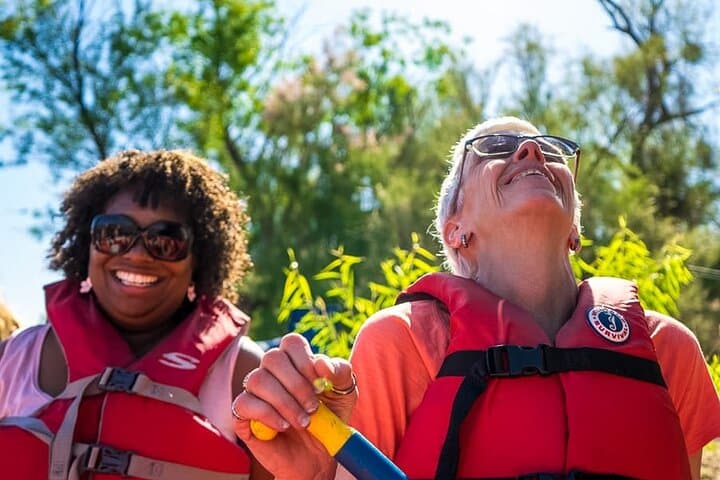
Yes. PFDs (life jackets) are provided and required for all participants.
Common sightings include bald eagles, great blue herons, and occasionally wild horses and other riparian species.
The Lower Salt River corridor supported Hohokam canal agriculture for centuries; later ranching and urban development altered flows but left cultural traces along the banks.
Water allocations, recreation pressure, and invasive species affect the riparian habitat—guided groups help reduce impact by following set access points and Leave No Trace principles.
Cliff Creek Outfitters operates guided outdoor trips and adventures with an emphasis on safety, stewardship, and memorable experiences.
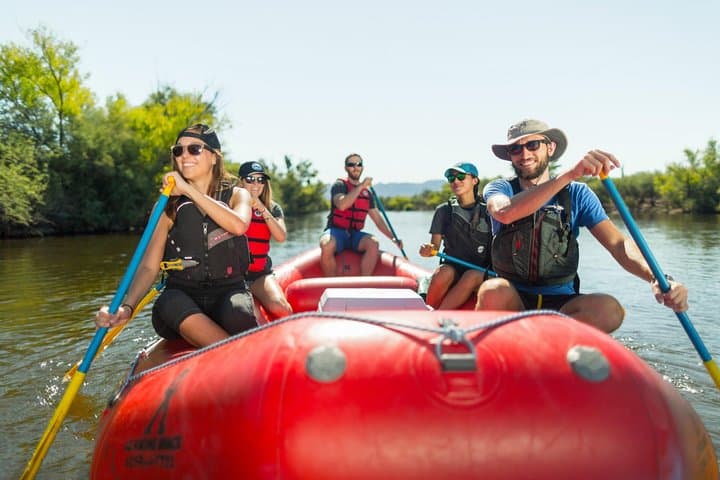
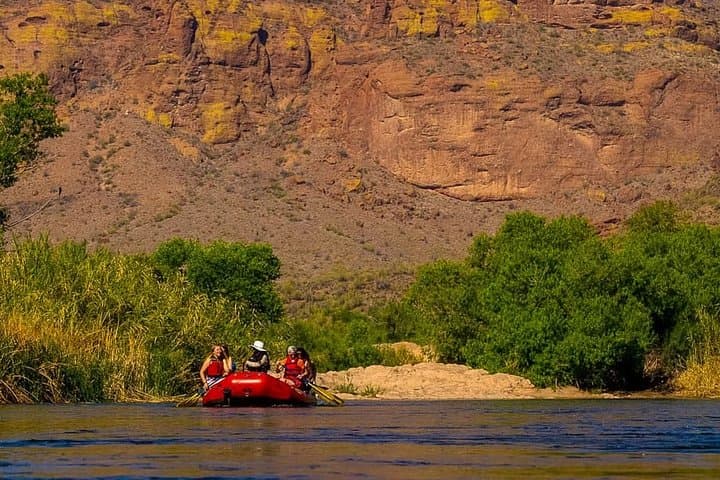
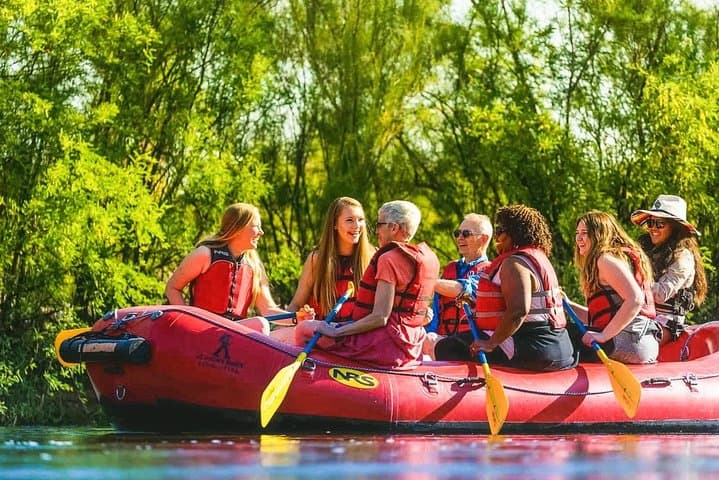
The raft sits low in the river, the current more coaxing than commanding. You push off and the Sonoran Desert exhales — creosote and warm rock — while the Lower Salt River threads a green ribbon through a landscape that otherwise leans toward open sky and sunbaked stone. Guides from Cliff Creek Outfitters take the tiller; you lean back, let the raft glide, and watch the banks become stages for wildlife and geology.
The raft sits low in the river, the current more coaxing than commanding. You push off and the Sonoran Desert exhales — creosote and warm rock — while the Lower Salt River threads a green ribbon through a landscape that otherwise leans toward open sky and sunbaked stone. Guides from Cliff Creek Outfitters take the tiller; you lean back, let the raft glide, and watch the banks become stages for wildlife and geology.
This is a class I float: approachable, social, and wide open to families and first-time paddlers. The Salt River has been a reliable water source for millennia — first for Hohokam farmers who engineered canals here, later for ranchers and the growing cities of Phoenix and Mesa. Where the water lingers, cottonwoods and mesquite claim territory; where it narrows, basalt and granite show the story of ancient volcanic episodes and eons of erosion. Bald eagles, great blue herons and, in quieter reaches, bands of wild desert horses are regular cast members; the river seems to pull wildlife into closer view the way a storyteller pulls listeners in.
Culturally the river corridor carries layers: Native American irrigation works, 19th-century ranching routes, and 20th-century recreation. Today public land policies and cooperative river management try to balance that history with the modern impulse to boat, swim, and bird-watch in a fragile riparian ecosystem.
Practicalities matter here. Tours meet at Canal/Hawes Park & Ride in Mesa and include round-trip transport to a launch point chosen for current flows; the whole outing is roughly four hours door-to-door. Guides supply PFDs, dry bags, and local interpretation — they’ll teach basic paddling strokes and lead short swimming stops when conditions allow. Water temperatures swing from about 60°F in winter to the low 80s in summer; even on warm days the current can feel brisk.
Plan for sun and quick weather shifts: lightweight long sleeves protect from UV and wind, water shoes with secure straps replace flip-flops, and a dry change of clothes is a small luxury after a swim. Hydration and sunscreen are non-negotiable; the guides provide bottled water but pack an electrolyte drink if you’re sensitive to heat.
For families, the Lower Salt is an excellent introduction to river culture: gentle water, frequent wildlife sightings, and a skilled guide to make the river feel less like a risk and more like a living classroom. If you want a longer, more technical run, this isn’t it — but for a half-day outside Phoenix, the Salt River is a clear, immediate way to meet Arizona’s wild edge.