THE ADVENTURE COLLECTIVE® · Independent discovery and booking for outdoor travel

Spend a brisk half-day from Miri exploring Lambir Hills National Park: a guided hike through one of the world’s richest lowland rainforests, finishing with a refreshing waterfall swim. Learn about the park’s plants, wildlife, and fragile geology while following established trails.
Spend a brisk half-day from Miri exploring Lambir Hills National Park: a guided hike through one of the world’s richest lowland rainforests, finishing with a refreshing waterfall swim. Learn about the park’s plants, wildlife, and fragile geology while following established trails.
The forest opens like a living map: trunks rise in layered ranks, leaves murmur above and a clear stream calls you toward rock-framed pools. On this half-day hike from Miri, a local guide leads a steady loop through mixed dipterocarp and kerangas forest where light filters in shafts and the trail alternates between packed earth and exposed roots.
Verified experiences and guided adventures in the surrounding area.
Operated by Asian Overland Services Tours & Travel · Miri, Sarawak
The forest opens like a living map: trunks rise in layered ranks, leaves murmur above and a clear stream calls you toward rock-framed pools. On this half-day hike from Miri, a local guide leads a steady loop through mixed dipterocarp and kerangas forest where light filters in shafts and the trail alternates between packed earth and exposed roots.
Geology here is folded sandstone and shale, eroded into ridges and gullies that feed the park’s streams and waterfalls. The area became protected in the 1970s to conserve one of the planet’s richest lowland rainforests—over 6,900 hectares that support hundreds of tree species and an exceptional variety of understory plants, including pitcher plants and orchids.
Culturally, the park sits on traditional lands used by indigenous Dayak communities for hunting and plant knowledge; guides commonly point out edible fruits and medicinal herbs while explaining local stories about the forest.
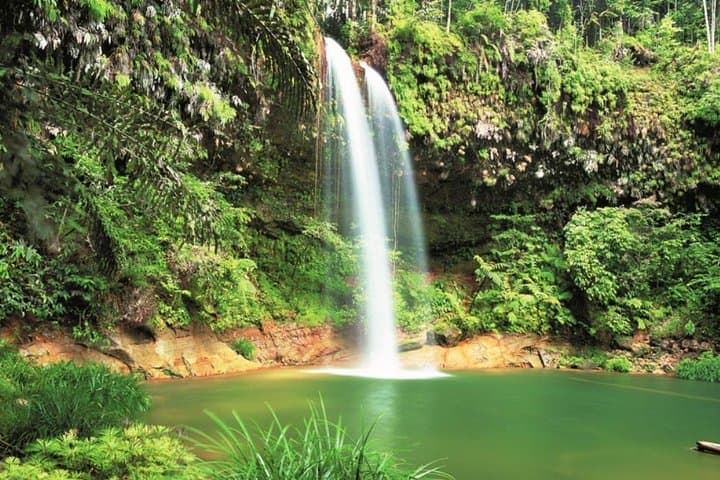
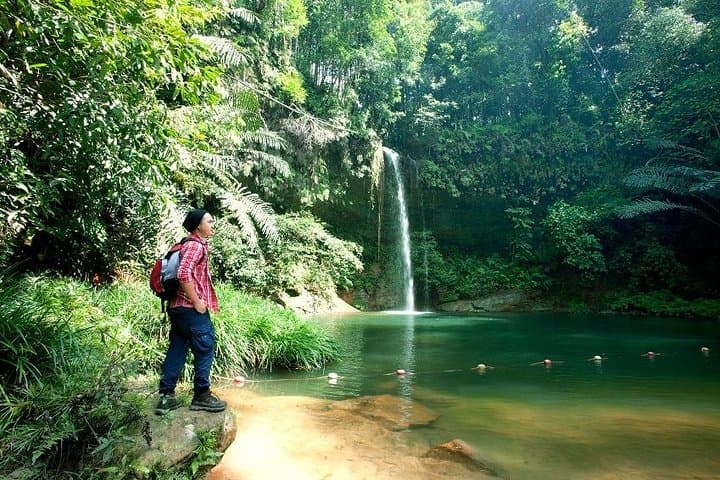
Expect attentive birdlife—hornbills and drongos are common—plus the occasional barking deer or primate high in the canopy. The walk covers moderate terrain: short, steep sections, humid conditions, and slippery rocks near streams. The reward is a cool pool under a waterfall that invites a brief swim before the return leg.
Practical notes: arrive with good hiking shoes, insect repellent, sun protection and at least 1–1.5 liters of water; pack swimwear and a quick-dry towel. Morning departures avoid heat and increase wildlife activity. Follow your guide, stay on trail, and leave no trace—this ecosystem is fragile but resilient when visitors tread lightly.
moderate.
3–4 hours.
Moderate fitness—able to walk uneven trails, handle short steep sections and humid conditions
The tour runs about 4 hours total and involves moderate walking with some short, steep or uneven sections; a basic level of fitness is recommended.
Yes—most half-day itineraries finish at a mountain stream and waterfall with a safe pool for a short swim; bring swimwear and a towel.
Wildlife sightings are common but not guaranteed; expect birds, primates, and small mammals—your guide will point out species and signs.
Children can participate but may require supervision; the operator does not recommend the hike for pregnant travelers or those with serious heart conditions.
Lambir Hills was set aside as a protected area in the 1970s to conserve one of Borneo’s most diverse lowland rainforests, noted for its dense dipterocarp canopy and rich understory.
Stay on marked paths, avoid feeding wildlife, and carry out all trash; the park’s biodiversity is vulnerable to disturbance and litter.
Asian Overland Services Tours & Travel operates guided outdoor trips and adventures with an emphasis on safety, stewardship, and memorable experiences.
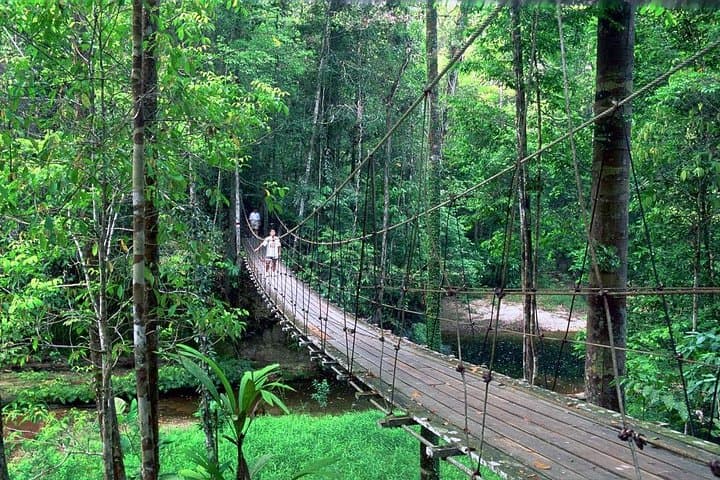
The forest opens like a living map: trunks rise in layered ranks, leaves murmur above and a clear stream calls you toward rock-framed pools. On this half-day hike from Miri, a local guide leads a steady loop through mixed dipterocarp and kerangas forest where light filters in shafts and the trail alternates between packed earth and exposed roots.
The forest opens like a living map: trunks rise in layered ranks, leaves murmur above and a clear stream calls you toward rock-framed pools. On this half-day hike from Miri, a local guide leads a steady loop through mixed dipterocarp and kerangas forest where light filters in shafts and the trail alternates between packed earth and exposed roots.
Geology here is folded sandstone and shale, eroded into ridges and gullies that feed the park’s streams and waterfalls. The area became protected in the 1970s to conserve one of the planet’s richest lowland rainforests—over 6,900 hectares that support hundreds of tree species and an exceptional variety of understory plants, including pitcher plants and orchids.
Culturally, the park sits on traditional lands used by indigenous Dayak communities for hunting and plant knowledge; guides commonly point out edible fruits and medicinal herbs while explaining local stories about the forest.
Expect attentive birdlife—hornbills and drongos are common—plus the occasional barking deer or primate high in the canopy. The walk covers moderate terrain: short, steep sections, humid conditions, and slippery rocks near streams. The reward is a cool pool under a waterfall that invites a brief swim before the return leg.
Practical notes: arrive with good hiking shoes, insect repellent, sun protection and at least 1–1.5 liters of water; pack swimwear and a quick-dry towel. Morning departures avoid heat and increase wildlife activity. Follow your guide, stay on trail, and leave no trace—this ecosystem is fragile but resilient when visitors tread lightly.