THE ADVENTURE COLLECTIVE® · Independent discovery and booking for outdoor travel

Spend a relaxed half-day wandering Kyoto’s Higashiyama: gardened temple halls, the pulse of Gion, and a sweet stop for matcha. This easy urban walk blends history, ritual, and local flavors in about 3–4 hours.
Spend a relaxed half-day wandering Kyoto’s Higashiyama: gardened temple halls, the pulse of Gion, and a sweet stop for matcha. This easy urban walk blends history, ritual, and local flavors in about 3–4 hours.
You step from a narrow stone street into a courtyard where incense threads the air and a pond holds the city’s reflections. Morning light strips the vermilion of Heian Shrine into clean bands; later, in a quieter side alley of Gion, wooden machiya watch as footsteps pass.
Verified experiences and guided adventures in the surrounding area.
Operated by MY Travel Consulting · Kyoto, Kyoto Prefecture
You step from a narrow stone street into a courtyard where incense threads the air and a pond holds the city’s reflections. Morning light strips the vermilion of Heian Shrine into clean bands; later, in a quieter side alley of Gion, wooden machiya watch as footsteps pass.
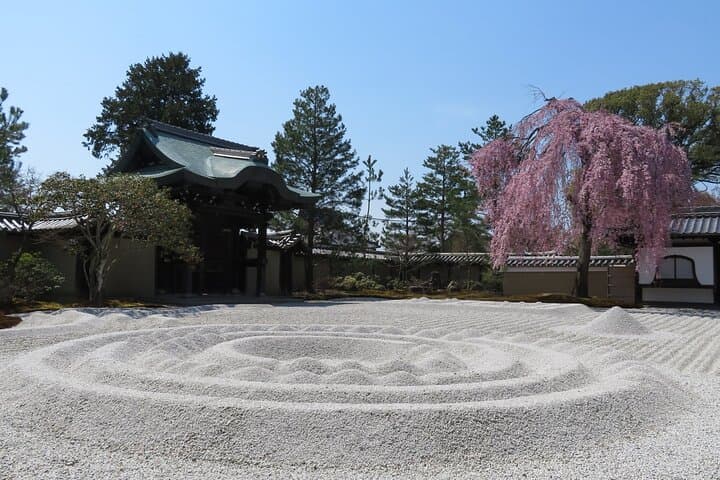
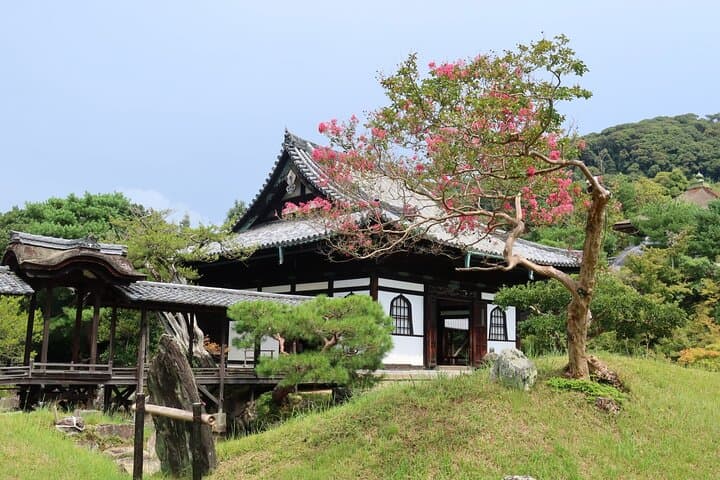
This half-day walk threads Higashiyama’s highlights: Kodaiji’s 1606 gardens and rock features crafted during the Azuchi–Momoyama era, Maruyama Park’s cherry-tree stage, Yasaka Shrine’s centuries-old festival life, Heian Shrine’s late-19th-century imperial architecture, and Kenninji’s Zen interiors dating to 1202. The route traces Kyoto’s cultural layers rather than geological drama—the city sits on an alluvial plain hemmed by low mountains, so expect mostly flat walking with occasional temple steps and shaded lanes.
Along the way you’ll sense the rhythms of local life: tea shops offering matcha sweets, the steady murmur of worship at a shrine, and narrow alleys that funnel evening light. Gion’s streets can offer glimpses of maiko slipping between appointments; keep your distance and your camera quiet.
Practical guidance: the loop is roughly 4–6 km and takes about 3–4 hours at a leisurely pace; terrain is paved or compacted stone with intermittent steps. Public transit and taxi options bookend the walk, and some operators include hotel pickup. Bring comfortable shoes, a lightweight rain layer in early summer, cash for small admissions and sweets, and a reusable water bottle. Visit mid-morning or late afternoon to avoid the midday crowds and to catch the best light for temple exteriors.
easy.
3–4 hours.
Moderate level of fitness for walking several kilometers and climbing temple steps
The itinerary is about 3–4 hours and covers roughly 4–6 km of mostly flat, paved streets with occasional temple steps.
Some temple admissions are included per the operator; check your booking details and carry cash for any additional sites or purchases.
Parts of the route have stone steps and uneven surfaces; while some areas are stroller-friendly, travelers with limited mobility should check pickup options and specific site accessibility in advance.
Tipping is not customary in Japan; guests often thank guides personally or leave a small souvenir gift instead.
Kyoto served as Japan’s imperial capital for over a millennium; Heian Shrine commemorates the city’s 1,100th anniversary while Kodaiji and Kenninji reflect key moments in samurai and Zen histories.
High visitor volumes can strain small temple gardens and narrow streets—stick to paths, avoid littering, and follow site rules to protect fragile cultural landscapes.
MY Travel Consulting operates guided outdoor trips and adventures with an emphasis on safety, stewardship, and memorable experiences.
You step from a narrow stone street into a courtyard where incense threads the air and a pond holds the city’s reflections. Morning light strips the vermilion of Heian Shrine into clean bands; later, in a quieter side alley of Gion, wooden machiya watch as footsteps pass.
You step from a narrow stone street into a courtyard where incense threads the air and a pond holds the city’s reflections. Morning light strips the vermilion of Heian Shrine into clean bands; later, in a quieter side alley of Gion, wooden machiya watch as footsteps pass.
This half-day walk threads Higashiyama’s highlights: Kodaiji’s 1606 gardens and rock features crafted during the Azuchi–Momoyama era, Maruyama Park’s cherry-tree stage, Yasaka Shrine’s centuries-old festival life, Heian Shrine’s late-19th-century imperial architecture, and Kenninji’s Zen interiors dating to 1202. The route traces Kyoto’s cultural layers rather than geological drama—the city sits on an alluvial plain hemmed by low mountains, so expect mostly flat walking with occasional temple steps and shaded lanes.
Along the way you’ll sense the rhythms of local life: tea shops offering matcha sweets, the steady murmur of worship at a shrine, and narrow alleys that funnel evening light. Gion’s streets can offer glimpses of maiko slipping between appointments; keep your distance and your camera quiet.
Practical guidance: the loop is roughly 4–6 km and takes about 3–4 hours at a leisurely pace; terrain is paved or compacted stone with intermittent steps. Public transit and taxi options bookend the walk, and some operators include hotel pickup. Bring comfortable shoes, a lightweight rain layer in early summer, cash for small admissions and sweets, and a reusable water bottle. Visit mid-morning or late afternoon to avoid the midday crowds and to catch the best light for temple exteriors.