THE ADVENTURE COLLECTIVE® · Independent discovery and booking for outdoor travel

Board an open safari vehicle in Marloth Park and cross into Kruger for a guided half-day game drive. With an expert guide, you'll pursue Big Five sightings, learn tracking cues, and pause at a Kruger rest camp for refreshments.
Board an open safari vehicle in Marloth Park and cross into Kruger for a guided half-day game drive. With an expert guide, you'll pursue Big Five sightings, learn tracking cues, and pause at a Kruger rest camp for refreshments.
You step into the dawn at Marloth Park and the air already smells of dust and bush—an open safari vehicle idles, ready to cross the Crocodile River into Kruger. Your guide, decades of tracks in his boots, scans a ribbon of road where spoor and shadow meet. The first light slants across mopane and acacia, and with every low ridge a new shape defines itself—distant elephant silhouettes, a glance of lion, a buffalo easing through long grass.
Verified experiences and guided adventures in the surrounding area.
Operated by Marloth & More · Marloth Park, Mpumalanga
You step into the dawn at Marloth Park and the air already smells of dust and bush—an open safari vehicle idles, ready to cross the Crocodile River into Kruger. Your guide, decades of tracks in his boots, scans a ribbon of road where spoor and shadow meet. The first light slants across mopane and acacia, and with every low ridge a new shape defines itself—distant elephant silhouettes, a glance of lion, a buffalo easing through long grass.
Kruger sits on ancient geology: granite outcrops and lowveld sandstones carved by seasonal rivers that set the rhythm of life here. Established in the early 20th century and named for Paul Kruger, the park has long been a conservation crucible in South Africa’s Mpumalanga Lowveld. Local Shangaan culture and the rhythms of rural life still mark the towns around the park—Marloth Park and Malelane offer the last signs of civilization before the bush takes over.
Practical guidance: expect 3–6 hours in the field depending on pickup and rest-camp stopovers; roads are gravel and often bumpy, so motion sensitivity or spinal injuries are worth flagging. Guides read behavior: where animals feed, how predators move, when birds shift—a good guide multiplies your sightings.
Bring layered clothing for chilly mornings, a brimmed hat, and binoculars; keep quiet, stay in the vehicle, and follow the guide’s instructions. Conservation fees are separate—pack cash or confirm payment—because your visit directly supports anti-poaching and habitat work. A half- or full-day here is part classroom, part theater: the stage is wide, the actors wild, and the rules are simple—observe, respect, and leave the bush as you found it.
moderate.
3–6 hours.
Minimal fitness required—able to board an open vehicle and remain seated for several hours.
No—conservation/admission fees are excluded; confirm current rates with your operator and bring payment method they accept.
No wildlife can be guaranteed, but an experienced 23-year guide increases the odds by choosing productive areas and reading tracks.
Yes—pick-up and drop-off from Marloth Park or Malelane are included; you'll be driven to the park entrance before the game drive begins.
The tour notes it’s not recommended for those with spinal injuries or significant mobility issues due to vehicle access and bumpy roads—ask the operator for specific accommodations.
Kruger evolved from colonial-era game reserves into South Africa’s largest protected area; it was formally established in the early 20th century and later named for statesman Paul Kruger.
Park fees and guided visits fund anti-poaching and habitat management; follow the guide and stay on roads to minimize disturbance.
Marloth & More operates guided outdoor trips and adventures with an emphasis on safety, stewardship, and memorable experiences.
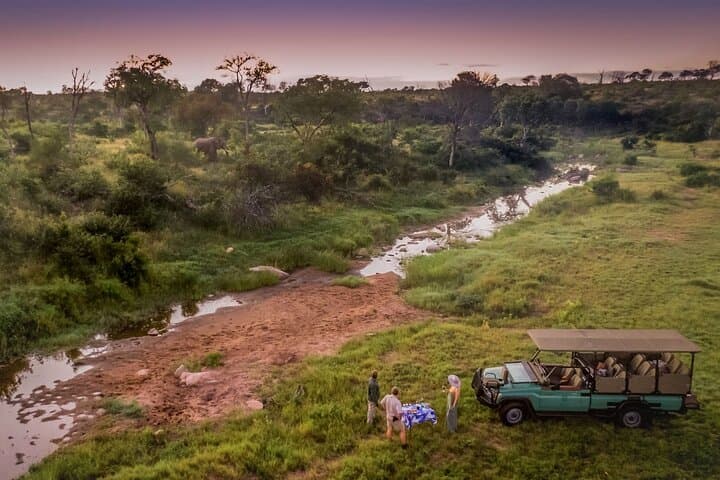

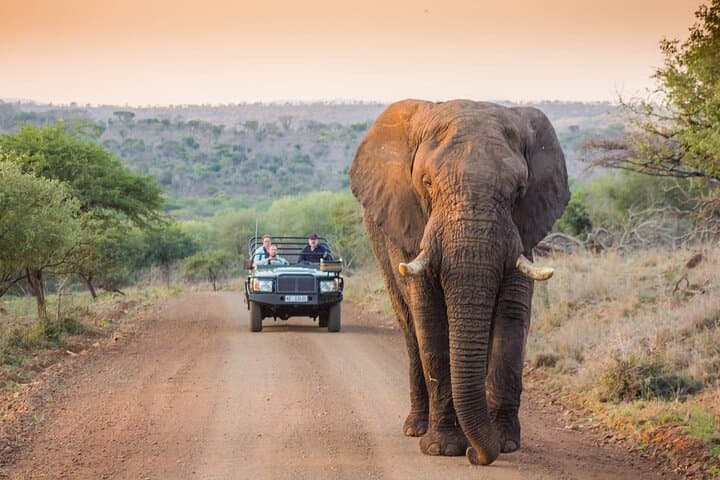

You step into the dawn at Marloth Park and the air already smells of dust and bush—an open safari vehicle idles, ready to cross the Crocodile River into Kruger. Your guide, decades of tracks in his boots, scans a ribbon of road where spoor and shadow meet. The first light slants across mopane and acacia, and with every low ridge a new shape defines itself—distant elephant silhouettes, a glance of lion, a buffalo easing through long grass.
You step into the dawn at Marloth Park and the air already smells of dust and bush—an open safari vehicle idles, ready to cross the Crocodile River into Kruger. Your guide, decades of tracks in his boots, scans a ribbon of road where spoor and shadow meet. The first light slants across mopane and acacia, and with every low ridge a new shape defines itself—distant elephant silhouettes, a glance of lion, a buffalo easing through long grass.
Kruger sits on ancient geology: granite outcrops and lowveld sandstones carved by seasonal rivers that set the rhythm of life here. Established in the early 20th century and named for Paul Kruger, the park has long been a conservation crucible in South Africa’s Mpumalanga Lowveld. Local Shangaan culture and the rhythms of rural life still mark the towns around the park—Marloth Park and Malelane offer the last signs of civilization before the bush takes over.
Practical guidance: expect 3–6 hours in the field depending on pickup and rest-camp stopovers; roads are gravel and often bumpy, so motion sensitivity or spinal injuries are worth flagging. Guides read behavior: where animals feed, how predators move, when birds shift—a good guide multiplies your sightings.
Bring layered clothing for chilly mornings, a brimmed hat, and binoculars; keep quiet, stay in the vehicle, and follow the guide’s instructions. Conservation fees are separate—pack cash or confirm payment—because your visit directly supports anti-poaching and habitat work. A half- or full-day here is part classroom, part theater: the stage is wide, the actors wild, and the rules are simple—observe, respect, and leave the bush as you found it.