THE ADVENTURE COLLECTIVE® · Independent discovery and booking for outdoor travel

Spend a focused half-day in Kruger National Park from Hazyview for concentrated Big Five viewing. Guided open-vehicle drives prioritize animal behavior and waterpoints to maximize sightings in 5–7 hours.
Spend a focused half-day in Kruger National Park from Hazyview for concentrated Big Five viewing. Guided open-vehicle drives prioritize animal behavior and waterpoints to maximize sightings in 5–7 hours.
Dawn strips the night from the bush and the open safari vehicle threads a ribbon of dust into Kruger National Park. Early light sharpens the contours of termite mounds and sends birds scattering; every fold of the landscape feels charged. On a half-day game drive from Hazyview, guides steer by animal behavior and spoor rather than a fixed route, chasing sightings across mopane and acacia toward watering holes where elephants and buffalo collect.
Verified experiences and guided adventures in the surrounding area.
Operated by Tours & Tickets SA · Hazyview, Mpumalanga
Dawn strips the night from the bush and the open safari vehicle threads a ribbon of dust into Kruger National Park. Early light sharpens the contours of termite mounds and sends birds scattering; every fold of the landscape feels charged. On a half-day game drive from Hazyview, guides steer by animal behavior and spoor rather than a fixed route, chasing sightings across mopane and acacia toward watering holes where elephants and buffalo collect.
Kruger’s origins stretch back to the late 19th century: first protected as the Sabi Game Reserve in 1898 and formally designated Kruger National Park in 1926. Geologically, the park sits on ancient granite and gneiss with lowveld plains punctuated by shallow ridges and seasonal rivers like the Sabie, which shape animal movements. Culturally the area is part of Mpumalanga’s long human history—ranching, conservation policy, and ecotourism overlap here.
Practically, expect 5–7 hours on an open 4x4 with a maximum of 10 guests. Morning safaris favor predator and bird activity; afternoon drives can turn up nocturnal species as dusk approaches. Bring warm layers (open vehicles get cold), a camera with a tele lens, binoculars, and a small daypack. Park gates are cashless—pay with card—and passports are required for entry. Respect distance rules: guides and rangers control interaction for safety and conservation.
This half-day safari is compact but rich: concentrated wildlife viewing, expert guiding, and a chance to witness how seasonal water shapes life across one of Africa’s most biodiverse savanna landscapes.
easy.
5–7 hours.
Suitable for most fitness levels; participants should be able to sit on an open vehicle for several hours and board uneven steps.
Children aged 6 years and above can join shared open-vehicle safaris; younger children require a private vehicle booking.
Park entry fees are not included; pay at the gate (card accepted) and carry your passport/ID for entry.
Shared open safari vehicles carry up to 10 guests to balance viewing opportunities and comfort.
No—safaris are guided and suitable for first-timers; bring patience and follow your guide’s instructions for best sightings and safety.
Kruger began as the Sabi Game Reserve in 1898 and was expanded and named Kruger National Park in 1926 to protect lowveld wildlife.
Visitor fees and guided operations fund anti-poaching units and habitat management; keep to roads and follow guide instructions to minimize disturbance.
Tours & Tickets SA operates guided outdoor trips and adventures with an emphasis on safety, stewardship, and memorable experiences.
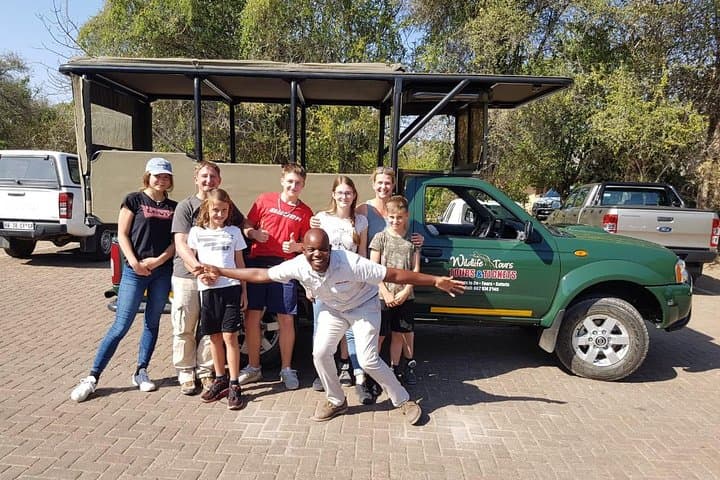
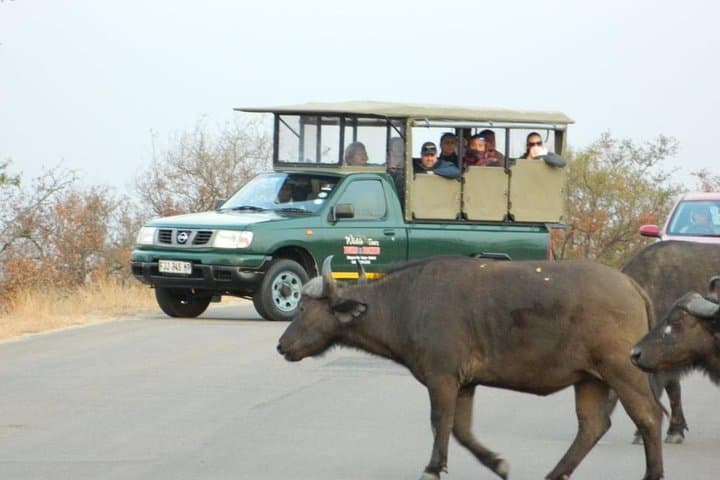
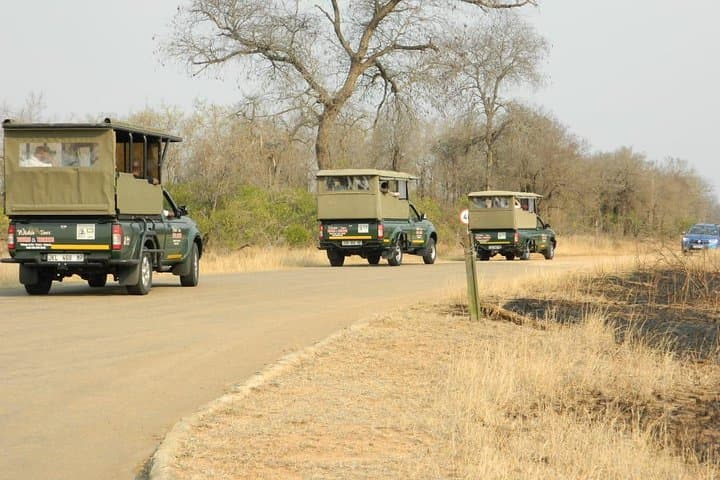
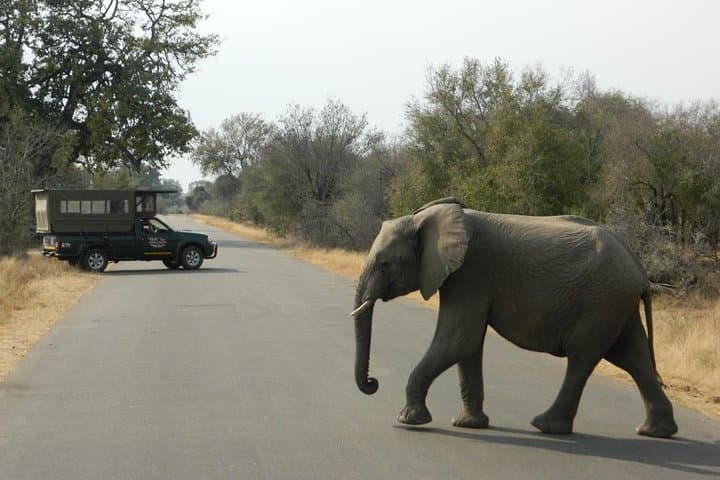
Dawn strips the night from the bush and the open safari vehicle threads a ribbon of dust into Kruger National Park. Early light sharpens the contours of termite mounds and sends birds scattering; every fold of the landscape feels charged. On a half-day game drive from Hazyview, guides steer by animal behavior and spoor rather than a fixed route, chasing sightings across mopane and acacia toward watering holes where elephants and buffalo collect.
Dawn strips the night from the bush and the open safari vehicle threads a ribbon of dust into Kruger National Park. Early light sharpens the contours of termite mounds and sends birds scattering; every fold of the landscape feels charged. On a half-day game drive from Hazyview, guides steer by animal behavior and spoor rather than a fixed route, chasing sightings across mopane and acacia toward watering holes where elephants and buffalo collect.
Kruger’s origins stretch back to the late 19th century: first protected as the Sabi Game Reserve in 1898 and formally designated Kruger National Park in 1926. Geologically, the park sits on ancient granite and gneiss with lowveld plains punctuated by shallow ridges and seasonal rivers like the Sabie, which shape animal movements. Culturally the area is part of Mpumalanga’s long human history—ranching, conservation policy, and ecotourism overlap here.
Practically, expect 5–7 hours on an open 4x4 with a maximum of 10 guests. Morning safaris favor predator and bird activity; afternoon drives can turn up nocturnal species as dusk approaches. Bring warm layers (open vehicles get cold), a camera with a tele lens, binoculars, and a small daypack. Park gates are cashless—pay with card—and passports are required for entry. Respect distance rules: guides and rangers control interaction for safety and conservation.
This half-day safari is compact but rich: concentrated wildlife viewing, expert guiding, and a chance to witness how seasonal water shapes life across one of Africa’s most biodiverse savanna landscapes.