THE ADVENTURE COLLECTIVE® · Independent discovery and booking for outdoor travel

A concise half-day tour that pairs Kathmandu’s historic core with the hilltop Swayambhunath Stupa. Expect carved temples, steep stairways, street markets and sweeping valley views—ideal for travelers short on time who want cultural immersion.
A concise half-day tour that pairs Kathmandu’s historic core with the hilltop Swayambhunath Stupa. Expect carved temples, steep stairways, street markets and sweeping valley views—ideal for travelers short on time who want cultural immersion.
You step out of an air-conditioned car into a maze of narrow lanes where incense and diesel mix, pigeons scatter, and a low chant threads through the air—this is Kathmandu by late morning. The route climbs to Swayambhunath, the stupa perched above the valley, where painted eyes watch the city and long stairways test your legs. Below, Durbar Square spills out courtyards, carved wood, and the rhythm of daily life.
Verified experiences and guided adventures in the surrounding area.
Operated by Sita, India · Kathmandu, Bagmati Province
You step out of an air-conditioned car into a maze of narrow lanes where incense and diesel mix, pigeons scatter, and a low chant threads through the air—this is Kathmandu by late morning. The route climbs to Swayambhunath, the stupa perched above the valley, where painted eyes watch the city and long stairways test your legs. Below, Durbar Square spills out courtyards, carved wood, and the rhythm of daily life.
Kathmandu sits at the crossroads of Himalayan geology and centuries of human craftsmanship. The valley floor is alluvial plain, ringed by terraced hills, while the city’s monuments are products of Newar artisanship and centuries of Buddhist and Hindu patronage. Swayambhu dates back over a millennium and remains a living shrine—monks, pilgrims, and mischievous macaques share the terraces.
Culturally, expect hands-on encounters: brass curio shops, rooftop tea with valley views, and the practiced courtesy of Nepali hosts. Guides translate not only language but ritual—showing how to circumambulate the stupa, spin prayer wheels, and read prayer flags.
Practically, plan for uneven stone steps, crowded alleys, and midday sun. Allow 4–6 hours for pickup, brief stops at Durbar Square and Swayambhunath, and easy walking. Comfortable shoes, a water bottle, and respectful clothing (shoulders and knees covered) make the day smoother. Morning departures avoid heat and peak traffic. Bring small local currency for temple donations and street snacks, and keep an eye on your belongings around the tourist hubs. This half-day tour is compact but textured: a concentrated primer on Kathmandu’s spiritual landmarks and urban hum.
easy.
4–6 hours.
Light to moderate: able to handle several flights of stairs and short walks on uneven surfaces.
The tour runs approximately 4–6 hours including hotel pickup and drop-off.
Typically the tour includes visits but entrance fees to some monuments may be paid on-site—confirm with your operator.
Yes for most, but be aware of stairs at Swayambhunath and crowded pathways; moderate fitness is recommended.
Photography is allowed in many outdoor and public temple areas, but avoid flash and follow signs or guide instructions in restricted interiors.
Kathmandu Valley has been a cultural and trading crossroads for over a thousand years; Swayambhunath is one of the valley’s oldest Buddhist shrines and an active pilgrimage site.
High visitor numbers stress fragile monuments—stay on designated paths, avoid touching carved wood, and support local conservation fees when offered.
Sita, India operates guided outdoor trips and adventures with an emphasis on safety, stewardship, and memorable experiences.


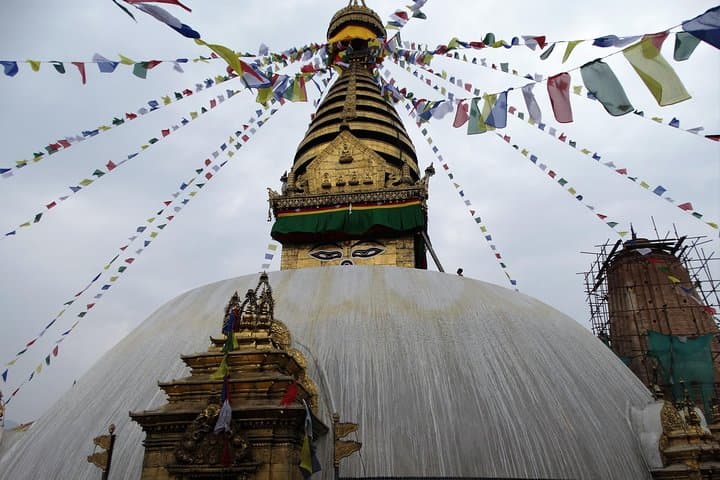

You step out of an air-conditioned car into a maze of narrow lanes where incense and diesel mix, pigeons scatter, and a low chant threads through the air—this is Kathmandu by late morning. The route climbs to Swayambhunath, the stupa perched above the valley, where painted eyes watch the city and long stairways test your legs. Below, Durbar Square spills out courtyards, carved wood, and the rhythm of daily life.
You step out of an air-conditioned car into a maze of narrow lanes where incense and diesel mix, pigeons scatter, and a low chant threads through the air—this is Kathmandu by late morning. The route climbs to Swayambhunath, the stupa perched above the valley, where painted eyes watch the city and long stairways test your legs. Below, Durbar Square spills out courtyards, carved wood, and the rhythm of daily life.
Kathmandu sits at the crossroads of Himalayan geology and centuries of human craftsmanship. The valley floor is alluvial plain, ringed by terraced hills, while the city’s monuments are products of Newar artisanship and centuries of Buddhist and Hindu patronage. Swayambhu dates back over a millennium and remains a living shrine—monks, pilgrims, and mischievous macaques share the terraces.
Culturally, expect hands-on encounters: brass curio shops, rooftop tea with valley views, and the practiced courtesy of Nepali hosts. Guides translate not only language but ritual—showing how to circumambulate the stupa, spin prayer wheels, and read prayer flags.
Practically, plan for uneven stone steps, crowded alleys, and midday sun. Allow 4–6 hours for pickup, brief stops at Durbar Square and Swayambhunath, and easy walking. Comfortable shoes, a water bottle, and respectful clothing (shoulders and knees covered) make the day smoother. Morning departures avoid heat and peak traffic. Bring small local currency for temple donations and street snacks, and keep an eye on your belongings around the tourist hubs. This half-day tour is compact but textured: a concentrated primer on Kathmandu’s spiritual landmarks and urban hum.