THE ADVENTURE COLLECTIVE® · Independent discovery and booking for outdoor travel

Explore Kampala’s major religious landmarks in a focused half-day tour that pairs panoramic hilltop views with architectural history. Expect guided visits to Gaddafi Mosque, Namirembe and Rubaga cathedrals, the Bahá’í Temple gardens and the Namugongo shrine, with private transport and lunch included.
Explore Kampala’s major religious landmarks in a focused half-day tour that pairs panoramic hilltop views with architectural history. Expect guided visits to Gaddafi Mosque, Namirembe and Rubaga cathedrals, the Bahá’í Temple gardens and the Namugongo shrine, with private transport and lunch included.
Morning light sits low over Kampala’s hills as an air-conditioned car pulls up to the Gaddafi National Mosque. The minaret lifts above the city like a lookout; from its terrace Kampala unfurls in layers of rooftops, market stalls and church spires. This half-day loop threads five major sites—Gaddafi Mosque, Namirembe and Rubaga cathedrals, the Baha’i Temple gardens, and the Namugongo martyrs’ shrine—each occupying one of the city’s prominent high points and offering different vantage points on Kampala’s life.
Verified experiences and guided adventures in the surrounding area.
Operated by UGANDA AFRICA SAFARI · Kampala, Kampala
Morning light sits low over Kampala’s hills as an air-conditioned car pulls up to the Gaddafi National Mosque. The minaret lifts above the city like a lookout; from its terrace Kampala unfurls in layers of rooftops, market stalls and church spires. This half-day loop threads five major sites—Gaddafi Mosque, Namirembe and Rubaga cathedrals, the Baha’i Temple gardens, and the Namugongo martyrs’ shrine—each occupying one of the city’s prominent high points and offering different vantage points on Kampala’s life.
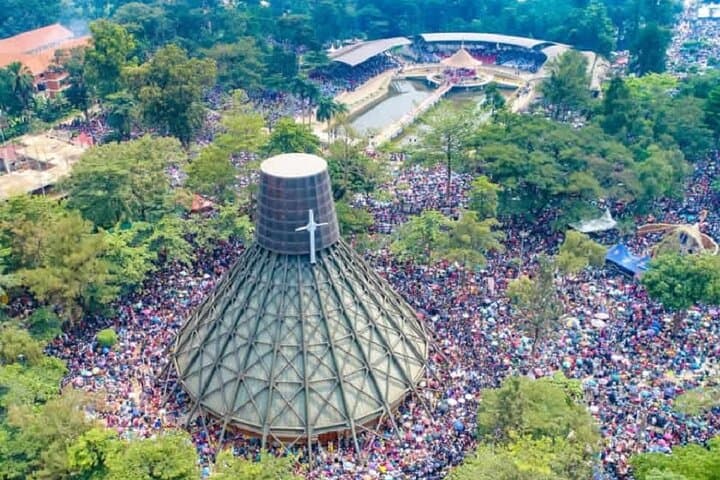
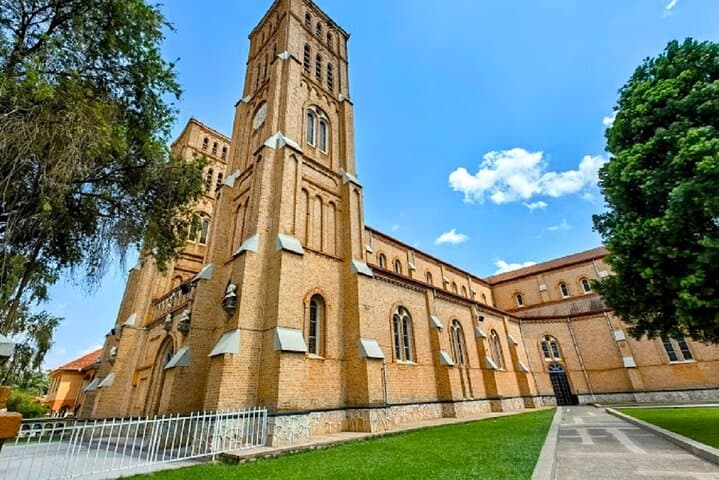
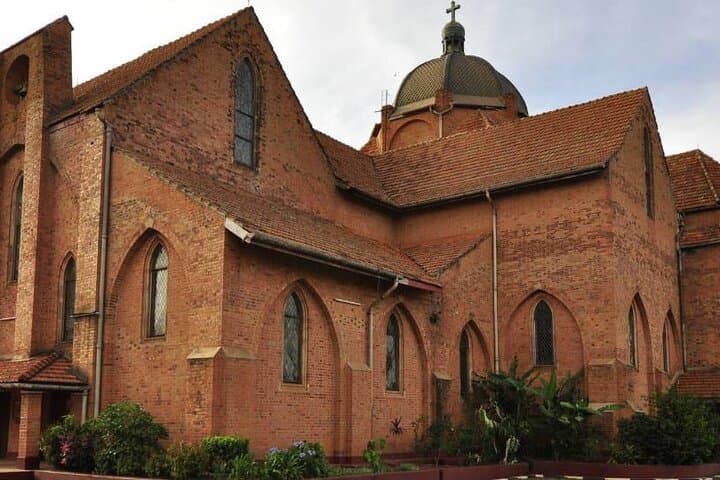
The route maps religious history onto Kampala’s Precambrian hills: French missionaries shaped Rubaga’s stonework, Anglican establishments trace colonial-era evangelical influence on Namirembe, and the Bahá’í Temple (opened 1961) brings quiet gardens and unusual architecture to Kikaaya Hill. The Gaddafi Mosque is a recent but dominant landmark (opened 2007), while Namugongo commemorates 19th-century martyrs and remains a major pilgrimage site.
Travelers should expect short walks, flights of stairs and paved approaches rather than long hikes; the city’s volcanic-era ridges hold views more than wilderness. Guides explain architecture, local religious customs, and where to stand or remove your head covering.
Practical notes: the tour runs roughly 4–8 hours with private transport and lunch; admission for listed sites is included. Dress modestly for mosque and shrine visits, bring sun protection and a refillable water bottle, and plan for traffic between hills. The experience is cultural and urban—an efficient, scenic introduction to Kampala’s spiritual geography and the people who keep it active.
easy.
4–8 hours.
Suitable for most fitness levels; comfortable mobility for stairs and short urban walks is helpful.
Yes; the listed itinerary notes admission included for the main sites visited.
Yes; the tour includes lunch at a local restaurant as part of the package.
No; several sites have stairs and uneven paths and the tour is not wheelchair accessible.
Yes; the tour offers private transportation and asks for your preferred pickup point at booking.
Kampala’s religious map grew during the late 19th and 20th centuries—French missionaries built key Catholic structures, Anglican influence centered on Namirembe, and Namugongo memorializes martyrs from the 1880s.
Visitors should stick to paths, avoid leaving offerings or litter on temple grounds, and support local guides to help sustain community incomes.
UGANDA AFRICA SAFARI operates guided outdoor trips and adventures with an emphasis on safety, stewardship, and memorable experiences.
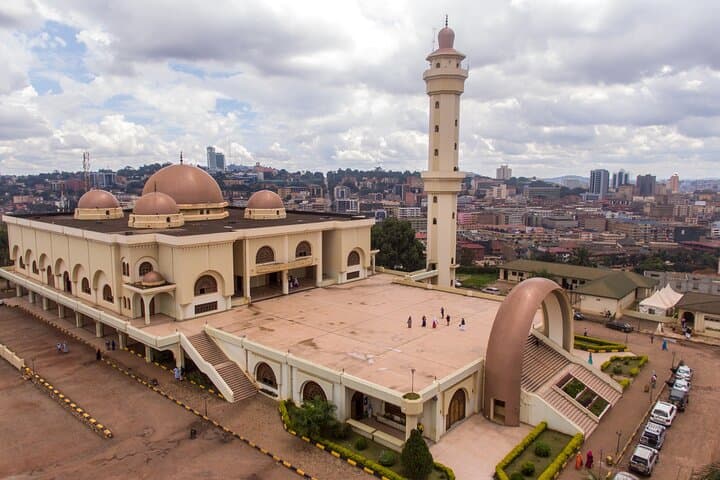
Morning light sits low over Kampala’s hills as an air-conditioned car pulls up to the Gaddafi National Mosque. The minaret lifts above the city like a lookout; from its terrace Kampala unfurls in layers of rooftops, market stalls and church spires. This half-day loop threads five major sites—Gaddafi Mosque, Namirembe and Rubaga cathedrals, the Baha’i Temple gardens, and the Namugongo martyrs’ shrine—each occupying one of the city’s prominent high points and offering different vantage points on Kampala’s life.
Morning light sits low over Kampala’s hills as an air-conditioned car pulls up to the Gaddafi National Mosque. The minaret lifts above the city like a lookout; from its terrace Kampala unfurls in layers of rooftops, market stalls and church spires. This half-day loop threads five major sites—Gaddafi Mosque, Namirembe and Rubaga cathedrals, the Baha’i Temple gardens, and the Namugongo martyrs’ shrine—each occupying one of the city’s prominent high points and offering different vantage points on Kampala’s life.
The route maps religious history onto Kampala’s Precambrian hills: French missionaries shaped Rubaga’s stonework, Anglican establishments trace colonial-era evangelical influence on Namirembe, and the Bahá’í Temple (opened 1961) brings quiet gardens and unusual architecture to Kikaaya Hill. The Gaddafi Mosque is a recent but dominant landmark (opened 2007), while Namugongo commemorates 19th-century martyrs and remains a major pilgrimage site.
Travelers should expect short walks, flights of stairs and paved approaches rather than long hikes; the city’s volcanic-era ridges hold views more than wilderness. Guides explain architecture, local religious customs, and where to stand or remove your head covering.
Practical notes: the tour runs roughly 4–8 hours with private transport and lunch; admission for listed sites is included. Dress modestly for mosque and shrine visits, bring sun protection and a refillable water bottle, and plan for traffic between hills. The experience is cultural and urban—an efficient, scenic introduction to Kampala’s spiritual geography and the people who keep it active.