THE ADVENTURE COLLECTIVE® · Independent discovery and booking for outdoor travel

Step outside Hanoi’s bustle for a half-day tour to Chuong and Quang Phu Cau—villages where conical hat and incense traditions live on. Meet artisans, try hat-making, and learn how these crafts connect daily life to Vietnam’s ritual calendar.
Step outside Hanoi’s bustle for a half-day tour to Chuong and Quang Phu Cau—villages where conical hat and incense traditions live on. Meet artisans, try hat-making, and learn how these crafts connect daily life to Vietnam’s ritual calendar.
You step out of Hanoi’s Old Quarter into a ribbon of road that slides past rice paddies and low brick houses; the city’s noise loosens and a faint plume of incense curls ahead, marking the day’s first village. In Chuong, the sharp scissors of conical-hat makers clip bamboo and palm leaves with rhythmic precision—hands that have shaped the non la for generations. The smoke from Quang Phu Cau’s dye vats and incense kilns moves through alleys like a patient messenger, announcing a craft economy older than many modern streets.
Verified experiences and guided adventures in the surrounding area.
Operated by Authentic Travel Ho Chi Minh · Hanoi, Hanoi
You step out of Hanoi’s Old Quarter into a ribbon of road that slides past rice paddies and low brick houses; the city’s noise loosens and a faint plume of incense curls ahead, marking the day’s first village. In Chuong, the sharp scissors of conical-hat makers clip bamboo and palm leaves with rhythmic precision—hands that have shaped the non la for generations. The smoke from Quang Phu Cau’s dye vats and incense kilns moves through alleys like a patient messenger, announcing a craft economy older than many modern streets.
Both villages sit on the Red River plain; soils here are alluvium, flat and fertile, shaped by seasonal floods that enabled settled craft communities. Conical hats trace back centuries as practical sun and rain protection and as cultural markers in northern Vietnam. Incense, woven into ancestor rites and festivals, ties local industry to national ritual calendars.
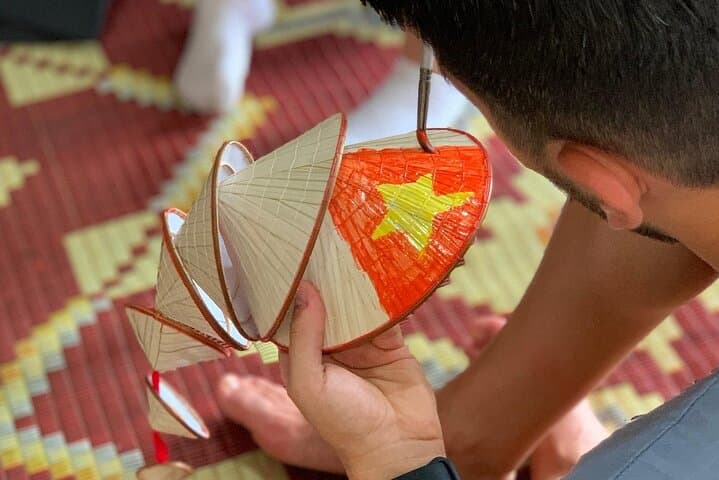
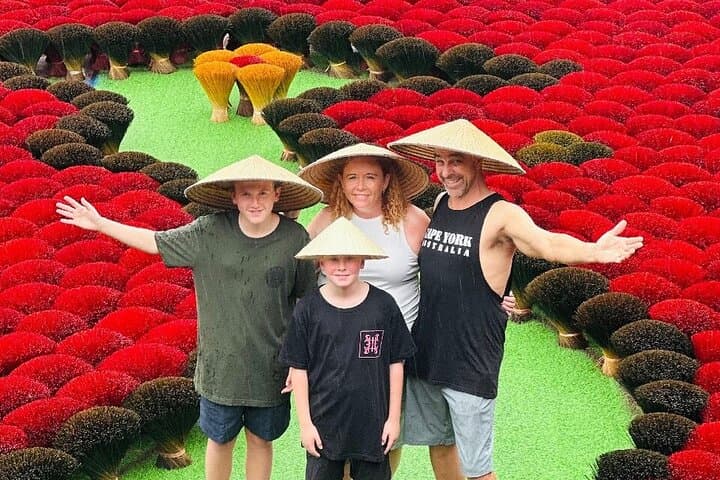
Expect close-up demonstrations at family-run workshops, a chance to paint and assemble your own hat, and vivid photo ops of stacked bundles of colored incense. The pace is gentle but intimate—workrooms are small and often busy, so observe etiquette and ask before shooting photos.
Practical guidance: wear closed-toe shoes for uneven village lanes, carry a reusable water bottle (one provided during the tour), and bring a small backpack for purchases. Morning departures are cooler and quieter; afternoons show more activity in workshops. Most interactions are conversational—English-speaking guides bridge language gaps—so bring curiosity and small local currency for souvenirs.
easy.
5 hours.
Suitable for all fitness levels; involves short walks and standing in workshops
Yes—air-conditioned pickup and drop-off are included from addresses in Hanoi Old Quarter.
No—the half-day tour does not include lunch; eat beforehand or bring snacks.
Yes—this tour is family-friendly and suitable for children, though supervision in workshops is advised.
Access is limited: narrow lanes and steps in traditional houses make full accessibility difficult for wheelchairs.
Chuong’s conical-hat craft stretches back roughly 300 years as a practical and cultural tradition; Quang Phu Cau’s incense production has supplied local rituals for generations.
Small workshops face pressure from industrial production and changing markets; support local artisans by buying minimally packaged products and avoiding single-use plastics.
Authentic Travel Ho Chi Minh operates guided outdoor trips and adventures with an emphasis on safety, stewardship, and memorable experiences.

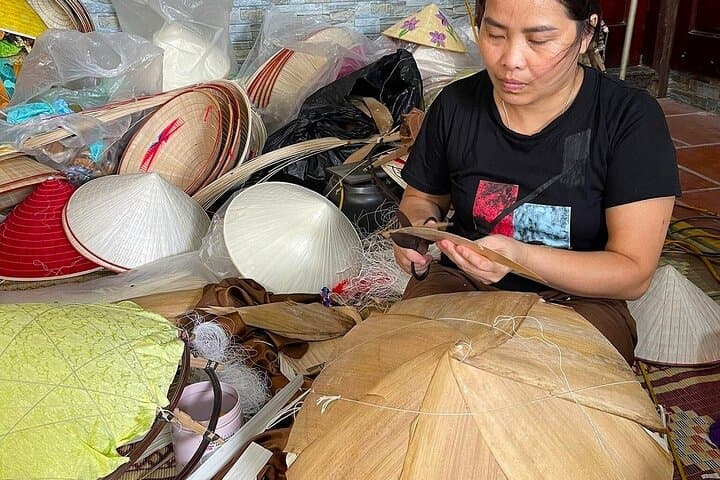
You step out of Hanoi’s Old Quarter into a ribbon of road that slides past rice paddies and low brick houses; the city’s noise loosens and a faint plume of incense curls ahead, marking the day’s first village. In Chuong, the sharp scissors of conical-hat makers clip bamboo and palm leaves with rhythmic precision—hands that have shaped the non la for generations. The smoke from Quang Phu Cau’s dye vats and incense kilns moves through alleys like a patient messenger, announcing a craft economy older than many modern streets.
You step out of Hanoi’s Old Quarter into a ribbon of road that slides past rice paddies and low brick houses; the city’s noise loosens and a faint plume of incense curls ahead, marking the day’s first village. In Chuong, the sharp scissors of conical-hat makers clip bamboo and palm leaves with rhythmic precision—hands that have shaped the non la for generations. The smoke from Quang Phu Cau’s dye vats and incense kilns moves through alleys like a patient messenger, announcing a craft economy older than many modern streets.
Both villages sit on the Red River plain; soils here are alluvium, flat and fertile, shaped by seasonal floods that enabled settled craft communities. Conical hats trace back centuries as practical sun and rain protection and as cultural markers in northern Vietnam. Incense, woven into ancestor rites and festivals, ties local industry to national ritual calendars.
Expect close-up demonstrations at family-run workshops, a chance to paint and assemble your own hat, and vivid photo ops of stacked bundles of colored incense. The pace is gentle but intimate—workrooms are small and often busy, so observe etiquette and ask before shooting photos.
Practical guidance: wear closed-toe shoes for uneven village lanes, carry a reusable water bottle (one provided during the tour), and bring a small backpack for purchases. Morning departures are cooler and quieter; afternoons show more activity in workshops. Most interactions are conversational—English-speaking guides bridge language gaps—so bring curiosity and small local currency for souvenirs.