THE ADVENTURE COLLECTIVE® · Independent discovery and booking for outdoor travel

Explore Jericho’s ancient layers and the Jordan River’s baptism sites on a focused half‑day drive from Bethlehem. This self‑guided tour pairs short walks at Tell es‑Sultan, Elisha’s Spring, Hisham Palace, and Qasr al‑Yahud with desert valley views and practical logistics for independent travelers.
Explore Jericho’s ancient layers and the Jordan River’s baptism sites on a focused half‑day drive from Bethlehem. This self‑guided tour pairs short walks at Tell es‑Sultan, Elisha’s Spring, Hisham Palace, and Qasr al‑Yahud with desert valley views and practical logistics for independent travelers.
Dusty morning light flattens the Jordan Valley as the vehicle drops you at the edge of Jericho — palms lean toward the river, and the low hills hold millennia of human footsteps. You step out into the hush of an oasis: Elisha’s spring gurgles with a steady, cool insistence, and Tell es‑Sultan’s low mound keeps its silent record of the world’s earliest settlements.
Verified experiences and guided adventures in the surrounding area.
Operated by Elijah Tours & Travel · Jericho, Jericho Governorate
Dusty morning light flattens the Jordan Valley as the vehicle drops you at the edge of Jericho — palms lean toward the river, and the low hills hold millennia of human footsteps. You step out into the hush of an oasis: Elisha’s spring gurgles with a steady, cool insistence, and Tell es‑Sultan’s low mound keeps its silent record of the world’s earliest settlements.
Jericho claims continuous habitation back to roughly 9000 BCE; the ruins at Tell es‑Sultan and the shell‑lined foundations at Hisham Palace speak to Neolithic communities and Umayyad artisans alike. Geologically, the Jordan Rift Valley is a graben faultline that carves abrupt relief between the Judean hills and the Jordan River plain, producing hot, arid lowlands dotted with freshwater springs that sustain date palms and reed beds.
Local culture blends Bedouin and Palestinian valley traditions—small olive‑wood workshops and market stalls offer practical crafts rather than glossy souvenirs. The Jordan River around Qasr al‑Yahud remains a living religious landscape where modern pilgrims follow ancient narratives.
Practical guidance: plan 4–6 hours, take sun protection and plenty of water, and carry ID—this is a border‑region excursion with checkpoints. Wear sturdy shoes for uneven ruins and short climbs; most stops are short walks from parking. Expect basic facilities at major sites and limited shade between stops. If you want a deeper historical commentary, hire a local guide in Jericho for the Tell es‑Sultan and Hisham Palace segments. Move deliberately, respect spring flows and religious practices, and you’ll leave with an acute sense of history pressed into the valley’s light.
easy.
4–6 hours.
Suitable for most fitness levels; involves short walks on uneven ground and brief standing at viewpoints.
This product is self‑guided with a driver only; the driver handles transport and basic logistics but does not provide a historical commentary.
Some sites like Hisham Palace may require a small local entrance fee (listed as not included); bring local currency (ILS/NIS) for tickets and tips.
Baptisms and religious rites occur at Qasr al‑Yahud but are subject to local regulations and seasonal water access; coordinate with local religious authorities if planning a ceremony.
Transportation options are listed as wheelchair accessible, but archaeological sites have limited accessibility due to terrain—check specific stops for suitability.
Jericho is one of the world’s oldest continuously inhabited settlements with layers dating back to roughly 9000 BCE; Hisham Palace dates to the Umayyad period (8th century).
Water resources in the Jordan Valley are fragile—avoid contaminating springs and use existing paths; support local businesses that follow sustainable water and waste practices.
Elijah Tours & Travel operates guided outdoor trips and adventures with an emphasis on safety, stewardship, and memorable experiences.
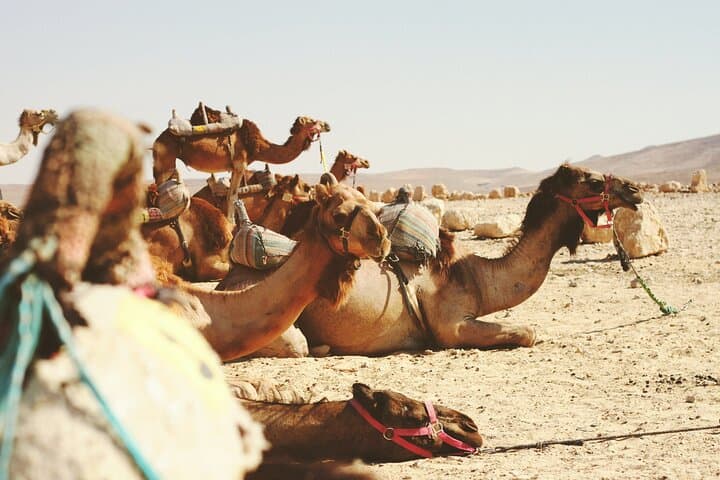
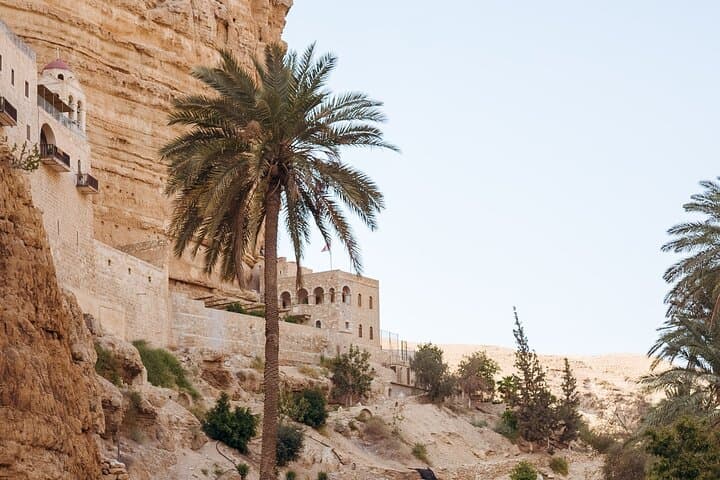
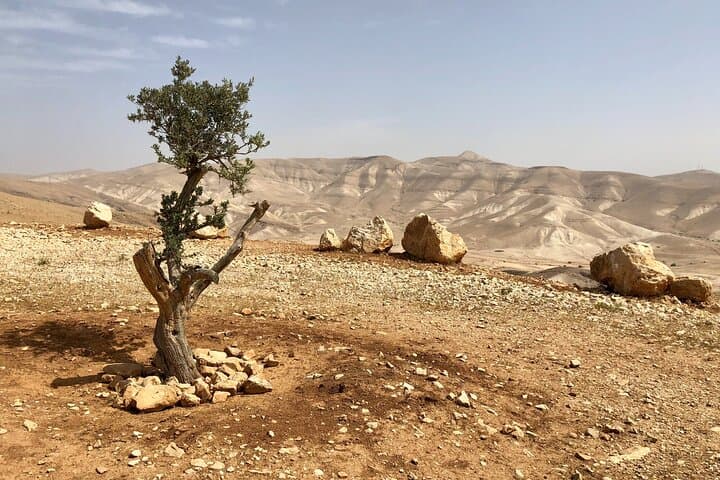
Dusty morning light flattens the Jordan Valley as the vehicle drops you at the edge of Jericho — palms lean toward the river, and the low hills hold millennia of human footsteps. You step out into the hush of an oasis: Elisha’s spring gurgles with a steady, cool insistence, and Tell es‑Sultan’s low mound keeps its silent record of the world’s earliest settlements.
Dusty morning light flattens the Jordan Valley as the vehicle drops you at the edge of Jericho — palms lean toward the river, and the low hills hold millennia of human footsteps. You step out into the hush of an oasis: Elisha’s spring gurgles with a steady, cool insistence, and Tell es‑Sultan’s low mound keeps its silent record of the world’s earliest settlements.
Jericho claims continuous habitation back to roughly 9000 BCE; the ruins at Tell es‑Sultan and the shell‑lined foundations at Hisham Palace speak to Neolithic communities and Umayyad artisans alike. Geologically, the Jordan Rift Valley is a graben faultline that carves abrupt relief between the Judean hills and the Jordan River plain, producing hot, arid lowlands dotted with freshwater springs that sustain date palms and reed beds.
Local culture blends Bedouin and Palestinian valley traditions—small olive‑wood workshops and market stalls offer practical crafts rather than glossy souvenirs. The Jordan River around Qasr al‑Yahud remains a living religious landscape where modern pilgrims follow ancient narratives.
Practical guidance: plan 4–6 hours, take sun protection and plenty of water, and carry ID—this is a border‑region excursion with checkpoints. Wear sturdy shoes for uneven ruins and short climbs; most stops are short walks from parking. Expect basic facilities at major sites and limited shade between stops. If you want a deeper historical commentary, hire a local guide in Jericho for the Tell es‑Sultan and Hisham Palace segments. Move deliberately, respect spring flows and religious practices, and you’ll leave with an acute sense of history pressed into the valley’s light.