THE ADVENTURE COLLECTIVE® · Independent discovery and booking for outdoor travel

Four hours of 4x4 scrambling through sandstone arches, Nabatean inscriptions, and red dunes—guided by Bedouin hosts who punctuate the route with steaming tea and desert stories. Optional camel rides and an overnight in a family-run camp extend the experience into night skies and campfire conversation.
Four hours of 4x4 scrambling through sandstone arches, Nabatean inscriptions, and red dunes—guided by Bedouin hosts who punctuate the route with steaming tea and desert stories. Optional camel rides and an overnight in a family-run camp extend the experience into night skies and campfire conversation.
The jeep shudders to a halt at the lip of a red sand dune and the desert opens like a map folded flat by wind. Your Bedouin guide—part cartographer, part storyteller—hands you steaming tea and points to a line of sculpted cliffs that hood the horizon. For the next four hours a 4x4 will thread between granite towers and sandstone arches, pausing where the landscape asks you to climb, peer into a canyon, or stand very still for a photograph.
Verified experiences and guided adventures in the surrounding area.
Operated by Wadi Rum Stars Valley · Wadi Rum Village, Aqaba Governorate
The jeep shudders to a halt at the lip of a red sand dune and the desert opens like a map folded flat by wind. Your Bedouin guide—part cartographer, part storyteller—hands you steaming tea and points to a line of sculpted cliffs that hood the horizon. For the next four hours a 4x4 will thread between granite towers and sandstone arches, pausing where the landscape asks you to climb, peer into a canyon, or stand very still for a photograph.
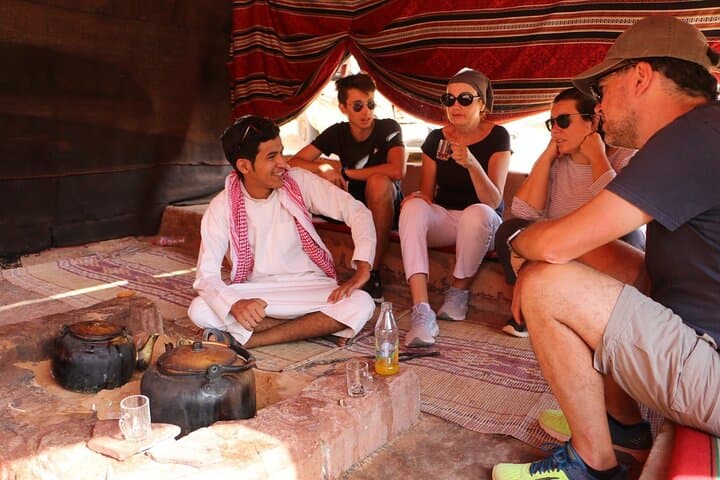
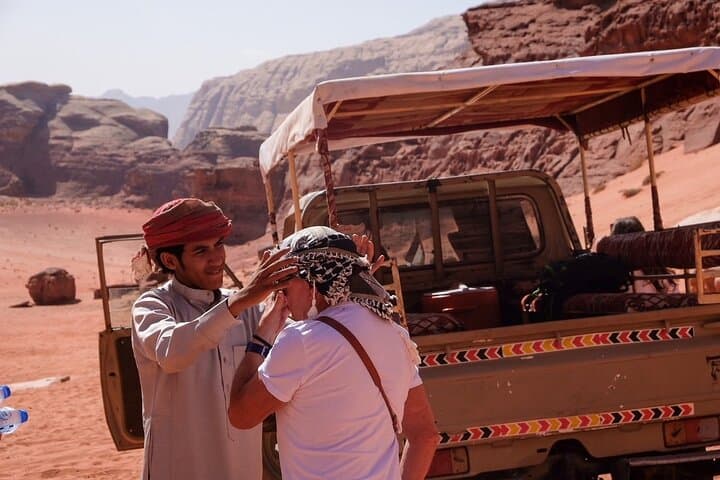
Wadi Rum is a geological theatre: layered sandstone and harder igneous intrusions hewn by millennia of wind and flash floods. Nabatean petroglyphs and Arabic inscriptions pepper the canyon walls; T.E. Lawrence and his wartime routes color the region's modern myth. The guides here belong to the al Zalahbieh Bedouin tribe—descendants of desert families who turn sand, stone, and scarce water into a working landscape and a living culture. Their stories, tea rituals, and knack for reading dunes are as much part of the tour as the rock bridges.
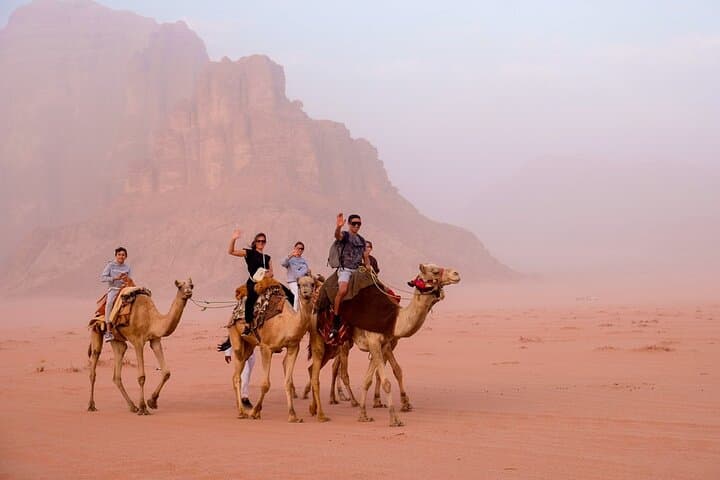
Expect a paced mix of driving and short scrambles. Typical stops include a natural water collection point where camels still drink, the red sand dune with a panoramic climb, a narrow canyon lined with inscriptions, the small arch for photos, and the Um Frouth rock bridge for a high-angle view. If you start in the afternoon, the jeep will likely aim for Um Sabatah to watch the sun negotiate the cliffs while you sip tea around a small fire. There's also an optional camel ride (30–120 minutes) and the chance to try sandboarding where conditions permit.
Practicalities: the tour is four hours and starts and ends at the Wadi Rum Village parking area next to the rest house. Bottled water and tea are included; bring at least 1.5–2 liters extra in summer. Wear closed-toe shoes with grip for scrambling and a hat and sunscreen—the desert gives no quarter to midday sun. Layers are crucial: temperatures swing dramatically between bright afternoon and a windy evening. Cash in Jordanian dinar is useful for tips, extra camel rides, or camp upgrades.
For those considering an overnight, the family-run Bedouin camp attached to the operator offers private tents, hot-water shared bathrooms, and a communal tent with charging station, Wi‑Fi, and telescope—an easy way to extend the desert's slow dusk into a star-lit morning. Respect the protected area by following your guide, staying on tracks, and leaving inscriptions and natural features intact. With good planning, a half day in Wadi Rum gives you geological grandeur, close cultural exchange, and a desert that insists you slow down and look closely.
moderate.
4 hours.
Suitable for travelers in average fitness; includes short hikes and light scrambling—sturdy legs and steady balance help.
Meet at the parking lot next to Wadi Rum Rest House in Wadi Rum Village; the operator collects all guests there.
No—camel rides are optional and cost extra (approx. 15, 20, or 35 JD for 30, 60, or 120 minutes respectively).
Yes—this tour is family-friendly, but parents should assess children's comfort with off-road rides and short rock scrambles.
Basic facilities are available at the village and at the family-run camp; during stops in the desert restroom options are limited.
Tipping is customary—10–15% of the tour price or a small cash amount per traveler is appreciated for good service.
Yes—there's an option to extend the tour with an overnight in private tents, including dinner and breakfast; book in advance if needed.
Wadi Rum contains Nabatean and Thamudic inscriptions and routes tied to Lawrence of Arabia; Bedouin families like al Zalahbieh have lived here for centuries.
Wadi Rum is a protected area—stay on designated tracks, avoid touching ancient inscriptions, and use local operators who support conservation and community livelihoods.
Wadi Rum Stars Valley operates guided outdoor trips and adventures with an emphasis on safety, stewardship, and memorable experiences.
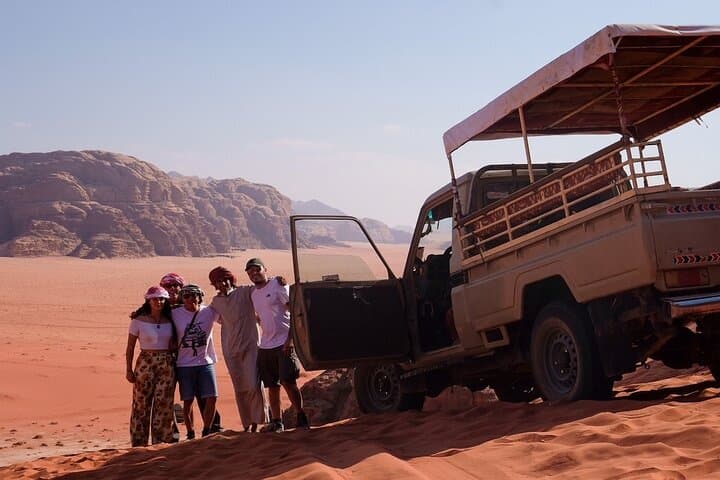
The jeep shudders to a halt at the lip of a red sand dune and the desert opens like a map folded flat by wind. Your Bedouin guide—part cartographer, part storyteller—hands you steaming tea and points to a line of sculpted cliffs that hood the horizon. For the next four hours a 4x4 will thread between granite towers and sandstone arches, pausing where the landscape asks you to climb, peer into a canyon, or stand very still for a photograph.
The jeep shudders to a halt at the lip of a red sand dune and the desert opens like a map folded flat by wind. Your Bedouin guide—part cartographer, part storyteller—hands you steaming tea and points to a line of sculpted cliffs that hood the horizon. For the next four hours a 4x4 will thread between granite towers and sandstone arches, pausing where the landscape asks you to climb, peer into a canyon, or stand very still for a photograph.
Wadi Rum is a geological theatre: layered sandstone and harder igneous intrusions hewn by millennia of wind and flash floods. Nabatean petroglyphs and Arabic inscriptions pepper the canyon walls; T.E. Lawrence and his wartime routes color the region's modern myth. The guides here belong to the al Zalahbieh Bedouin tribe—descendants of desert families who turn sand, stone, and scarce water into a working landscape and a living culture. Their stories, tea rituals, and knack for reading dunes are as much part of the tour as the rock bridges.
Expect a paced mix of driving and short scrambles. Typical stops include a natural water collection point where camels still drink, the red sand dune with a panoramic climb, a narrow canyon lined with inscriptions, the small arch for photos, and the Um Frouth rock bridge for a high-angle view. If you start in the afternoon, the jeep will likely aim for Um Sabatah to watch the sun negotiate the cliffs while you sip tea around a small fire. There's also an optional camel ride (30–120 minutes) and the chance to try sandboarding where conditions permit.
Practicalities: the tour is four hours and starts and ends at the Wadi Rum Village parking area next to the rest house. Bottled water and tea are included; bring at least 1.5–2 liters extra in summer. Wear closed-toe shoes with grip for scrambling and a hat and sunscreen—the desert gives no quarter to midday sun. Layers are crucial: temperatures swing dramatically between bright afternoon and a windy evening. Cash in Jordanian dinar is useful for tips, extra camel rides, or camp upgrades.
For those considering an overnight, the family-run Bedouin camp attached to the operator offers private tents, hot-water shared bathrooms, and a communal tent with charging station, Wi‑Fi, and telescope—an easy way to extend the desert's slow dusk into a star-lit morning. Respect the protected area by following your guide, staying on tracks, and leaving inscriptions and natural features intact. With good planning, a half day in Wadi Rum gives you geological grandeur, close cultural exchange, and a desert that insists you slow down and look closely.