THE ADVENTURE COLLECTIVE® · Independent discovery and booking for outdoor travel

In four hours a 4x4 threads through red dunes, narrows canyons and rock bridges while a Bedouin guide shares petroglyphs and local lore. This half-day Wadi Rum jeep tour pairs accessible scrambling, sandboarding and big desert views—ideal for travelers short on time.
In four hours a 4x4 threads through red dunes, narrows canyons and rock bridges while a Bedouin guide shares petroglyphs and local lore. This half-day Wadi Rum jeep tour pairs accessible scrambling, sandboarding and big desert views—ideal for travelers short on time.
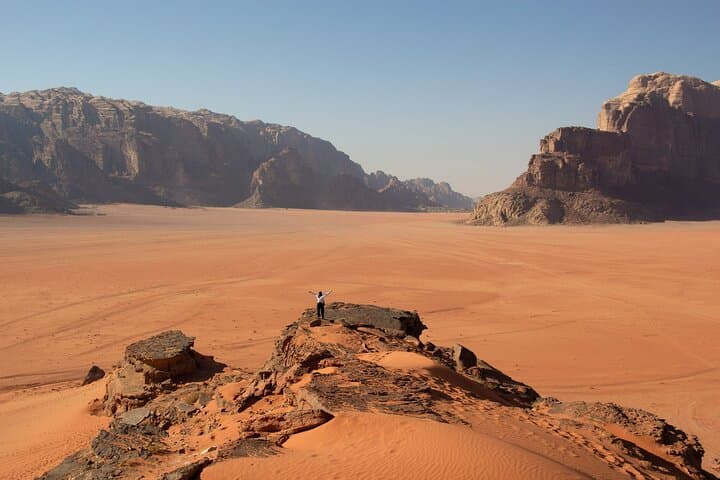
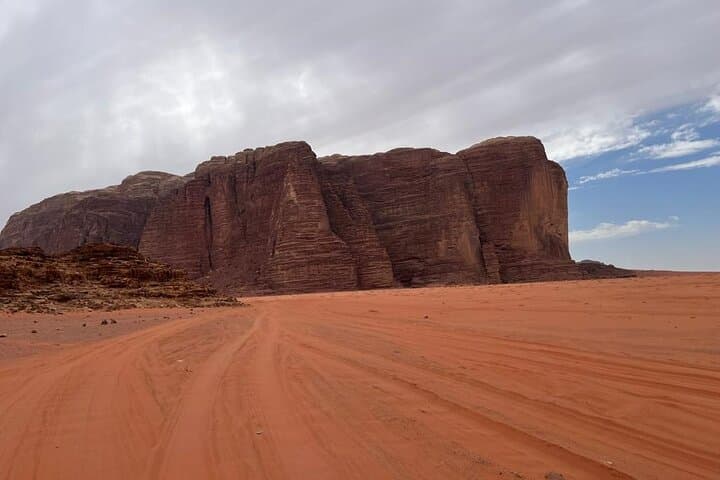
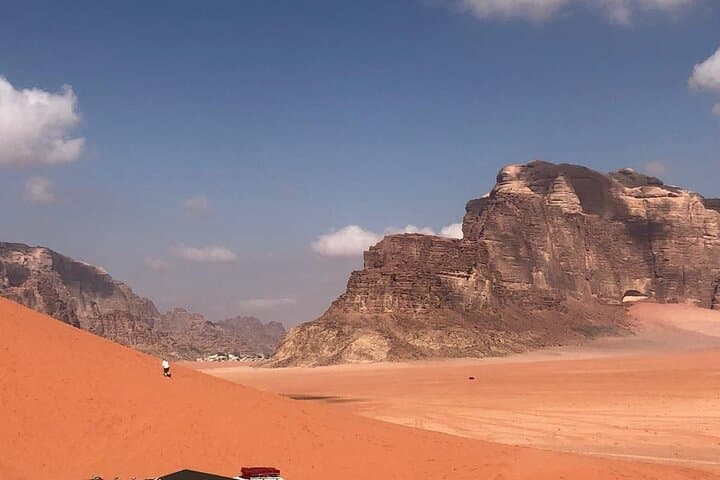
A winded ribbon of red sand glows under the sun as the 4x4 drops off a lip and the desert opens into an ocean of orange. On this half-day jeep tour through Wadi Rum, drivers thread between sandstone cliffs and wind-sculpted arches while the Bedouin guide points out petroglyphs, tracks, and the best place to dismount for photographs. The engine’s rumble is a familiar companion here; the desert answers with its own slow, constant movement—dunes that shift like a living thing and rock faces that hold inscriptions older than most nations.
Verified experiences and guided adventures in the surrounding area.
Operated by Wadi Rum Nights · Wadi Rum Village, Aqaba Governorate
A winded ribbon of red sand glows under the sun as the 4x4 drops off a lip and the desert opens into an ocean of orange. On this half-day jeep tour through Wadi Rum, drivers thread between sandstone cliffs and wind-sculpted arches while the Bedouin guide points out petroglyphs, tracks, and the best place to dismount for photographs. The engine’s rumble is a familiar companion here; the desert answers with its own slow, constant movement—dunes that shift like a living thing and rock faces that hold inscriptions older than most nations.
Geology in Wadi Rum reads like a slow-motion drama: Cambrian sandstone stacked and scored by millions of years of wind and water. The red sand owes its hue to iron oxide; the cliffs keep cool shadows where Nabataean and Thamudic carvings survive. The tour stops at the Red Sand Dune (Al Ramal), Khazali Canyon with its carved human and animal figures, Little Rock Bridge and the lower Um Fruth Rock Bridge—each site layered with human stories. T. E. Lawrence’s name floats through local lore; the modest ruin known as Lawrence’s House sits on older Nabataean foundations and offers a view that explains why people used this corridor for travel and shelter.
Culturally, the trip is as much about hospitality as it is about landscape. Expect strong, plain tea and commentary from a Bedouin guide who knows the desert’s routes and rhythms. Sandboarding is offered free of charge at the big dune; it’s playful, brief and best attempted once you’ve tested footing on dry sand. The whole route is compact—roughly a 4-hour circuit beginning and ending at Wadi Rum Village parking, about 7 km from the Visitor Center—so it’s ideal for travelers short on time but wanting a concentrated encounter with the desert.
Practicalities are straightforward: the terrain is sandy and uneven, with short scrambles onto rock bridges that aren’t technically difficult but require steady footing. Temperatures swing—days can be hot; mornings and evenings crisp—so dress in layers, bring strong sun protection and carry a reusable water bottle even though bottled water is included. If you’re coming from Petra or Aqaba, buses and taxis serve the area; the tour is shared and limited to small groups, and cancellation is possible up to 24 hours before departure.
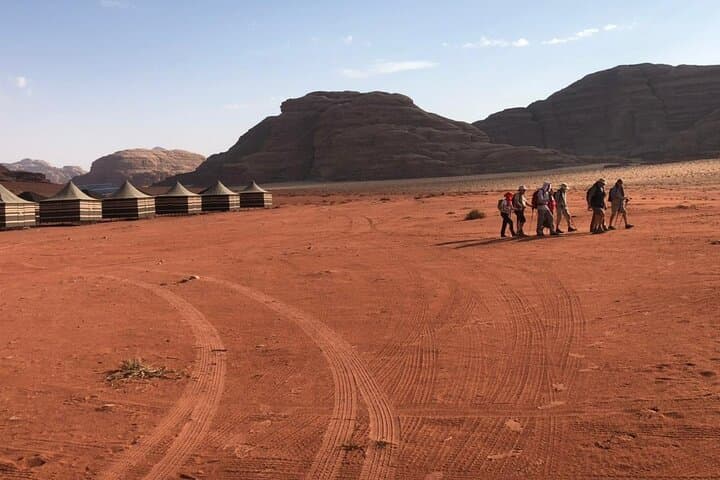
For photographers, aim for low sun on the dunes or the warm light on canyon walls. For those after local color, listen for stories about caravan routes and watch for signs of recent nomadic life: tents, goat tracks and shepherding calls. This half-day jeep tour gives a brisk, sensory-first introduction to Wadi Rum—its geology, its histories and the human rhythms that still mark this desert.
moderate.
4 hours.
Moderate fitness; able to climb short rock scrambles and stand on uneven desert slopes for 10–20 minutes at a time.
The tour meets at the Wadi Rum Parking/Wadi Rum Village point on maps (Wadi Rum Nights); you can reach it by taxi from Aqaba or Petra, or by regional bus to the village.
Yes—sandboarding is offered free during the stop at the Red Sand Dune (Al Ramal); bring sturdy shoes and be prepared for a short walk up the dune.
Basic restroom facilities exist near the village and visitor center; on-route stops in the reserve are primitive—plan accordingly.
Children can join but some sections involve short climbs; the tour is not recommended for pregnant travelers or those with serious spinal or heart conditions.
Mention dietary or accessibility needs when booking; guides can usually accommodate beverage preferences but vehicle space and terrain limit mobility access.
Most Bedouin guides on this route speak English; ask the operator if you require another language.
Wadi Rum preserves rock art and inscriptions from Thamudic, Nabataean and Islamic periods; Lawrence of Arabia’s stories are woven into the modern tour narrative but the landscape’s human record is far older.
Wadi Rum is a protected area with limits on off-track driving and camping; stick to marked routes, avoid disturbing rock art and reduce plastic use to protect fragile desert ecosystems.
Wadi Rum Nights operates guided outdoor trips and adventures with an emphasis on safety, stewardship, and memorable experiences.
A winded ribbon of red sand glows under the sun as the 4x4 drops off a lip and the desert opens into an ocean of orange. On this half-day jeep tour through Wadi Rum, drivers thread between sandstone cliffs and wind-sculpted arches while the Bedouin guide points out petroglyphs, tracks, and the best place to dismount for photographs. The engine’s rumble is a familiar companion here; the desert answers with its own slow, constant movement—dunes that shift like a living thing and rock faces that hold inscriptions older than most nations.
A winded ribbon of red sand glows under the sun as the 4x4 drops off a lip and the desert opens into an ocean of orange. On this half-day jeep tour through Wadi Rum, drivers thread between sandstone cliffs and wind-sculpted arches while the Bedouin guide points out petroglyphs, tracks, and the best place to dismount for photographs. The engine’s rumble is a familiar companion here; the desert answers with its own slow, constant movement—dunes that shift like a living thing and rock faces that hold inscriptions older than most nations.
Geology in Wadi Rum reads like a slow-motion drama: Cambrian sandstone stacked and scored by millions of years of wind and water. The red sand owes its hue to iron oxide; the cliffs keep cool shadows where Nabataean and Thamudic carvings survive. The tour stops at the Red Sand Dune (Al Ramal), Khazali Canyon with its carved human and animal figures, Little Rock Bridge and the lower Um Fruth Rock Bridge—each site layered with human stories. T. E. Lawrence’s name floats through local lore; the modest ruin known as Lawrence’s House sits on older Nabataean foundations and offers a view that explains why people used this corridor for travel and shelter.
Culturally, the trip is as much about hospitality as it is about landscape. Expect strong, plain tea and commentary from a Bedouin guide who knows the desert’s routes and rhythms. Sandboarding is offered free of charge at the big dune; it’s playful, brief and best attempted once you’ve tested footing on dry sand. The whole route is compact—roughly a 4-hour circuit beginning and ending at Wadi Rum Village parking, about 7 km from the Visitor Center—so it’s ideal for travelers short on time but wanting a concentrated encounter with the desert.
Practicalities are straightforward: the terrain is sandy and uneven, with short scrambles onto rock bridges that aren’t technically difficult but require steady footing. Temperatures swing—days can be hot; mornings and evenings crisp—so dress in layers, bring strong sun protection and carry a reusable water bottle even though bottled water is included. If you’re coming from Petra or Aqaba, buses and taxis serve the area; the tour is shared and limited to small groups, and cancellation is possible up to 24 hours before departure.
For photographers, aim for low sun on the dunes or the warm light on canyon walls. For those after local color, listen for stories about caravan routes and watch for signs of recent nomadic life: tents, goat tracks and shepherding calls. This half-day jeep tour gives a brisk, sensory-first introduction to Wadi Rum—its geology, its histories and the human rhythms that still mark this desert.