THE ADVENTURE COLLECTIVE® · Independent discovery and booking for outdoor travel

Explore Jakarta’s split personality on a 3–4 hour half‑day tour that pairs modern monuments with Old Batavia’s colonial streets. Perfect for travelers who want history, architecture, and quick cultural immersion.
Explore Jakarta’s split personality on a 3–4 hour half‑day tour that pairs modern monuments with Old Batavia’s colonial streets. Perfect for travelers who want history, architecture, and quick cultural immersion.
You step out of an air-conditioned van and into a vast city that moves at its own tempo—traffic honking, vendors calling, and the skyline pressing forward like a promise. The tour threads through Merdeka Square, pauses for a frame at the Selamat Datang monument, then lays the past beside the present as you cross from cathedral to mosque in a single block.
Verified experiences and guided adventures in the surrounding area.
Operated by TRIPEDIA · Jakarta, DKI Jakarta
You step out of an air-conditioned van and into a vast city that moves at its own tempo—traffic honking, vendors calling, and the skyline pressing forward like a promise. The tour threads through Merdeka Square, pauses for a frame at the Selamat Datang monument, then lays the past beside the present as you cross from cathedral to mosque in a single block.
Jakarta’s Old Town (Kota Tua) began as Batavia, the Dutch VOC hub of the 17th century, its brick facades and austere town hall carrying the imprint of colonial trade. Geologically the city sits on low coastal plains and estuarine deposits, which shaped its historic port life—Sunda Kelapa’s wooden phinisis still bob where sailors first traded spices and culture.
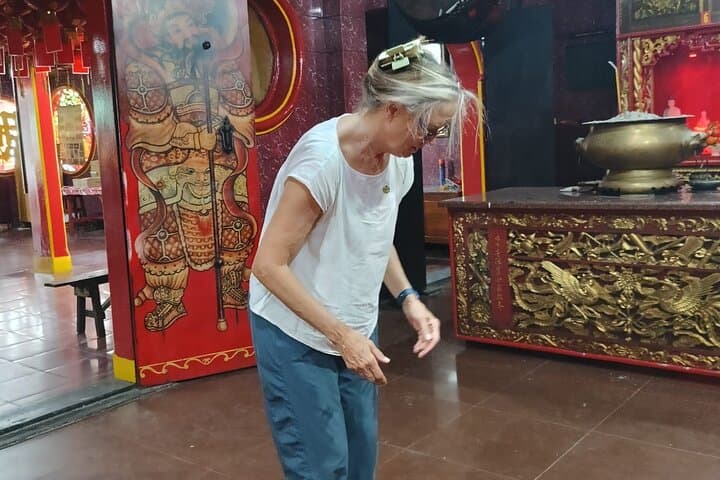
Culturally the route highlights contrasts: Istiqlal Mosque’s monumental scale and ritual practices, the neo‑Gothic Cathedral across the street, and the layered commerce of Glodok (Chinatown) with its markets and temples. Local guides add texture—puppet makers’ studios, colonial anecdotes, and tips for navigating tuk‑tuks and crowded alleys.
Practically, the half‑day format runs 3–4 hours with hotel pick‑up and air‑conditioned transport between stops; expect short walks, photo stops, and one or two indoor visits (shoe removal at the mosque). Carry modest clothing for religious sites, lightweight shoes for cobbled squares, and a small amount of cash for street snacks and souvenirs. Timing matters: mornings are cooler and give clearer light for Monument and Kota Tua photos.
easy.
3–4 hours.
Suitable for most fitness levels; involves short, mostly flat walks and standing at photo stops
The tour lasts approximately 3–4 hours including pick‑up and drop‑off; actual sightseeing time is about 2–3 hours.
Yes—outside photos are standard and guided visits inside are included when the mosque is open; note the mosque is closed to visitors on Fridays for midday prayers.
Yes—private air‑conditioned transport with pick‑up and drop‑off across Jakarta is included in the tour price.
Yes—there’s time to visit a wayang (puppet) studio in Kota Tua; purchases are available but optional and typically paid in cash.
Jakarta grew from the 17th‑century VOC port Batavia; colonial architecture in Kota Tua reflects Dutch trading-era urban planning and administration.
Heritage buildings are fragile on Jakarta’s soft ground; practice low-impact visitation, avoid touching artifacts, and support local guides and museums to fund preservation.
TRIPEDIA operates guided outdoor trips and adventures with an emphasis on safety, stewardship, and memorable experiences.



You step out of an air-conditioned van and into a vast city that moves at its own tempo—traffic honking, vendors calling, and the skyline pressing forward like a promise. The tour threads through Merdeka Square, pauses for a frame at the Selamat Datang monument, then lays the past beside the present as you cross from cathedral to mosque in a single block.
You step out of an air-conditioned van and into a vast city that moves at its own tempo—traffic honking, vendors calling, and the skyline pressing forward like a promise. The tour threads through Merdeka Square, pauses for a frame at the Selamat Datang monument, then lays the past beside the present as you cross from cathedral to mosque in a single block.
Jakarta’s Old Town (Kota Tua) began as Batavia, the Dutch VOC hub of the 17th century, its brick facades and austere town hall carrying the imprint of colonial trade. Geologically the city sits on low coastal plains and estuarine deposits, which shaped its historic port life—Sunda Kelapa’s wooden phinisis still bob where sailors first traded spices and culture.
Culturally the route highlights contrasts: Istiqlal Mosque’s monumental scale and ritual practices, the neo‑Gothic Cathedral across the street, and the layered commerce of Glodok (Chinatown) with its markets and temples. Local guides add texture—puppet makers’ studios, colonial anecdotes, and tips for navigating tuk‑tuks and crowded alleys.
Practically, the half‑day format runs 3–4 hours with hotel pick‑up and air‑conditioned transport between stops; expect short walks, photo stops, and one or two indoor visits (shoe removal at the mosque). Carry modest clothing for religious sites, lightweight shoes for cobbled squares, and a small amount of cash for street snacks and souvenirs. Timing matters: mornings are cooler and give clearer light for Monument and Kota Tua photos.