THE ADVENTURE COLLECTIVE® · Independent discovery and booking for outdoor travel

Learn to breathe underwater on Aruba’s shallow reefs and wrecks in a single half-day course. Includes pool instruction, all gear, and an instructor-accompanied open-water dive to 20–30 feet.
Learn to breathe underwater on Aruba’s shallow reefs and wrecks in a single half-day course. Includes pool instruction, all gear, and an instructor-accompanied open-water dive to 20–30 feet.
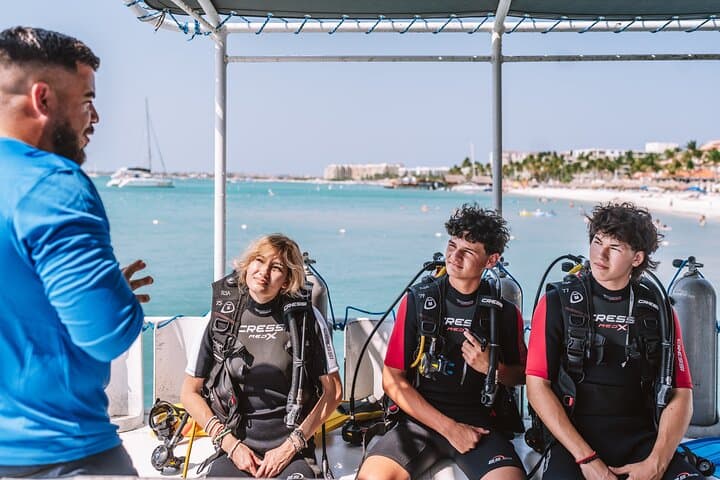
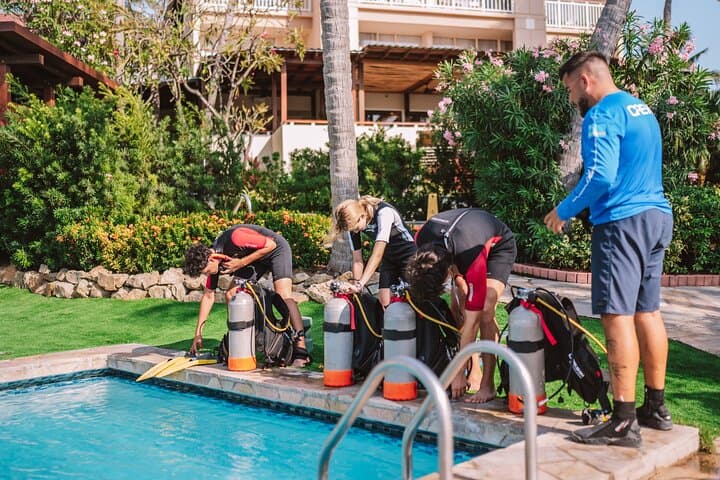
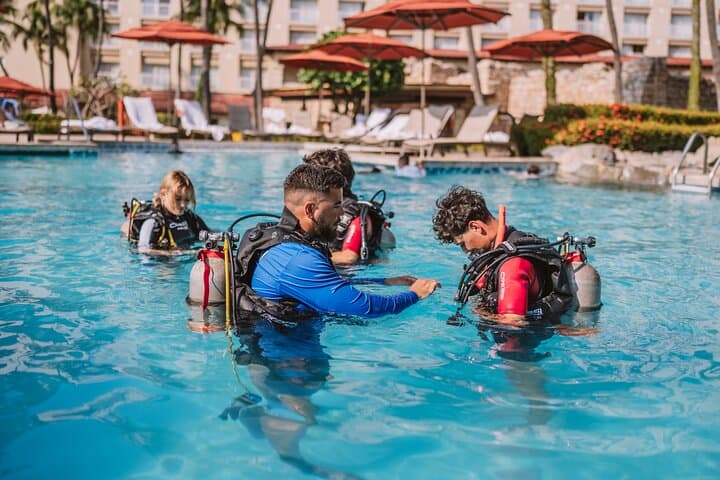
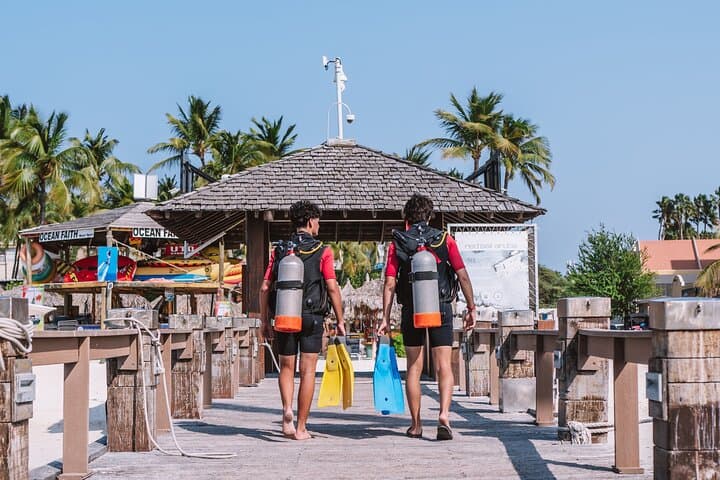
Salt air and sun-warmed decks set the pace before you ever slip a mask over your face. In this half-day intro dive you move from a brief classroom to a supervised pool session, then out to a short boat ride where a single guided open-water tank places you in 20–30 feet of clear Caribbean water.
Verified experiences and guided adventures in the surrounding area.
Operated by Red Sail Sports - Aruba · Oranjestad, Aruba
Salt air and sun-warmed decks set the pace before you ever slip a mask over your face. In this half-day intro dive you move from a brief classroom to a supervised pool session, then out to a short boat ride where a single guided open-water tank places you in 20–30 feet of clear Caribbean water.
Aruba’s leeward shore is built on ancient limestone and coral outcrops; reefs and scattered wrecks like the Antilla offer shallow structure alive with parrotfish, angelfish and hard coral. The island’s Dutch-Caribbean culture still orients around the sea — fishing, boatbuilding and a relaxed seaside hospitality — so operators here keep safety and easy access front and center. Expect practical briefings on pressure, breathing and mask skills, followed by a 1.5-hour boat transit and a 30–40 minute instructor-accompanied dive to a shallow reef or wreck.
Practically: arrive hydrated, well-rested and ready to complete a medical screening. All dive gear and instruction are included; instructors use a step-down platform and twin ladders for easy entry and exit. Visibility is typically good year-round, but wind and swell can shorten the excursion or move it to a different shallow site.
This experience is ideal when you want the weightless freedom of breathing underwater without committing to certification. If you plan to fly afterward, leave at least 18–24 hours after diving. Bring reef-safe sunscreen, a swimsuit, a towel, and a sense of curiosity — the Caribbean below is patient but direct, and the guide will keep you moving forward safely.
moderate.
4 hours.
Moderate fitness—comfortable swimming and basic mobility needed for ladder entries and a surface swim.
No — this intro course is designed for beginners and includes pool training and a guided open-water dive with an instructor.
The typical open-water dive for this program is in the 20–30 foot range (6–9 meters), appropriate for first-time divers.
Yes, the operator supplies masks, regulators, BCDs, tanks and weights; you just need personal items like a swimsuit and towel.
No — congested air spaces increase risk while diving; clear sinuses and medical clearance are required.
Aruba’s reefs and wrecks reflect a long maritime history; the German cargo ship Antilla, sunk in WWII, is a well-known shallow wreck near Aruba’s coast.
Operators in Aruba emphasize reef-safe products and responsible buoyancy to limit coral contact; avoid touching marine life and use reef-safe sunscreen to reduce chemical damage.
Red Sail Sports - Aruba operates guided outdoor trips and adventures with an emphasis on safety, stewardship, and memorable experiences.
Salt air and sun-warmed decks set the pace before you ever slip a mask over your face. In this half-day intro dive you move from a brief classroom to a supervised pool session, then out to a short boat ride where a single guided open-water tank places you in 20–30 feet of clear Caribbean water.
Salt air and sun-warmed decks set the pace before you ever slip a mask over your face. In this half-day intro dive you move from a brief classroom to a supervised pool session, then out to a short boat ride where a single guided open-water tank places you in 20–30 feet of clear Caribbean water.
Aruba’s leeward shore is built on ancient limestone and coral outcrops; reefs and scattered wrecks like the Antilla offer shallow structure alive with parrotfish, angelfish and hard coral. The island’s Dutch-Caribbean culture still orients around the sea — fishing, boatbuilding and a relaxed seaside hospitality — so operators here keep safety and easy access front and center. Expect practical briefings on pressure, breathing and mask skills, followed by a 1.5-hour boat transit and a 30–40 minute instructor-accompanied dive to a shallow reef or wreck.
Practically: arrive hydrated, well-rested and ready to complete a medical screening. All dive gear and instruction are included; instructors use a step-down platform and twin ladders for easy entry and exit. Visibility is typically good year-round, but wind and swell can shorten the excursion or move it to a different shallow site.
This experience is ideal when you want the weightless freedom of breathing underwater without committing to certification. If you plan to fly afterward, leave at least 18–24 hours after diving. Bring reef-safe sunscreen, a swimsuit, a towel, and a sense of curiosity — the Caribbean below is patient but direct, and the guide will keep you moving forward safely.