THE ADVENTURE COLLECTIVE® · Independent discovery and booking for outdoor travel

Cycle from Hoi An into the working lanes of Kim Bong Village to meet carpenters, mat weavers and rice-paper makers. This half-day tour pairs gentle riding with hands-on craft experiences and an optional boat return.
Cycle from Hoi An into the working lanes of Kim Bong Village to meet carpenters, mat weavers and rice-paper makers. This half-day tour pairs gentle riding with hands-on craft experiences and an optional boat return.
A river wind moves through the rice paddies as cyclists roll off Hoi An's busy streets and onto narrow village lanes. The tour opens with a soft rhythm—pedal, pass a water buffalo, wave to children at a riverside school—until the neat workshops of Kim Bong Village appear, their cedar shavings drifting like confetti.
Verified experiences and guided adventures in the surrounding area.
Operated by VietSilk Travel · Hoi An, Quang Nam
A river wind moves through the rice paddies as cyclists roll off Hoi An's busy streets and onto narrow village lanes. The tour opens with a soft rhythm—pedal, pass a water buffalo, wave to children at a riverside school—until the neat workshops of Kim Bong Village appear, their cedar shavings drifting like confetti.
Kim Bong sits on Cam Kim island opposite Hoi An, in a landscape shaped by the Thu Bon River's slow deposits. Once a hub for boat-building and carpentry tied to Hoi An’s centuries-long role as a trading port, the village still produces furniture and carved keepsakes using techniques handed down through families. A short ride reveals mat-weaving houses, rice paper kitchens where thin circles dry in sun and breeze, and temples whose roofs map the region’s cultural layers.
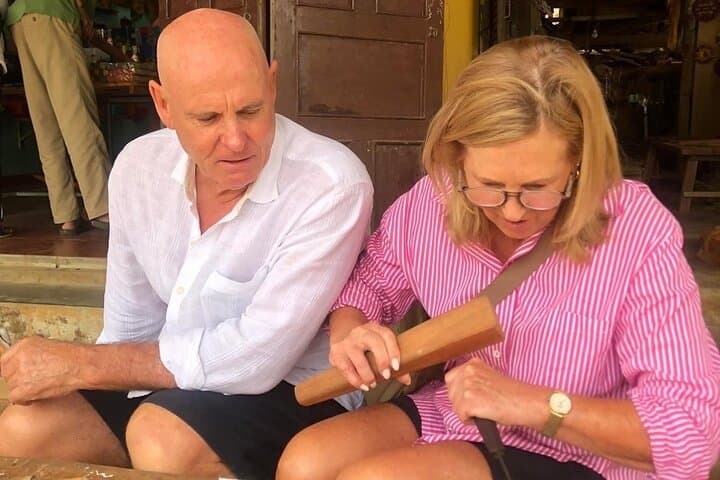
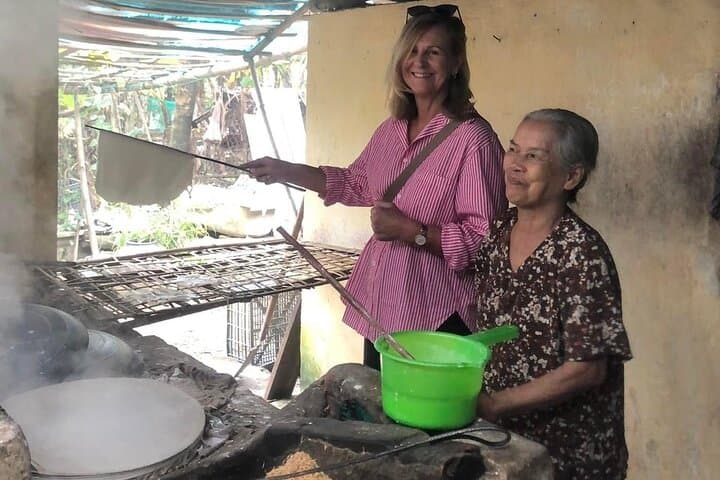
The experience balances observation and participation: visitors watch master carpenters carve and can try rice-paper pressing under local guidance. Guides share stories about boat commerce, local materials like jackfruit and tamarind used in construction, and how seasonality governs life along the river.
Practical notes: expect 4–5 hours with flat to gently rolling terrain, mainly paved and packed-dirt lanes. Wear closed-toe shoes, bring sun protection and insect repellent, and choose the boat return if you want to trade a final pedal for a calm river glide back to Hoi An. Timing matters—early mornings or late afternoons offer cooler air and the best light for photos, while midday brings heat and more local activity in the workshops.
moderate.
4–5 hours.
Moderate fitness for 4–5 hours of mostly easy cycling with occasional short walks
No expert skills needed—basic bike handling and comfort riding on mixed surfaces are sufficient.
Yes—most tours offer an optional boat return, which is recommended if you prefer a shorter ride back.
A local lunch is included; dietary requests should be noted at booking to accommodate restrictions.
Children who can safely ride a bike for several kilometers and follow guide instructions are generally fine; check age restrictions with the operator.
Hoi An was a major Southeast Asian trading port from the 15th–19th centuries; Kim Bong's carpentry and boatbuilding traditions grew from that maritime economy.
Support local craftspeople by buying directly and avoid single-use plastics; stay on designated paths to protect rice paddies and waterways.
VietSilk Travel operates guided outdoor trips and adventures with an emphasis on safety, stewardship, and memorable experiences.
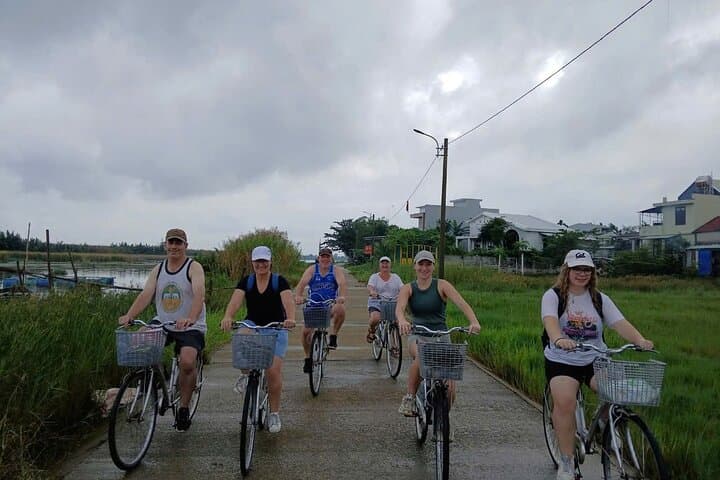
A river wind moves through the rice paddies as cyclists roll off Hoi An's busy streets and onto narrow village lanes. The tour opens with a soft rhythm—pedal, pass a water buffalo, wave to children at a riverside school—until the neat workshops of Kim Bong Village appear, their cedar shavings drifting like confetti.
A river wind moves through the rice paddies as cyclists roll off Hoi An's busy streets and onto narrow village lanes. The tour opens with a soft rhythm—pedal, pass a water buffalo, wave to children at a riverside school—until the neat workshops of Kim Bong Village appear, their cedar shavings drifting like confetti.
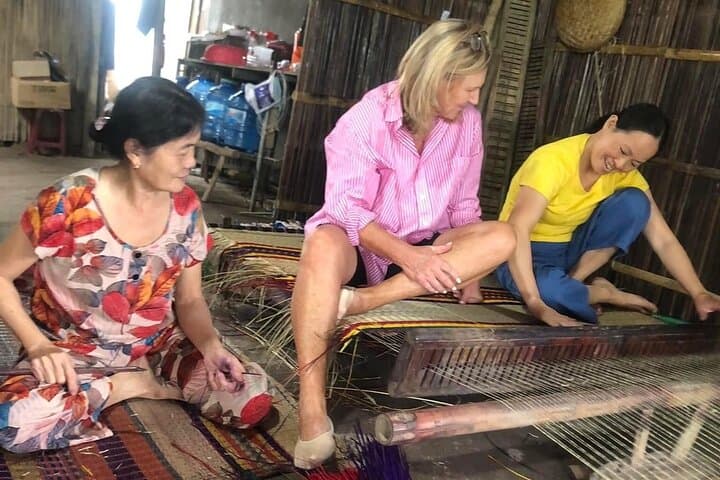
Kim Bong sits on Cam Kim island opposite Hoi An, in a landscape shaped by the Thu Bon River's slow deposits. Once a hub for boat-building and carpentry tied to Hoi An’s centuries-long role as a trading port, the village still produces furniture and carved keepsakes using techniques handed down through families. A short ride reveals mat-weaving houses, rice paper kitchens where thin circles dry in sun and breeze, and temples whose roofs map the region’s cultural layers.
The experience balances observation and participation: visitors watch master carpenters carve and can try rice-paper pressing under local guidance. Guides share stories about boat commerce, local materials like jackfruit and tamarind used in construction, and how seasonality governs life along the river.
Practical notes: expect 4–5 hours with flat to gently rolling terrain, mainly paved and packed-dirt lanes. Wear closed-toe shoes, bring sun protection and insect repellent, and choose the boat return if you want to trade a final pedal for a calm river glide back to Hoi An. Timing matters—early mornings or late afternoons offer cooler air and the best light for photos, while midday brings heat and more local activity in the workshops.