THE ADVENTURE COLLECTIVE® · Independent discovery and booking for outdoor travel

Climb a less-traveled route to the top of Rio’s Sugarloaf Mountain: steep granite scrambles, a guided vertical pitch, and unmatched views over Guanabara Bay before a cable-car descent. Practical tips and what to expect on this half-day adventure.
Climb a less-traveled route to the top of Rio’s Sugarloaf Mountain: steep granite scrambles, a guided vertical pitch, and unmatched views over Guanabara Bay before a cable-car descent. Practical tips and what to expect on this half-day adventure.
The trail begins in the warm, salt-scented air of Urca—you meet the guide by the angel statue and feel the city peel away as the granite face rises above you.
Verified experiences and guided adventures in the surrounding area.
Operated by Rio Mountain Sports · Rio de Janeiro, Rio de Janeiro
The trail begins in the warm, salt-scented air of Urca—you meet the guide by the angel statue and feel the city peel away as the granite face rises above you.
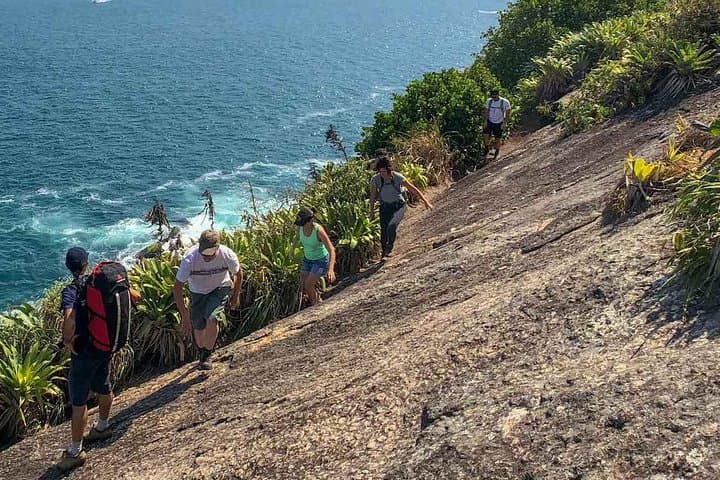
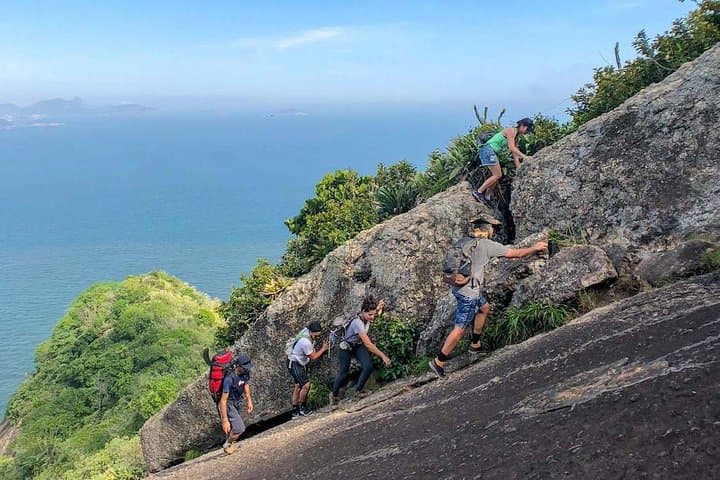
Sugarloaf is a steep, compact climb: exposed granite slabs, short technical scrambles and one protected vertical pitch that our guides rig for you. The rock is ancient—part of Rio’s granite and gneiss backbone carved by time—and the route rewards effort with sweeping views of Guanabara Bay, Copacabana’s curve, and Christ the Redeemer watching from a distant ridge. Locals have long revered this monolith; the cable car that opened in the early 20th century helped make Sugarloaf an icon of Carioca pride and seaside leisure.
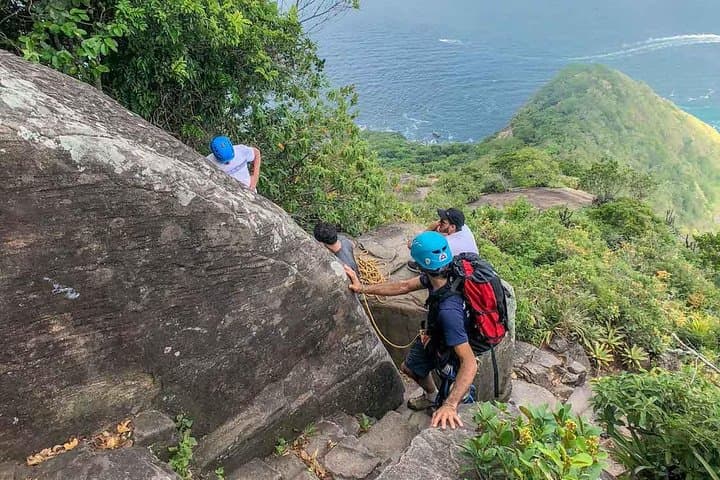
Expect stair-like granite steps, ledges for rest, and occasional jungle tangles where the Atlantic Forest presses close. The vertical section is climbed with harness and rope—no prior lead experience required because guides manage the protection and coach you through technique.
Practical guidance: come with 1.5L of water, closed-toe shoes with grippy soles, sun protection and insect repellent. Allow about 2–3 hours to reach the summit at a measured pace and another hour for the return via Morro da Urca and the cable car descent. Weather can change quickly—rain slicks rock and raises difficulty—so morning departures give firmer surfaces and clearer panoramas. Leave no trace: pack out trash, stay on the line, and follow the guides’ instructions for a safe ascent.
challenging.
4 hours.
Best for people with moderate to good cardiovascular fitness and no mobility-limiting conditions; expect sustained uphill hiking and short technical scrambles.
No—guides provide all technical gear and belay the vertical pitch; basic scrambling comfort helps but prior climbing experience isn’t required.
Meet at the angel statue in the center of the square in Urca as specified by the operator; guides will brief the group there.
This activity isn’t recommended for pregnant travelers or those with significant back or cardiovascular problems; disclose conditions when booking.
After time on the summit you descend to Morro da Urca and take the cable car back to the base, avoiding a full retrace of the ascent route.
Sugarloaf became a public symbol of Rio after the first cable car opened in 1912; the rock has long been a landmark for sailors entering Guanabara Bay.
The climb passes remnant Atlantic Forest; stay on trails, avoid feeding wildlife, and pack out all waste to reduce impact.
Rio Mountain Sports operates guided outdoor trips and adventures with an emphasis on safety, stewardship, and memorable experiences.

The trail begins in the warm, salt-scented air of Urca—you meet the guide by the angel statue and feel the city peel away as the granite face rises above you.
The trail begins in the warm, salt-scented air of Urca—you meet the guide by the angel statue and feel the city peel away as the granite face rises above you.
Sugarloaf is a steep, compact climb: exposed granite slabs, short technical scrambles and one protected vertical pitch that our guides rig for you. The rock is ancient—part of Rio’s granite and gneiss backbone carved by time—and the route rewards effort with sweeping views of Guanabara Bay, Copacabana’s curve, and Christ the Redeemer watching from a distant ridge. Locals have long revered this monolith; the cable car that opened in the early 20th century helped make Sugarloaf an icon of Carioca pride and seaside leisure.
Expect stair-like granite steps, ledges for rest, and occasional jungle tangles where the Atlantic Forest presses close. The vertical section is climbed with harness and rope—no prior lead experience required because guides manage the protection and coach you through technique.
Practical guidance: come with 1.5L of water, closed-toe shoes with grippy soles, sun protection and insect repellent. Allow about 2–3 hours to reach the summit at a measured pace and another hour for the return via Morro da Urca and the cable car descent. Weather can change quickly—rain slicks rock and raises difficulty—so morning departures give firmer surfaces and clearer panoramas. Leave no trace: pack out trash, stay on the line, and follow the guides’ instructions for a safe ascent.