THE ADVENTURE COLLECTIVE® · Independent discovery and booking for outdoor travel

Walk 8 km between film sets, dinosaur footprints and 5,000‑year‑old cave paintings on a compact, history-rich half‑day hike. Expect rocky limestone, village pastries and wide Saharan light.
Walk 8 km between film sets, dinosaur footprints and 5,000‑year‑old cave paintings on a compact, history-rich half‑day hike. Expect rocky limestone, village pastries and wide Saharan light.
The trail opens under a pale desert sky as you leave the rounded walls of Ksar Hadada and follow a scatter of stone tracks toward Ghomrassen. Light scours the limestone and the carved ghorfas throw long shadows; every ridge seems to hold a story — from film crews to footprints pressed into Jurassic rock.
Verified experiences and guided adventures in the surrounding area.
Operated by South Tunisia Adventures · Ghomrassen, Tataouine Governorate
The trail opens under a pale desert sky as you leave the rounded walls of Ksar Hadada and follow a scatter of stone tracks toward Ghomrassen. Light scours the limestone and the carved ghorfas throw long shadows; every ridge seems to hold a story — from film crews to footprints pressed into Jurassic rock.
This compact 8 km route crosses human and deep time. The ksar is a late-19th-century fortified granary; its rows of ghorfas and small citadel speak to communal storage strategies across southern Tunisia. The surrounding Dahar limestone preserves Middle Jurassic surfaces where herbivore and theropod tracks are visible, and the final climb reaches Insefri, a mountain oasis with cave paintings dating back some 5,000 years.
Local life threads through the walk: irrigated pocket fields in the Beni Ghedir valley, small family bakeries in Ghomrassen serving fried pastries, and villagers who keep traditional techniques alive. The wind here has a voice — it brushes through ghorfa corridors and presses warm dust against your calves.
Practical guidance: expect uneven limestone and compacted dirt, roughly 8 km round-trip with intermittent short climbs and about 200–300 m cumulative gain. Plan 4–5 hours including stops. Start early to avoid midday heat; bring at least 1.5–2 L water, sun protection, and sturdy shoes with good grip for limestone slabs. Respect archaeological sites — don’t lean on or touch engravings — and buy snacks in Ghomrassen to support local vendors. The hike is moderate: rewarding for anyone comfortable on rocky terrain and walking several hours in dry heat.
moderate.
4–5 hours.
Suitable for hikers with moderate fitness who can manage uneven terrain, short climbs, and several hours in heat.
The route is about 8 km round-trip, roughly 4–5 hours including stops; it’s moderate with some short climbs and uneven limestone surfaces.
Yes — the ksar was a filming location (Mos Espa scenes); structures are exterior and viewable from the trail but there are no formal film-set facilities on site.
Limited options: small vendors and bakeries in Ghomrassen sell pastries and snacks; bring your own water for the hike itself.
They are reachable on the guided route but are fragile; visitors should not touch or attempt to climb on engraved slabs or painted surfaces.
The ksar architecture reflects communal grain storage traditions of southern Tunisia; parts of the site doubled as Mos Espa in the Star Wars films, drawing contemporary attention to older cultural uses.
Rock art and footprint slabs are fragile—stick to paths, avoid touching surfaces, and support local stewardship by hiring local guides and purchasing food from village vendors.
South Tunisia Adventures operates guided outdoor trips and adventures with an emphasis on safety, stewardship, and memorable experiences.
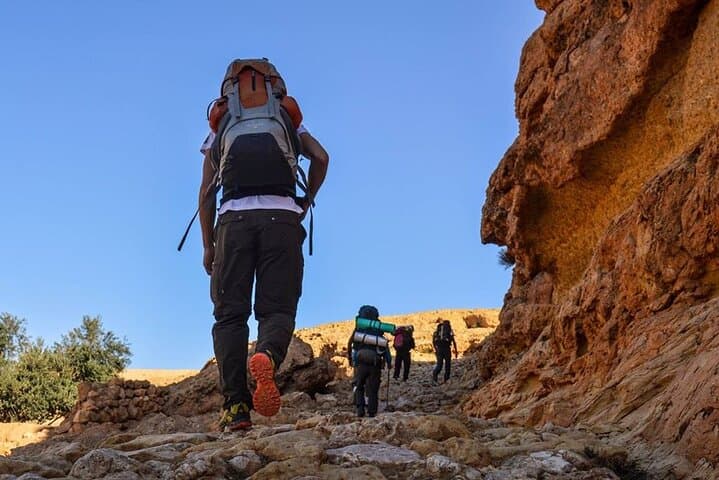
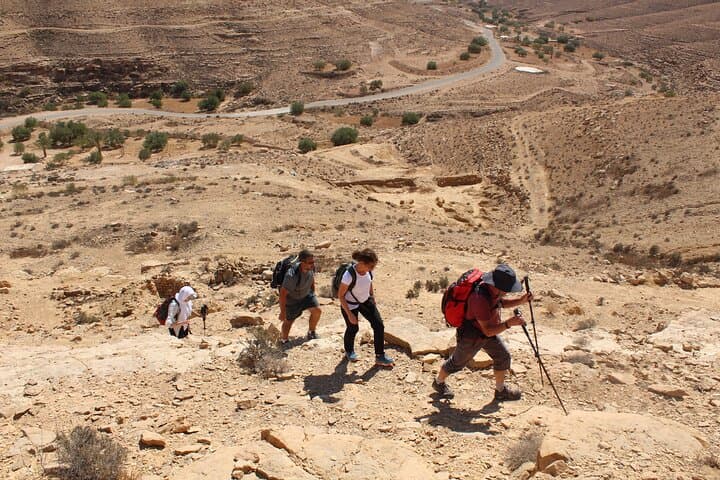
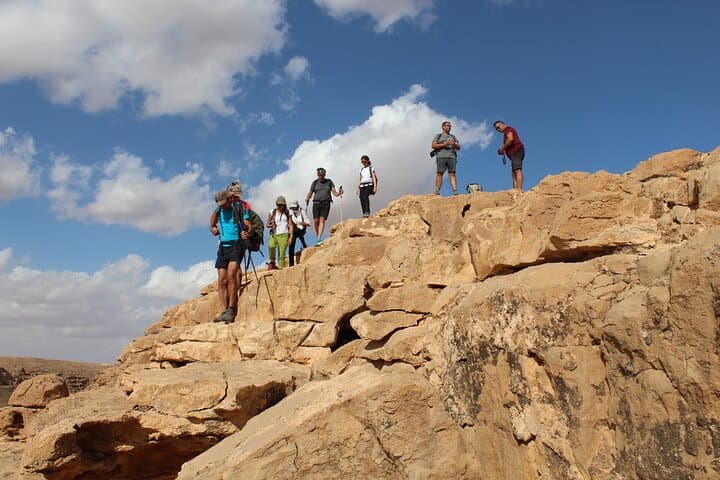
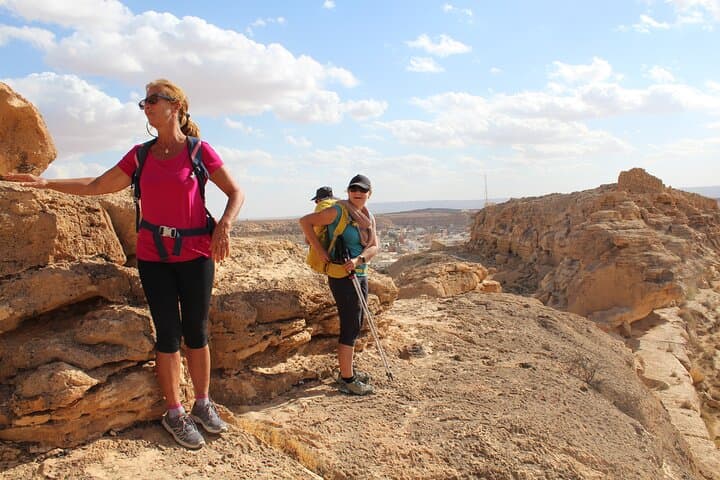
The trail opens under a pale desert sky as you leave the rounded walls of Ksar Hadada and follow a scatter of stone tracks toward Ghomrassen. Light scours the limestone and the carved ghorfas throw long shadows; every ridge seems to hold a story — from film crews to footprints pressed into Jurassic rock.
The trail opens under a pale desert sky as you leave the rounded walls of Ksar Hadada and follow a scatter of stone tracks toward Ghomrassen. Light scours the limestone and the carved ghorfas throw long shadows; every ridge seems to hold a story — from film crews to footprints pressed into Jurassic rock.
This compact 8 km route crosses human and deep time. The ksar is a late-19th-century fortified granary; its rows of ghorfas and small citadel speak to communal storage strategies across southern Tunisia. The surrounding Dahar limestone preserves Middle Jurassic surfaces where herbivore and theropod tracks are visible, and the final climb reaches Insefri, a mountain oasis with cave paintings dating back some 5,000 years.
Local life threads through the walk: irrigated pocket fields in the Beni Ghedir valley, small family bakeries in Ghomrassen serving fried pastries, and villagers who keep traditional techniques alive. The wind here has a voice — it brushes through ghorfa corridors and presses warm dust against your calves.
Practical guidance: expect uneven limestone and compacted dirt, roughly 8 km round-trip with intermittent short climbs and about 200–300 m cumulative gain. Plan 4–5 hours including stops. Start early to avoid midday heat; bring at least 1.5–2 L water, sun protection, and sturdy shoes with good grip for limestone slabs. Respect archaeological sites — don’t lean on or touch engravings — and buy snacks in Ghomrassen to support local vendors. The hike is moderate: rewarding for anyone comfortable on rocky terrain and walking several hours in dry heat.