THE ADVENTURE COLLECTIVE® · Independent discovery and booking for outdoor travel

Escape Marrakech for a compact High Atlas experience: short guided hikes to Setti Fadma’s cascades, a behind-the-scenes argan workshop, and sweeping mountain views in a single half-day trip.
Escape Marrakech for a compact High Atlas experience: short guided hikes to Setti Fadma’s cascades, a behind-the-scenes argan workshop, and sweeping mountain views in a single half-day trip.
A morning drive peels away Marrakech’s ochre walls and the city’s pulse softens as the road climbs into the High Atlas. In under an hour, rocky ridgelines rise up, the air sharp with juniper and dust, and a narrow lane drops into the small village of Setti Fadma where voices, goats, and mule tracks set the rhythm.
Verified experiences and guided adventures in the surrounding area.
Operated by Take your guide · Setti Fatma, Marrakesh-Safi
A morning drive peels away Marrakech’s ochre walls and the city’s pulse softens as the road climbs into the High Atlas. In under an hour, rocky ridgelines rise up, the air sharp with juniper and dust, and a narrow lane drops into the small village of Setti Fadma where voices, goats, and mule tracks set the rhythm.
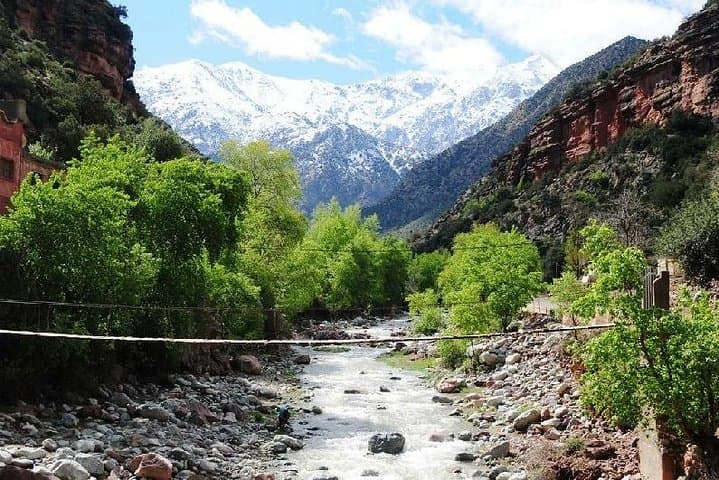
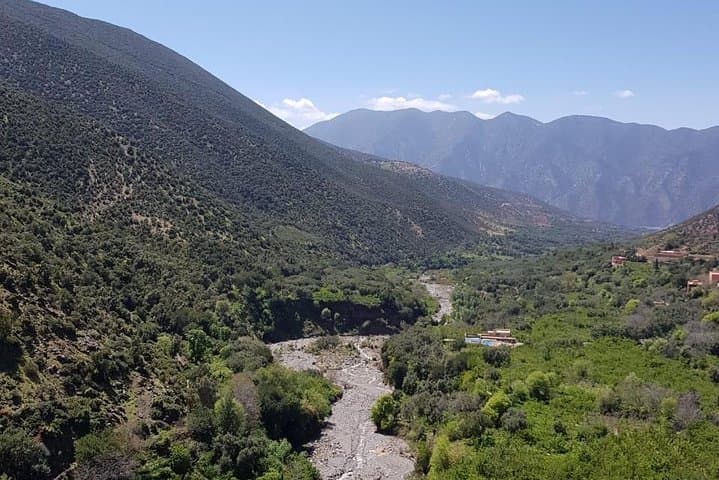
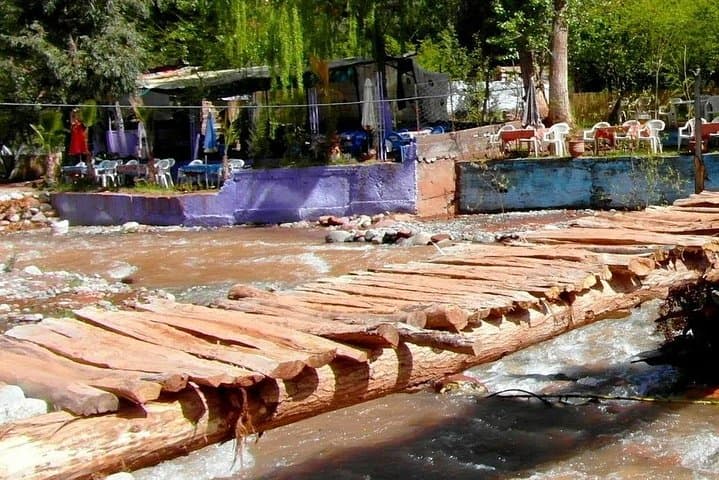
The route threads through a landscape carved by millennia: folded sedimentary layers, seasonal torrents, and terraced fields that mark human adaptation to steep slopes. The itinerary pairs short, guided walking with cultural stops — a family-run argan workshop where women crack fruit and press oil, and a local breakfast that uses regional olive oil, honey, and flatbread. The highlight is a guided trek to the seven cascades above Setti Fadma; cascades appear and disappear with the season, demanding a local guide to navigate informal trails and stream crossings.
This area’s culture is rooted in Berber village life and mountain agriculture; local guides often speak French, Spanish and English. Geologically, the High Atlas is younger and steeper than surrounding ranges, so expect rocky scree and switchbacks on short climbs.
Practical guidance: wear sturdy shoes with good grip, bring layered clothing for cool mornings and warmer valley afternoons, and carry your own water beyond what’s provided. The walk is suitable for most fitness levels but includes uneven terrain and occasional wet rock. Plan for early departures to avoid midday heat and give yourself time to enjoy viewpoints and the argan workshop without rushing.
easy.
5 hours.
Suitable for most people who can walk short uphill sections on uneven terrain; basic mobility required
The tour is approximately a one-hour drive each way; total experience lasts about five hours including transfers and stops.
Short sections are manageable for children and reasonably fit older adults, but expect uneven footing and some short uphill sections — disclose mobility needs when booking.
The tour includes bottled water and a local breakfast; additional snacks or purchases at the argan cooperative are optional and paid locally.
Yes — the itinerary includes a stop at a local argan workshop where visitors can watch production and purchase oils and byproducts.
The High Atlas has long been home to Berber (Amazigh) communities who built terraced agriculture and village networks adapted to steep terrain.
Visitors are encouraged to stick to established paths, avoid disturbing streamside vegetation, and buy locally made argan products to support sustainable livelihoods.
Take your guide operates guided outdoor trips and adventures with an emphasis on safety, stewardship, and memorable experiences.
A morning drive peels away Marrakech’s ochre walls and the city’s pulse softens as the road climbs into the High Atlas. In under an hour, rocky ridgelines rise up, the air sharp with juniper and dust, and a narrow lane drops into the small village of Setti Fadma where voices, goats, and mule tracks set the rhythm.
A morning drive peels away Marrakech’s ochre walls and the city’s pulse softens as the road climbs into the High Atlas. In under an hour, rocky ridgelines rise up, the air sharp with juniper and dust, and a narrow lane drops into the small village of Setti Fadma where voices, goats, and mule tracks set the rhythm.
The route threads through a landscape carved by millennia: folded sedimentary layers, seasonal torrents, and terraced fields that mark human adaptation to steep slopes. The itinerary pairs short, guided walking with cultural stops — a family-run argan workshop where women crack fruit and press oil, and a local breakfast that uses regional olive oil, honey, and flatbread. The highlight is a guided trek to the seven cascades above Setti Fadma; cascades appear and disappear with the season, demanding a local guide to navigate informal trails and stream crossings.
This area’s culture is rooted in Berber village life and mountain agriculture; local guides often speak French, Spanish and English. Geologically, the High Atlas is younger and steeper than surrounding ranges, so expect rocky scree and switchbacks on short climbs.
Practical guidance: wear sturdy shoes with good grip, bring layered clothing for cool mornings and warmer valley afternoons, and carry your own water beyond what’s provided. The walk is suitable for most fitness levels but includes uneven terrain and occasional wet rock. Plan for early departures to avoid midday heat and give yourself time to enjoy viewpoints and the argan workshop without rushing.