THE ADVENTURE COLLECTIVE® · Independent discovery and booking for outdoor travel

Explore Mykonos on a focused half-day walking tour that combines the postcard windmills, the seaside charm of Little Venice, historic chapels, and a short beach stop. Ideal for travelers who want a compact, interpretive introduction to the island.
Explore Mykonos on a focused half-day walking tour that combines the postcard windmills, the seaside charm of Little Venice, historic chapels, and a short beach stop. Ideal for travelers who want a compact, interpretive introduction to the island.
The group steps from the wharf into Mykonos’ sun-baked alleys, white cubic houses throwing sharp shadows across narrow lanes. Footsteps echo on cobbles as the tour winds toward the iconic row of windmills, their blunt silhouettes turning slowly against the Aegean blue. Little Venice waits with balconies perched over the sea; the waves nudge the stone walls like an insistent guide.
Verified experiences and guided adventures in the surrounding area.
Operated by Private Tours Greece · Mykonos (Chora), South Aegean
The group steps from the wharf into Mykonos’ sun-baked alleys, white cubic houses throwing sharp shadows across narrow lanes. Footsteps echo on cobbles as the tour winds toward the iconic row of windmills, their blunt silhouettes turning slowly against the Aegean blue. Little Venice waits with balconies perched over the sea; the waves nudge the stone walls like an insistent guide.
Mykonos’ modern identity as a cosmopolitan island grew from fishing villages and Venetian-era captain’s houses. Geology here is compact limestone and schist—rocky ridges scarred by millennia of wind—so settlements cluster where water and shelter are found. Culture is tangible: 16th-century churches such as Panayia Tourliani in Ano Mera, tiny chapels with carved iconostases, and the eccentric local fame of Peter the Pelican, who became an island mascot.
The half-day route combines town walking with short drives to beach viewpoints and a stop for coffee at a southern shore beach. Expect paved alleys, steps, and short stretches of roadside walking between stops. Guides point out Mycenaean and Neolithic traces inland and explain how tourism and fishing shaped the island.
Practical guidance: bring sturdy shoes for cobbles, sun protection, and a refillable water bottle (one bottle is provided but refill stations are limited). The tour is family-friendly, runs about four hours, and includes pickup from the port or hotel. Plan mornings or late afternoons to avoid peak sun and busiest crowds; pockets of shade and seaside cafes make good pauses during the walk.
easy.
4 hours.
Suitable for most fitness levels; involves walking on uneven cobbles and short stair sections—good mobility recommended.
Pickup is from Mykonos port or your hotel in Chora; the tour returns to the same drop-off point at the end.
Yes—infants and small children can use strollers on flatter streets, though some historic lanes and steps are not stroller-friendly.
No—this walking tour focuses on exterior visits and viewpoints; any temple or museum admissions would be at your own expense.
The route is generally easy but includes uneven cobbles and short staircases; contact the operator in advance to discuss accessible options or alternative routing.
Mykonos retains layers of history from Neolithic and Mycenaean finds inland to Venetian-era captain’s houses; Panayia Tourliani in Ano Mera is a notable 16th-century church with an elaborate iconostasis.
High summer visitation stresses beaches and water resources—bring reusable bottles, stay on paths, and avoid disturbing nesting birds or fragile coastal vegetation.
Private Tours Greece operates guided outdoor trips and adventures with an emphasis on safety, stewardship, and memorable experiences.

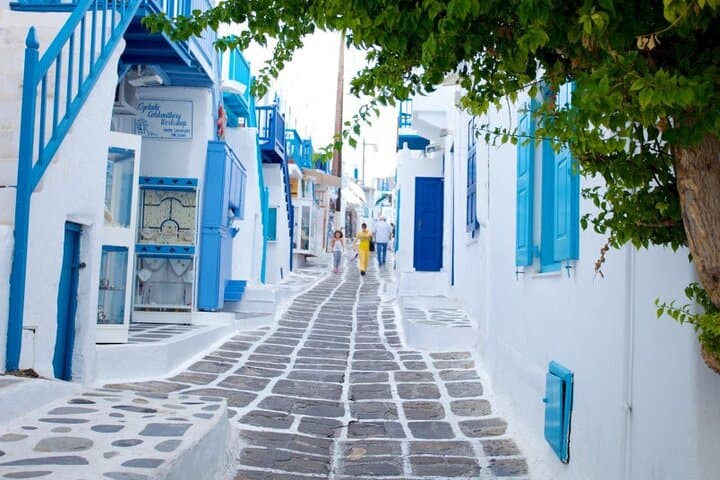

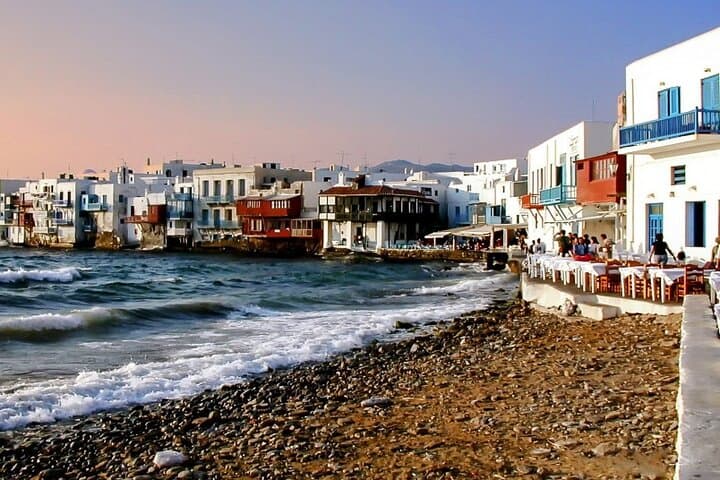
The group steps from the wharf into Mykonos’ sun-baked alleys, white cubic houses throwing sharp shadows across narrow lanes. Footsteps echo on cobbles as the tour winds toward the iconic row of windmills, their blunt silhouettes turning slowly against the Aegean blue. Little Venice waits with balconies perched over the sea; the waves nudge the stone walls like an insistent guide.
The group steps from the wharf into Mykonos’ sun-baked alleys, white cubic houses throwing sharp shadows across narrow lanes. Footsteps echo on cobbles as the tour winds toward the iconic row of windmills, their blunt silhouettes turning slowly against the Aegean blue. Little Venice waits with balconies perched over the sea; the waves nudge the stone walls like an insistent guide.
Mykonos’ modern identity as a cosmopolitan island grew from fishing villages and Venetian-era captain’s houses. Geology here is compact limestone and schist—rocky ridges scarred by millennia of wind—so settlements cluster where water and shelter are found. Culture is tangible: 16th-century churches such as Panayia Tourliani in Ano Mera, tiny chapels with carved iconostases, and the eccentric local fame of Peter the Pelican, who became an island mascot.
The half-day route combines town walking with short drives to beach viewpoints and a stop for coffee at a southern shore beach. Expect paved alleys, steps, and short stretches of roadside walking between stops. Guides point out Mycenaean and Neolithic traces inland and explain how tourism and fishing shaped the island.
Practical guidance: bring sturdy shoes for cobbles, sun protection, and a refillable water bottle (one bottle is provided but refill stations are limited). The tour is family-friendly, runs about four hours, and includes pickup from the port or hotel. Plan mornings or late afternoons to avoid peak sun and busiest crowds; pockets of shade and seaside cafes make good pauses during the walk.