THE ADVENTURE COLLECTIVE® · Independent discovery and booking for outdoor travel

Spend four hours with an Egyptologist exploring the Pyramids of Giza, the Great Sphinx and the Valley Temple. This concise half-day tour combines close-up views, panoramic vantage points and practical guidance for visiting Egypt’s most iconic monuments.
Spend four hours with an Egyptologist exploring the Pyramids of Giza, the Great Sphinx and the Valley Temple. This concise half-day tour combines close-up views, panoramic vantage points and practical guidance for visiting Egypt’s most iconic monuments.
At first light the Giza Plateau reads like a chapter in stone: the sun strips across limestone faces and the three pyramids stand in hard silhouette against Cairo’s haze.
Verified experiences and guided adventures in the surrounding area.
Operated by OceanAir Travels Egypt · Giza, Giza Governorate
At first light the Giza Plateau reads like a chapter in stone: the sun strips across limestone faces and the three pyramids stand in hard silhouette against Cairo’s haze.
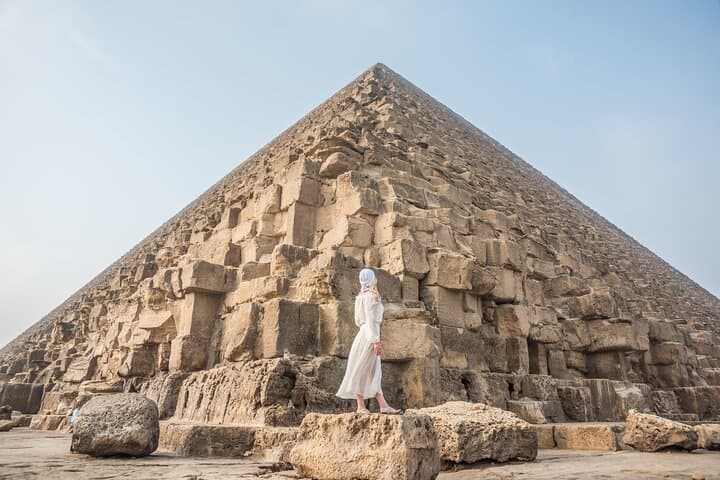
Your Egyptologist guide meets you at your hotel and, in an air-conditioned vehicle, delivers context as you approach the Great Pyramid of Khufu, Khafre’s slightly smaller neighbor and the compact Menkaure. These are not just large mounds but Fourth Dynasty innovations (c. 2600–2500 BCE) in geometry and labor organization, cut from local limestone and aligned with striking precision.
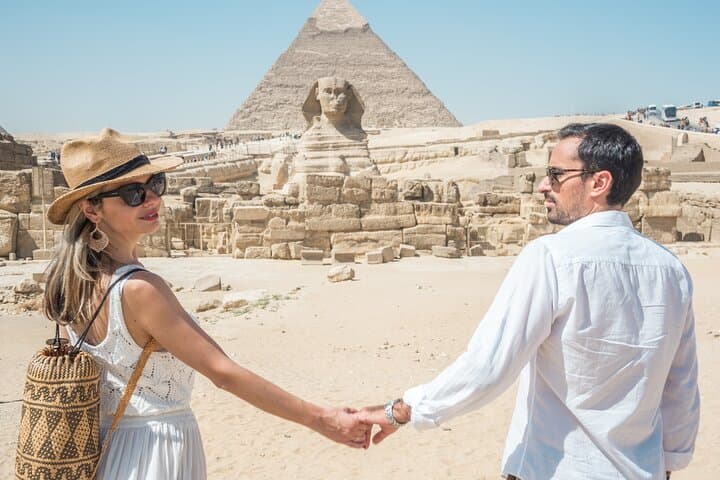
The Great Sphinx—lion body, human head—watches the desert breeze that has worn its nose and softened its details over millennia. Nearby, the Valley Temple of Khafre reveals dressed stone blocks and mortared joints where funerary rites were performed; the Solar Boat Museum preserves a cedar vessel once buried beside the pharaoh.
Expect sandy, uneven walking surfaces, wide panoramic views from the plateau viewpoint and sharp, dry sun by midday. Camel rides are offered near the plateau but are optional and privately priced; interior pyramid access is limited and often requires a separate ticket and physical readiness for low, narrow passageways.
Practical advice: schedule morning or late-afternoon departures to avoid heat, carry at least one liter of water, wear closed-toe shoes for loose stone, and bring sunscreen and a hat. Respect ropes and signage—these monuments are fragile and managed for long-term preservation.
easy.
4 hours.
Suitable for most fitness levels; requires short periods of standing and walking on uneven ground.
Some booking options include entry to the Giza Plateau and the Valley Temple; confirm your selected option before arrival—if not included you can purchase tickets on-site.
Interior access is limited, often requires a separate ticket and can involve narrow, steep passages that are not suitable for those with mobility issues.
Camel rides are offered at the plateau by independent vendors and are not included in the standard tour price—you can choose them on site for an additional fee.
Yes—this tour includes pickup and drop-off from most hotels in Cairo and Giza via air-conditioned vehicle as part of the half-day schedule.
The three main pyramids were built during Egypt’s Fourth Dynasty (c. 2600–2500 BCE) as royal tombs and monumental engineering projects tied to pharaonic funerary beliefs.
Visitor pressure and wind-driven erosion stress the monuments; stick to marked paths, heed site staff, and avoid touching carved surfaces to minimize wear.
OceanAir Travels Egypt operates guided outdoor trips and adventures with an emphasis on safety, stewardship, and memorable experiences.
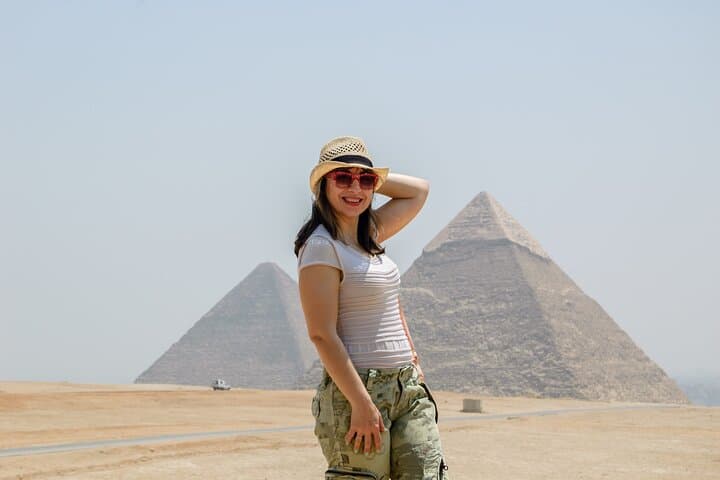
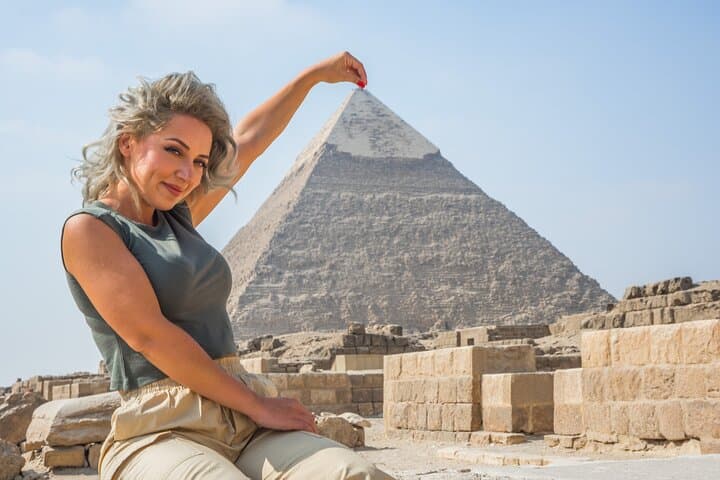
At first light the Giza Plateau reads like a chapter in stone: the sun strips across limestone faces and the three pyramids stand in hard silhouette against Cairo’s haze.
At first light the Giza Plateau reads like a chapter in stone: the sun strips across limestone faces and the three pyramids stand in hard silhouette against Cairo’s haze.
Your Egyptologist guide meets you at your hotel and, in an air-conditioned vehicle, delivers context as you approach the Great Pyramid of Khufu, Khafre’s slightly smaller neighbor and the compact Menkaure. These are not just large mounds but Fourth Dynasty innovations (c. 2600–2500 BCE) in geometry and labor organization, cut from local limestone and aligned with striking precision.
The Great Sphinx—lion body, human head—watches the desert breeze that has worn its nose and softened its details over millennia. Nearby, the Valley Temple of Khafre reveals dressed stone blocks and mortared joints where funerary rites were performed; the Solar Boat Museum preserves a cedar vessel once buried beside the pharaoh.
Expect sandy, uneven walking surfaces, wide panoramic views from the plateau viewpoint and sharp, dry sun by midday. Camel rides are offered near the plateau but are optional and privately priced; interior pyramid access is limited and often requires a separate ticket and physical readiness for low, narrow passageways.
Practical advice: schedule morning or late-afternoon departures to avoid heat, carry at least one liter of water, wear closed-toe shoes for loose stone, and bring sunscreen and a hat. Respect ropes and signage—these monuments are fragile and managed for long-term preservation.