THE ADVENTURE COLLECTIVE® · Independent discovery and booking for outdoor travel

See Shoshone Falls’ 212-foot drop and the Perrine Bridge in one accessible half-day outing. This guided tour pairs canyon geology and local history with city stops and visitor-center insights — ideal for a compact outdoor escape.
See Shoshone Falls’ 212-foot drop and the Perrine Bridge in one accessible half-day outing. This guided tour pairs canyon geology and local history with city stops and visitor-center insights — ideal for a compact outdoor escape.
You step from an air-conditioned van onto a rim that looks out over a canyon cut raw by the Snake River — water daring the cliffs, spray rising like a cold breath against your face. Shoshone Falls tumbles 212 feet and stretches nearly 950 feet across, its roar a clear punctuation in an otherwise open sky. The Perrine Memorial Bridge sits lofty and still, while below the river threads through basalt walls shaped by ice-age floods.
Verified experiences and guided adventures in the surrounding area.
Operated by Big Green Adventure Tours · Twin Falls, Idaho
You step from an air-conditioned van onto a rim that looks out over a canyon cut raw by the Snake River — water daring the cliffs, spray rising like a cold breath against your face. Shoshone Falls tumbles 212 feet and stretches nearly 950 feet across, its roar a clear punctuation in an otherwise open sky. The Perrine Memorial Bridge sits lofty and still, while below the river threads through basalt walls shaped by ice-age floods.
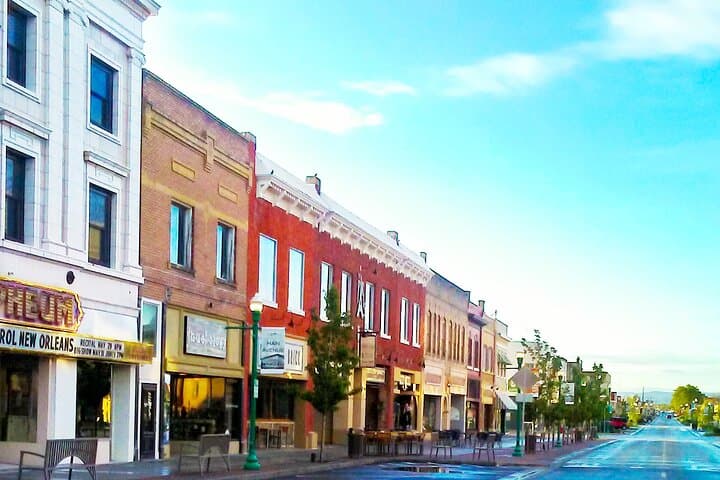
This half-day tour pairs natural spectacle with human story. Geology dominates: 15,000 years ago Lake Bonneville overtopped and the Bonneville flood ripped away rock to form the canyon and falls you see today. Industrial history follows — the 1907 Shoshone Falls power plant and Twin Falls’ early 20th-century irrigation projects transformed sagebrush into farmland, and the restored Warehouse District keeps that pioneer-era grit and grain-silo skyline visible.
Local culture surfaces in murals, the Visitor Center exhibits and the Evel Knievel jump site — reminders that this place blends outdoor risk, engineering and small-city pride. Expect clear interpretive stops: downtown historic blocks, multiple overlooks at Shoshone Falls, the Visitor Center and Perrine Bridge viewpoints.
Practical guidance: plan for four hours, wear sturdy walking shoes for platforms and short rim trails, and bring layered sun protection — spray and wind are common. Morning and late afternoon light give the most dramatic views and cooler temperatures; spring snowmelt boosts flows while late summer can be drier. Hydrate, keep to fenced viewpoints, and ask your guide about quieter overlooks or nearby trails if you want more time in the canyon.
easy.
4 hours.
Light walking and short strolls; suitable for most fitness levels, including families with small children.
The tour itinerary includes stops at Shoshone Falls and the Visitor Center; admission is handled as part of the tour—confirm specifics at booking.
The tour notes stroller accessibility and generally low-impact walking at viewing platforms; some overlooks require short steps—contact the operator to confirm wheelchair access needs.
Yes — the bridge is one of the few places in the U.S. with year-round legal BASE jumping; jumpers are often visible from the rim and overlook platforms.
Late spring during snowmelt typically provides the strongest flows; summer often has lower volume but clearer weather and longer daylight.
The falls and canyon owe their shape to the Bonneville Flood at the end of the last ice age; the area later powered early 20th‑century irrigation and electric projects that built Twin Falls.
Water flow is managed for irrigation and power by local utilities, which affects seasonal appearance; stay on designated paths, pack out trash and follow state park rules to reduce visitor impact.
Big Green Adventure Tours operates guided outdoor trips and adventures with an emphasis on safety, stewardship, and memorable experiences.
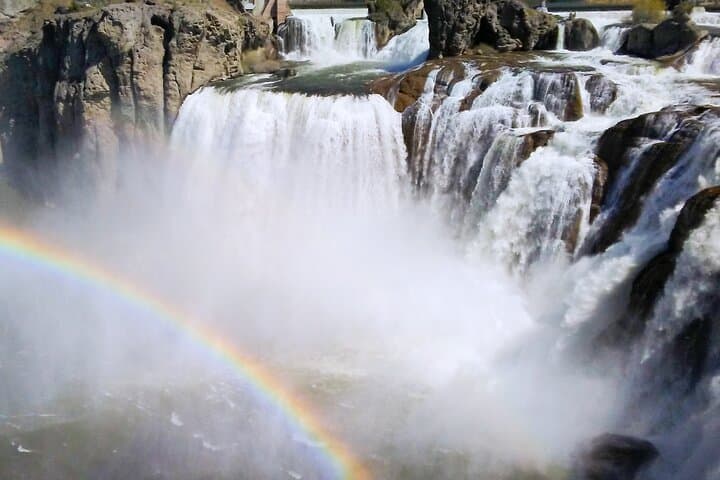
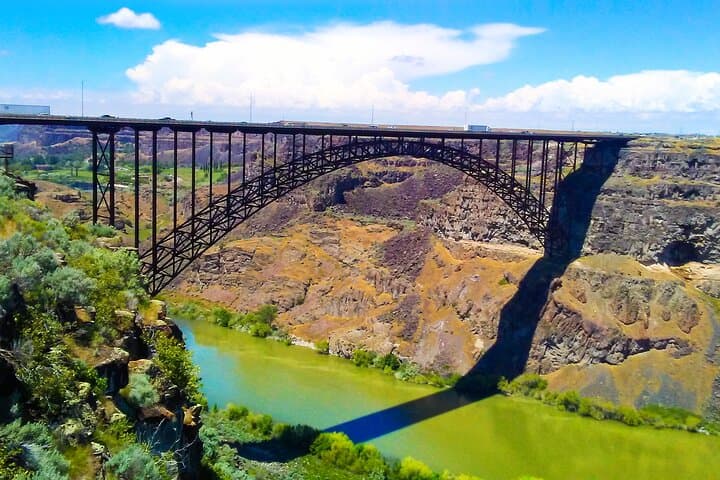
You step from an air-conditioned van onto a rim that looks out over a canyon cut raw by the Snake River — water daring the cliffs, spray rising like a cold breath against your face. Shoshone Falls tumbles 212 feet and stretches nearly 950 feet across, its roar a clear punctuation in an otherwise open sky. The Perrine Memorial Bridge sits lofty and still, while below the river threads through basalt walls shaped by ice-age floods.
You step from an air-conditioned van onto a rim that looks out over a canyon cut raw by the Snake River — water daring the cliffs, spray rising like a cold breath against your face. Shoshone Falls tumbles 212 feet and stretches nearly 950 feet across, its roar a clear punctuation in an otherwise open sky. The Perrine Memorial Bridge sits lofty and still, while below the river threads through basalt walls shaped by ice-age floods.
This half-day tour pairs natural spectacle with human story. Geology dominates: 15,000 years ago Lake Bonneville overtopped and the Bonneville flood ripped away rock to form the canyon and falls you see today. Industrial history follows — the 1907 Shoshone Falls power plant and Twin Falls’ early 20th-century irrigation projects transformed sagebrush into farmland, and the restored Warehouse District keeps that pioneer-era grit and grain-silo skyline visible.
Local culture surfaces in murals, the Visitor Center exhibits and the Evel Knievel jump site — reminders that this place blends outdoor risk, engineering and small-city pride. Expect clear interpretive stops: downtown historic blocks, multiple overlooks at Shoshone Falls, the Visitor Center and Perrine Bridge viewpoints.
Practical guidance: plan for four hours, wear sturdy walking shoes for platforms and short rim trails, and bring layered sun protection — spray and wind are common. Morning and late afternoon light give the most dramatic views and cooler temperatures; spring snowmelt boosts flows while late summer can be drier. Hydrate, keep to fenced viewpoints, and ask your guide about quieter overlooks or nearby trails if you want more time in the canyon.