THE ADVENTURE COLLECTIVE® · Independent discovery and booking for outdoor travel

Spend a tranquil half-day among Zanzibar’s coastal forest on a guided walk that focuses on the endemic Kirk’s red colobus and the mangrove boardwalks of Jozani-Chwaka National Park. This accessible tour pairs wildlife viewing with cultural and ecological context.
Spend a tranquil half-day among Zanzibar’s coastal forest on a guided walk that focuses on the endemic Kirk’s red colobus and the mangrove boardwalks of Jozani-Chwaka National Park. This accessible tour pairs wildlife viewing with cultural and ecological context.
Walking into Jozani feels like stepping through a curtain of warm, humid air where leaves lean low and the forest seems to breathe around you.
Verified experiences and guided adventures in the surrounding area.
Operated by Lemon Tours and Safaris Zanzibar · Jozani, Zanzibar
Walking into Jozani feels like stepping through a curtain of warm, humid air where leaves lean low and the forest seems to breathe around you.
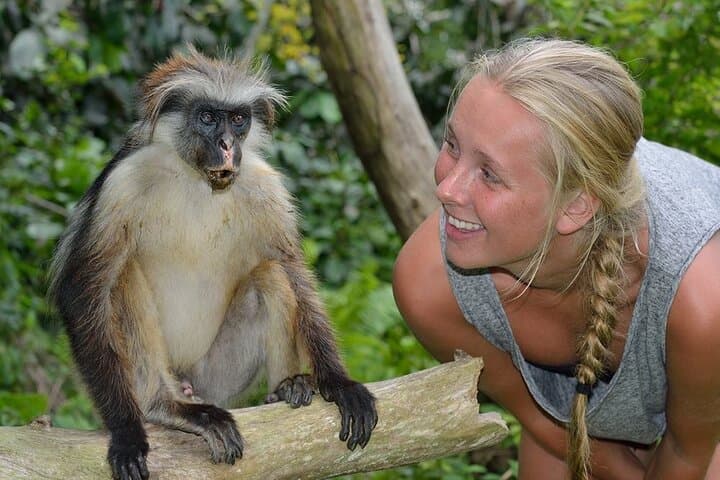
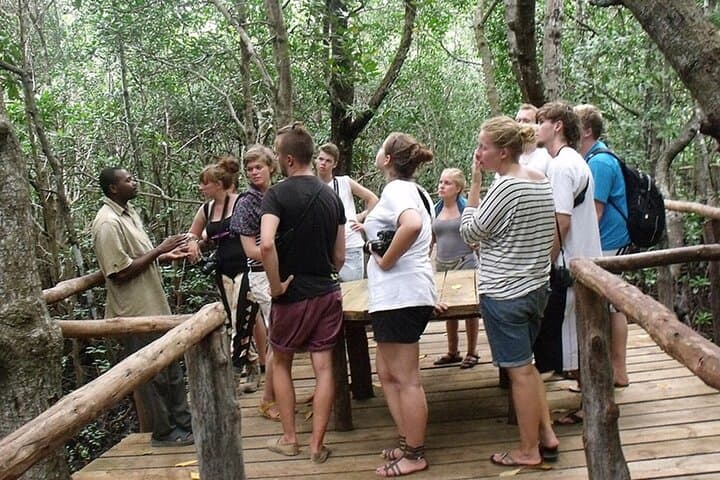
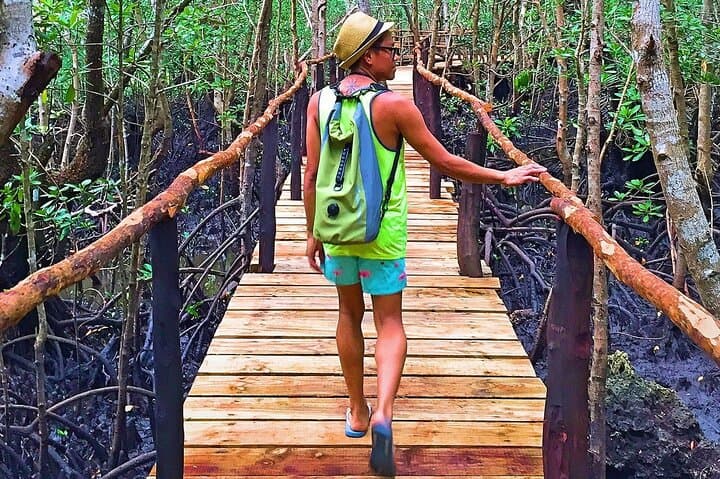
On this half-day guided tour you follow compact dirt trails and a raised boardwalk into mangrove swamps, guided by a local naturalist who points out the habitual Kirk’s red colobus as they move through the canopy with reckless curiosity. The forest floor is soft underfoot; the path is generally flat with minimal elevation gain, making the walk accessible but intimate.
Jozani-Chwaka National Park was designated in the 1960s to protect these unique coastal woodlands and the endemic colobus, which became a conservation symbol in the 1990s. Geologically the site is coastal limestone overlain by shallow soils that support mixed coastal forest and mangrove systems tied to Chwaka Bay. Culturally, nearby villages maintain traditional fishing and clove-growing practices—guides often weave local stories into identification of plants used for medicine and craft.
Practical guidance: expect 2–3 hours on a guided route of roughly 1.5–3 km with boardwalk sections into the mangroves; wear sturdy shoes and sun protection. Bring insect repellent—mosquitoes are present near water—and a refillable water bottle; bottled water is usually provided. Photography is welcome but keep a respectful distance from habituated wildlife and strictly follow your guide to avoid disturbing sensitive areas.
This is a compact, low-impact wildlife experience that rewards quiet observation and small moments—colobus faces peering through vines, mangrove roots gripping at the tide—rather than long treks or strenuous climbs.
easy.
2–3 hours.
Suitable for most fitness levels; minimal elevation and short distances but expect humid conditions.
Sightings are frequent—there are habituated groups used to human presence—but wildlife is never guaranteed; guides maximize chances by visiting known feeding and resting sites.
Some entry areas and short sections are accessible, but the mangrove boardwalk and uneven forest paths can be narrow; check with the operator for specific accessibility arrangements.
Most tours include pickup in Stone Town; private or shared drivers take about 45–60 minutes depending on traffic and route.
Confirmed tours commonly include park fees and bottled water, but verify at booking—some operators list fees separately.
The reserve was set aside in the 1960s to protect coastal forest; conservation efforts in the 1990s elevated the red colobus as a flagship species for Zanzibar.
Stay on trails, avoid feeding wildlife, and support the park via entrance fees—these practices reduce disturbance and fund local habitat protection.
Lemon Tours and Safaris Zanzibar operates guided outdoor trips and adventures with an emphasis on safety, stewardship, and memorable experiences.

Walking into Jozani feels like stepping through a curtain of warm, humid air where leaves lean low and the forest seems to breathe around you.
Walking into Jozani feels like stepping through a curtain of warm, humid air where leaves lean low and the forest seems to breathe around you.
On this half-day guided tour you follow compact dirt trails and a raised boardwalk into mangrove swamps, guided by a local naturalist who points out the habitual Kirk’s red colobus as they move through the canopy with reckless curiosity. The forest floor is soft underfoot; the path is generally flat with minimal elevation gain, making the walk accessible but intimate.
Jozani-Chwaka National Park was designated in the 1960s to protect these unique coastal woodlands and the endemic colobus, which became a conservation symbol in the 1990s. Geologically the site is coastal limestone overlain by shallow soils that support mixed coastal forest and mangrove systems tied to Chwaka Bay. Culturally, nearby villages maintain traditional fishing and clove-growing practices—guides often weave local stories into identification of plants used for medicine and craft.
Practical guidance: expect 2–3 hours on a guided route of roughly 1.5–3 km with boardwalk sections into the mangroves; wear sturdy shoes and sun protection. Bring insect repellent—mosquitoes are present near water—and a refillable water bottle; bottled water is usually provided. Photography is welcome but keep a respectful distance from habituated wildlife and strictly follow your guide to avoid disturbing sensitive areas.
This is a compact, low-impact wildlife experience that rewards quiet observation and small moments—colobus faces peering through vines, mangrove roots gripping at the tide—rather than long treks or strenuous climbs.