THE ADVENTURE COLLECTIVE® · Independent discovery and booking for outdoor travel

Spend a private half-day exploring Karnak and Luxor Temples with an Egyptologist guide. This tour covers the Avenue of the Sphinxes, Karnak’s hypostyle hall, and Luxor Temple with hotel or Nile cruise pickup included.
Spend a private half-day exploring Karnak and Luxor Temples with an Egyptologist guide. This tour covers the Avenue of the Sphinxes, Karnak’s hypostyle hall, and Luxor Temple with hotel or Nile cruise pickup included.
A morning on Luxor’s East Bank begins with light settling over sandstone pylons and a river that keeps time with the city. Visitors step from an air-conditioned vehicle into the flattened heat and the slow, deliberate geometry of ancient stone—columns rising like a planted forest, obelisks pointing into clear blue sky, and sphinxes that line an avenue built to connect two centers of power.
Verified experiences and guided adventures in the surrounding area.
Operated by Aqua Egypt Tours · Luxor, Luxor Governorate
A morning on Luxor’s East Bank begins with light settling over sandstone pylons and a river that keeps time with the city. Visitors step from an air-conditioned vehicle into the flattened heat and the slow, deliberate geometry of ancient stone—columns rising like a planted forest, obelisks pointing into clear blue sky, and sphinxes that line an avenue built to connect two centers of power.
The tour threads together two of Egypt’s most layered sites. Karnak grew over two millennia from Middle Kingdom foundations through New Kingdom expansions and later Ptolemaic additions; its hypostyle hall, obelisks and sacred lake reveal construction phases and religious practice. Luxor Temple marks the southern terminus of the Avenue of the Sphinxes and carries visible work from Amenhotep III and Ramesses II, later adapted for Coptic and Islamic use.
Beyond dates and pharaohs, the walk shows practical archaeology—the way sandstone weathers in the desert sun, how Nile proximity shaped ritual access, and small inscriptions that record everyday offerings. Local guides translate hieroglyphic economy into human stories and point out quieter features often missed by hurried groups.
Practical side: expect 5–6 hours including transfers, moderate walking on uneven stone, and strong sun. Wear breathable, modest clothing, sturdy shoes, and bring water and a hat. Photography is generally allowed but obey signage at sanctuaries. The private format means time to linger at the hypostyle hall and the sacred lake; early mornings are cooler and the light is best for detail. This is a cultural walk that rewards curiosity and common sense—pack sun protection, a sense of pace, and an appetite for layered history.
easy.
5–6 hours.
Suitable for most fitness levels; involves walking on uneven stone and standing for guided explanations
Yes — private pickup and return to hotels or Nile cruises on Luxor’s East Bank are included in the tour.
Yes — entrance fees to Karnak and Luxor Temples are included as part of the tour package.
The tour is rated easy physically, but uneven stone and steps can challenge limited mobility; infants must sit on laps.
Photography is generally allowed in exterior and many interior areas, but follow guide instructions and signage where restrictions apply.
Karnak is an accretional complex expanded by pharaohs over nearly 2,000 years; Luxor Temple functioned as both a religious center and later repurposed space under successive cultures.
Wear-and-tear from visitors and desert pollution are managed by site authorities; follow routes and avoid touching reliefs to help preserve surfaces.
Aqua Egypt Tours operates guided outdoor trips and adventures with an emphasis on safety, stewardship, and memorable experiences.
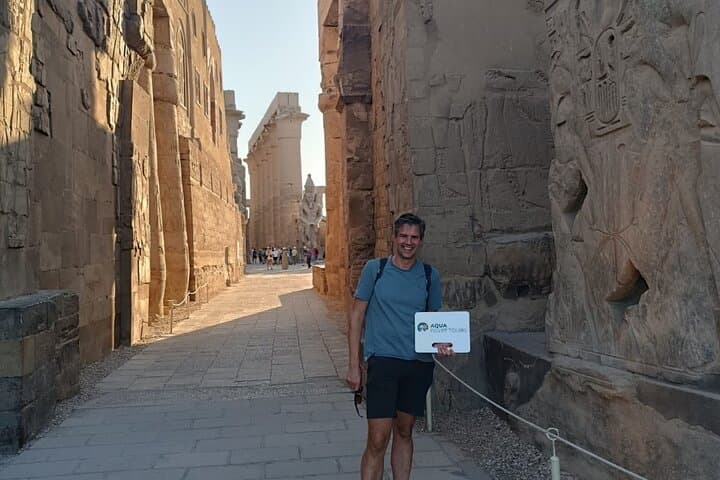
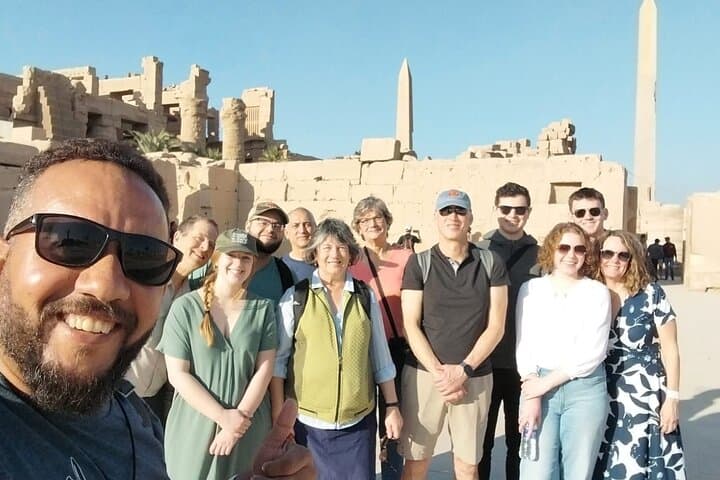
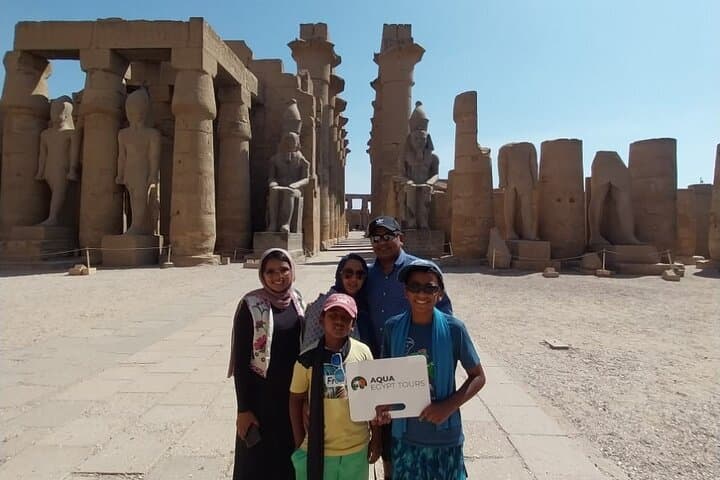

A morning on Luxor’s East Bank begins with light settling over sandstone pylons and a river that keeps time with the city. Visitors step from an air-conditioned vehicle into the flattened heat and the slow, deliberate geometry of ancient stone—columns rising like a planted forest, obelisks pointing into clear blue sky, and sphinxes that line an avenue built to connect two centers of power.
A morning on Luxor’s East Bank begins with light settling over sandstone pylons and a river that keeps time with the city. Visitors step from an air-conditioned vehicle into the flattened heat and the slow, deliberate geometry of ancient stone—columns rising like a planted forest, obelisks pointing into clear blue sky, and sphinxes that line an avenue built to connect two centers of power.
The tour threads together two of Egypt’s most layered sites. Karnak grew over two millennia from Middle Kingdom foundations through New Kingdom expansions and later Ptolemaic additions; its hypostyle hall, obelisks and sacred lake reveal construction phases and religious practice. Luxor Temple marks the southern terminus of the Avenue of the Sphinxes and carries visible work from Amenhotep III and Ramesses II, later adapted for Coptic and Islamic use.
Beyond dates and pharaohs, the walk shows practical archaeology—the way sandstone weathers in the desert sun, how Nile proximity shaped ritual access, and small inscriptions that record everyday offerings. Local guides translate hieroglyphic economy into human stories and point out quieter features often missed by hurried groups.
Practical side: expect 5–6 hours including transfers, moderate walking on uneven stone, and strong sun. Wear breathable, modest clothing, sturdy shoes, and bring water and a hat. Photography is generally allowed but obey signage at sanctuaries. The private format means time to linger at the hypostyle hall and the sacred lake; early mornings are cooler and the light is best for detail. This is a cultural walk that rewards curiosity and common sense—pack sun protection, a sense of pace, and an appetite for layered history.