THE ADVENTURE COLLECTIVE® · Independent discovery and booking for outdoor travel

Climb schist crags above Lake Wakatipu with local guides on this four-hour half-day session. Ideal for beginners and experienced climbers alike, the tour combines technical coaching, short approaches and dramatic alpine-lake views.
Climb schist crags above Lake Wakatipu with local guides on this four-hour half-day session. Ideal for beginners and experienced climbers alike, the tour combines technical coaching, short approaches and dramatic alpine-lake views.
You meet at the Basecamp climbing centre as morning light slices across the lake. Guides sort harnesses, test knots and scan the sky; behind them, The Remarkables glint with late snow and the schist walls that ring Queenstown stand like pages from a geologist’s notebook — banded, firm and surprisingly grippy. Within minutes you’re in the van, crossing the low tussock flats toward a cluster of cliffs where routes range from gentle slab to steep, technical faces. The air tastes like alpine dust and sunscreen.
Verified experiences and guided adventures in the surrounding area.
Operated by Climbing Queenstown · Queenstown, Otago
You meet at the Basecamp climbing centre as morning light slices across the lake. Guides sort harnesses, test knots and scan the sky; behind them, The Remarkables glint with late snow and the schist walls that ring Queenstown stand like pages from a geologist’s notebook — banded, firm and surprisingly grippy. Within minutes you’re in the van, crossing the low tussock flats toward a cluster of cliffs where routes range from gentle slab to steep, technical faces. The air tastes like alpine dust and sunscreen.
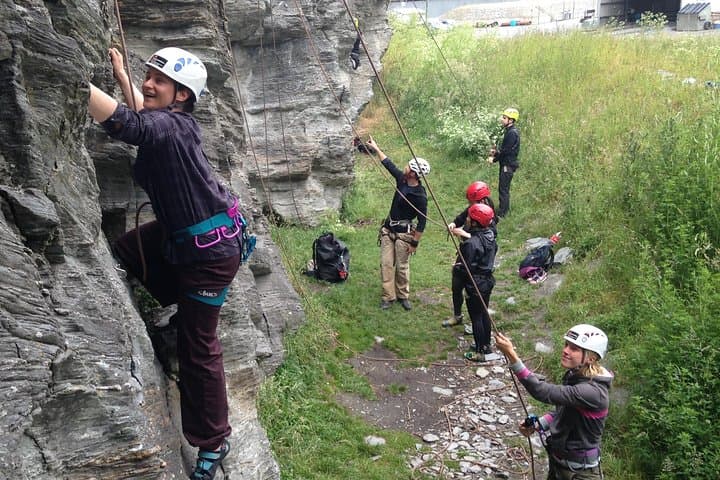
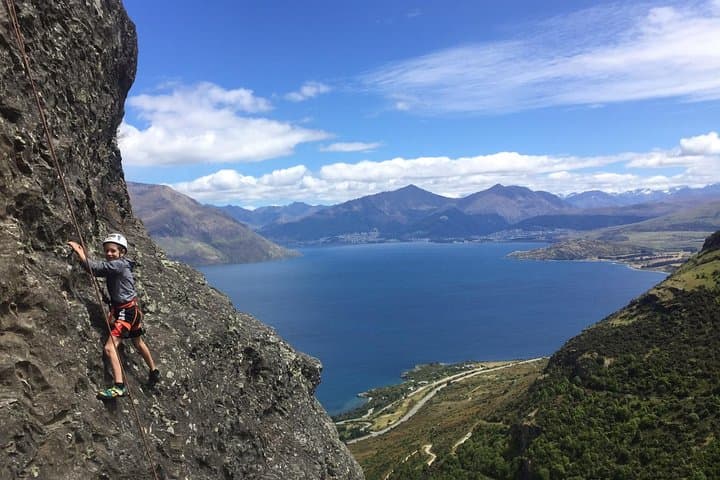
This half-day climbs takes place on the hard schist that defines much of the Southern Lakes. Schist’s foliated layers create cracks, edges and polished faces that reward precise footwork. The guides at Basecamp tailor every session: for beginners you’ll climb top-roped single pitches — 10–30 metres of concentrated movement — while stronger climbers can push into sport lines and multi-pitch moves at nearby venues. Between routes, the lake dares you to look away; Lake Wakatipu’s blue tracks the sun and the crags often have a panoramic drop that makes every swing of rope feel purposeful.
Queenstown’s climbing history is young compared with the Alps but rooted in exploration — ski guides and mountaineers who cut summer lines on rock in the same neighborhoods they ski in winter. Local culture treats climbing as social and technical: expect clear, practical instruction, a focus on safety and plenty of hands-on coaching to build skills quickly.
For practical planning: the half-day runs about four hours and includes transport to selected crags, a professional guide and all technical equipment (harness, helmet and climbing shoes). Approach walks are short — typically 5–20 minutes — but terrain can be uneven; plan for modest elevation change on foot and stays on exposed ledges when belaying. Minimum age is six, and children must be supervised.
Timing matters. Mornings are cooler and quieter; afternoons can be windy or sun-soaked depending on the season. Guides operate in most weather but will reschedule in very poor conditions. Bring layered clothing, a water bottle, sunscreen and a small daypack. If you’ve never belayed, this is a perfect introduction: guides teach knots, belay technique and route reading in real time.
This is climbing with context — spectacular lake views, efficient coaching and the chance to progress on real rock. Whether you’re leading for the first time or brushing up on technique, the half-day session pairs focused instruction with the kind of scenery that makes every move feel earned.
moderate.
4 hours.
Suitable for most active people; basic mobility and the ability to walk short uneven approaches required
No — guides cater to beginners and will teach knots, belaying and technique on safe top-rope routes.
Yes — the price includes harness, helmet and climbing shoes; bring your own shoes only if you prefer them.
Minimum age is six; children must be accompanied by an adult and be comfortable following basic safety instructions.
The session is moderately active: expect short walks, standing at belays and repeated climbs that use both upper- and lower-body strength.
Guides operate in most conditions but will offer an alternative date or full refund if the activity is cancelled due to very poor weather.
Yes — guides can tailor the session for stronger climbers and access more technical sport lines; discuss objectives when booking.
Climbing around Queenstown grew from mountaineering and ski guide culture; local crags were developed in recent decades as the town expanded into a year-round adventure hub.
Stick to marked paths, avoid chalking more than needed and pack out any trash; fragile alpine plants recover slowly from trampling.
Climbing Queenstown operates guided outdoor trips and adventures with an emphasis on safety, stewardship, and memorable experiences.
You meet at the Basecamp climbing centre as morning light slices across the lake. Guides sort harnesses, test knots and scan the sky; behind them, The Remarkables glint with late snow and the schist walls that ring Queenstown stand like pages from a geologist’s notebook — banded, firm and surprisingly grippy. Within minutes you’re in the van, crossing the low tussock flats toward a cluster of cliffs where routes range from gentle slab to steep, technical faces. The air tastes like alpine dust and sunscreen.
You meet at the Basecamp climbing centre as morning light slices across the lake. Guides sort harnesses, test knots and scan the sky; behind them, The Remarkables glint with late snow and the schist walls that ring Queenstown stand like pages from a geologist’s notebook — banded, firm and surprisingly grippy. Within minutes you’re in the van, crossing the low tussock flats toward a cluster of cliffs where routes range from gentle slab to steep, technical faces. The air tastes like alpine dust and sunscreen.
This half-day climbs takes place on the hard schist that defines much of the Southern Lakes. Schist’s foliated layers create cracks, edges and polished faces that reward precise footwork. The guides at Basecamp tailor every session: for beginners you’ll climb top-roped single pitches — 10–30 metres of concentrated movement — while stronger climbers can push into sport lines and multi-pitch moves at nearby venues. Between routes, the lake dares you to look away; Lake Wakatipu’s blue tracks the sun and the crags often have a panoramic drop that makes every swing of rope feel purposeful.
Queenstown’s climbing history is young compared with the Alps but rooted in exploration — ski guides and mountaineers who cut summer lines on rock in the same neighborhoods they ski in winter. Local culture treats climbing as social and technical: expect clear, practical instruction, a focus on safety and plenty of hands-on coaching to build skills quickly.
For practical planning: the half-day runs about four hours and includes transport to selected crags, a professional guide and all technical equipment (harness, helmet and climbing shoes). Approach walks are short — typically 5–20 minutes — but terrain can be uneven; plan for modest elevation change on foot and stays on exposed ledges when belaying. Minimum age is six, and children must be supervised.
Timing matters. Mornings are cooler and quieter; afternoons can be windy or sun-soaked depending on the season. Guides operate in most weather but will reschedule in very poor conditions. Bring layered clothing, a water bottle, sunscreen and a small daypack. If you’ve never belayed, this is a perfect introduction: guides teach knots, belay technique and route reading in real time.
This is climbing with context — spectacular lake views, efficient coaching and the chance to progress on real rock. Whether you’re leading for the first time or brushing up on technique, the half-day session pairs focused instruction with the kind of scenery that makes every move feel earned.