THE ADVENTURE COLLECTIVE® · Independent discovery and booking for outdoor travel

Navigate Marrakech’s medina with a professional guide on a focused half-day walk through souks, madrassas and hidden courtyards. Learn local history, shopping tips, and the best times to explore while avoiding crowds and heat.
Navigate Marrakech’s medina with a professional guide on a focused half-day walk through souks, madrassas and hidden courtyards. Learn local history, shopping tips, and the best times to explore while avoiding crowds and heat.
Stepping from the dizzying noise of Jamaa el-Fna into a narrow medina alley feels like passing a threshold: the square’s calls recede and the world tightens to tile, spice, and the rhythm of footsteps on worn stone.
Verified experiences and guided adventures in the surrounding area.
Operated by DESERT MOROCCO ADVENTURE · Marrakech, Marrakech-Safi
Stepping from the dizzying noise of Jamaa el-Fna into a narrow medina alley feels like passing a threshold: the square’s calls recede and the world tightens to tile, spice, and the rhythm of footsteps on worn stone.
A professional guide clips a path through the souks, pausing to explain the madrasa’s carved cedar and plaster, the trade routes that brought saffron and silver, and the layered history of Almoravid, Saadian and French influences that shaped Marrakech. The city sits on a plain of red earth where the Atlas Mountains push a dry, warm breeze through the palms; the medina itself is a UNESCO-listed labyrinth of workshops, riads and rooftop viewpoints.
Expect focused cultural context—life in the souks, the old Jewish quarter (Mellah), and the role of riads—balanced with practical orientation: how to haggle, which crafts are authentic, and where to sample mint tea without paying tourist prices. Your guide often adds architectural details and local anecdotes that bring sites like Ben Youssef and the Koutoubia area into clearer relief.
Practicalities matter here: this is walking terrain—uneven flagstones and tight alleys—so comfortable shoes and sun protection are essential. The tour runs about 4–5 hours, often including riad pickup or meeting at Jamaa el-Fna; bottled water is typically provided. Plan for mid-morning or late afternoon to avoid peak heat, and carry small change for entrance fees or refreshments. With the right pace, a half-day tour gives both orientation and moments to linger—on a rooftop, at a spice stall, or in a quiet courtyard.
easy.
4–5 hours.
Light walking ability required—comfortable standing and several hours of pace over uneven surfaces.
Tours typically offer riad pickup within central areas or a meet-up at Jamaa el-Fna; confirm your pickup point at booking.
Many guides are multilingual—English, French and Spanish are common—but check the listing for specific language availability.
The tour is rated easy and suitable for most fitness levels, but the medina’s narrow, uneven alleys can be challenging for wheelchairs—advise the operator in advance for accommodations.
Most half-day tours provide narration and visits outside major sites; any admissions (e.g., some museums or riads) are usually extra—ask your guide beforehand.
Founded in the 11th century by the Almoravids, Marrakech grew as a trade and imperial center; the medina preserves centuries of Islamic architecture and urban craft traditions.
High foot traffic strains narrow medina streets—pack out waste, support local guides and small workshops, and avoid buying items made from protected animal materials.
DESERT MOROCCO ADVENTURE operates guided outdoor trips and adventures with an emphasis on safety, stewardship, and memorable experiences.
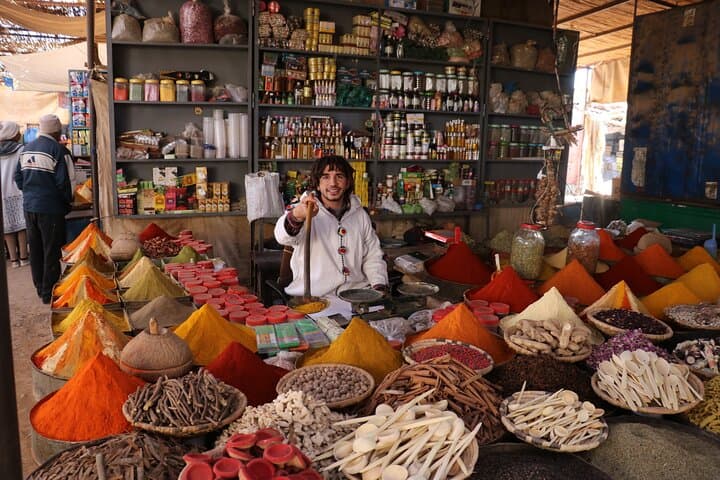
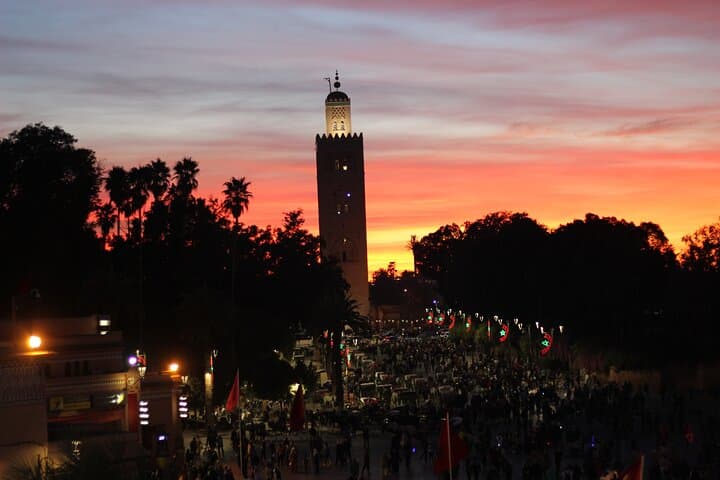
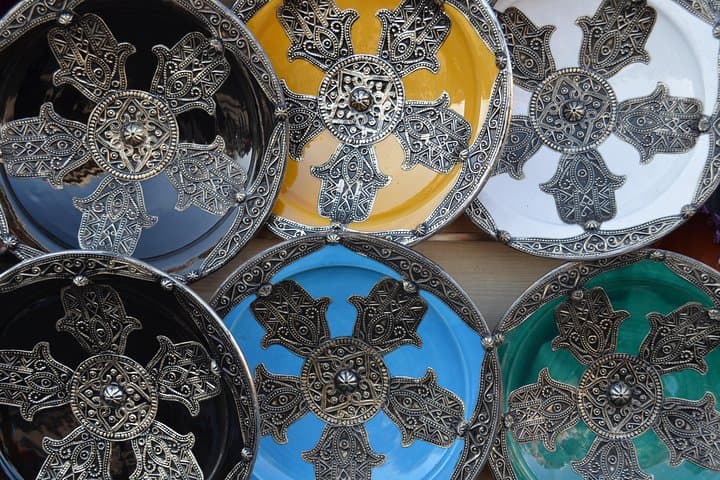
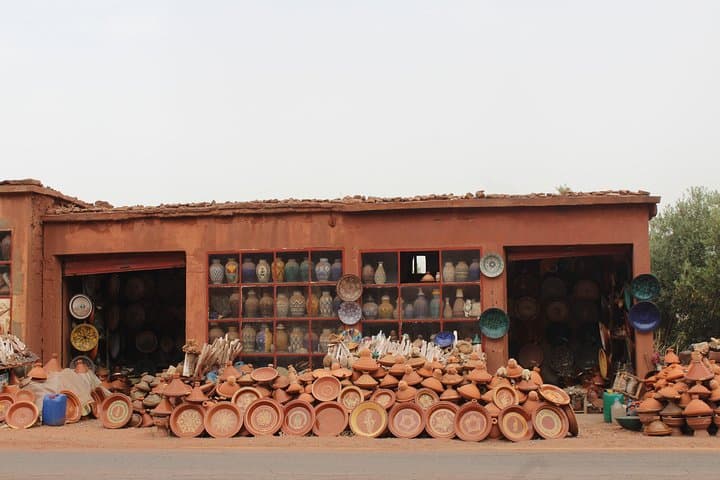
Stepping from the dizzying noise of Jamaa el-Fna into a narrow medina alley feels like passing a threshold: the square’s calls recede and the world tightens to tile, spice, and the rhythm of footsteps on worn stone.
Stepping from the dizzying noise of Jamaa el-Fna into a narrow medina alley feels like passing a threshold: the square’s calls recede and the world tightens to tile, spice, and the rhythm of footsteps on worn stone.
A professional guide clips a path through the souks, pausing to explain the madrasa’s carved cedar and plaster, the trade routes that brought saffron and silver, and the layered history of Almoravid, Saadian and French influences that shaped Marrakech. The city sits on a plain of red earth where the Atlas Mountains push a dry, warm breeze through the palms; the medina itself is a UNESCO-listed labyrinth of workshops, riads and rooftop viewpoints.
Expect focused cultural context—life in the souks, the old Jewish quarter (Mellah), and the role of riads—balanced with practical orientation: how to haggle, which crafts are authentic, and where to sample mint tea without paying tourist prices. Your guide often adds architectural details and local anecdotes that bring sites like Ben Youssef and the Koutoubia area into clearer relief.
Practicalities matter here: this is walking terrain—uneven flagstones and tight alleys—so comfortable shoes and sun protection are essential. The tour runs about 4–5 hours, often including riad pickup or meeting at Jamaa el-Fna; bottled water is typically provided. Plan for mid-morning or late afternoon to avoid peak heat, and carry small change for entrance fees or refreshments. With the right pace, a half-day tour gives both orientation and moments to linger—on a rooftop, at a spice stall, or in a quiet courtyard.