THE ADVENTURE COLLECTIVE® · Independent discovery and booking for outdoor travel

Explore Gondar’s 17th-century castles, see the painted ceiling of Debre Berhan Selassie Church and stand at the edge of Fasiladas’ Bath on a compact half-day tour. Practical, history-rich and walkable—this is an ideal primer on Ethiopia’s imperial heart.
Explore Gondar’s 17th-century castles, see the painted ceiling of Debre Berhan Selassie Church and stand at the edge of Fasiladas’ Bath on a compact half-day tour. Practical, history-rich and walkable—this is an ideal primer on Ethiopia’s imperial heart.
You arrive onto the high Ethiopian plateau as the sun softens the stone of old walls and a cool wind presses against the town. Gondar’s streets open like pages of a history book: squat castles rise with rounded towers, church roofs glow with painted saints, and the scent of coffee drifts from back alleys. The city moves at a deliberate pace; its architecture seems to watch visitors with a patient, carved gaze.
Verified experiences and guided adventures in the surrounding area.
Operated by Ethio Tours · Gondar, Amhara Region
You arrive onto the high Ethiopian plateau as the sun softens the stone of old walls and a cool wind presses against the town. Gondar’s streets open like pages of a history book: squat castles rise with rounded towers, church roofs glow with painted saints, and the scent of coffee drifts from back alleys. The city moves at a deliberate pace; its architecture seems to watch visitors with a patient, carved gaze.
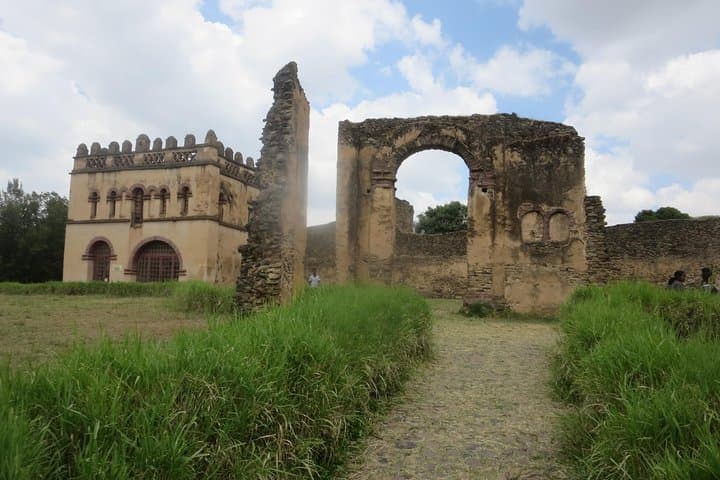
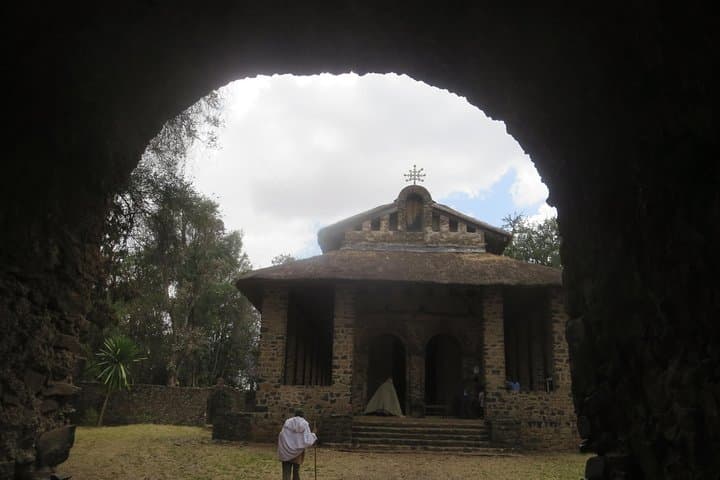
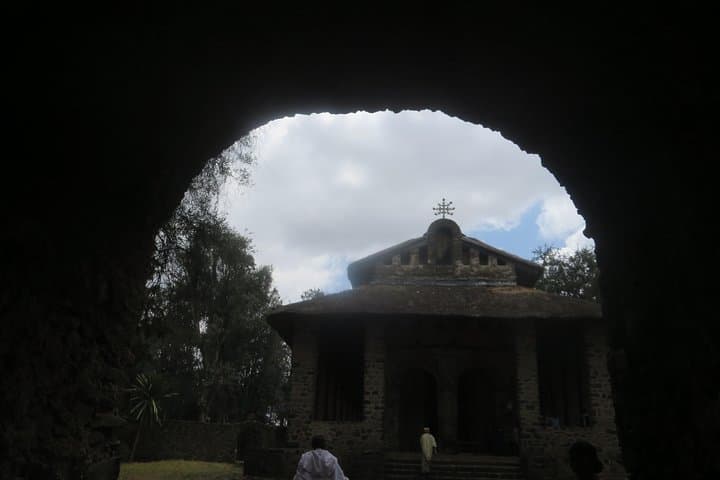
Gondar was Ethiopia’s imperial capital in the 17th century and the remains of Fasil Ghebbi—royal enclosures and castles—are the tour’s main draw. The geology of the plateau is volcanic in origin, feeding the stone used in fortress walls and the thermal pools that collect at Fasiladas’ Bath. At Debre Berhan Selassie Church, the ceiling frescoes of winged faces give a closer look at Ethiopian Orthodox artistry and local religious life.
The half-day itinerary typically includes the castles, Fasil Bath, and the church, with short walks between sites and a local guide explaining court life, religious customs and the annual Timkat celebrations when the baths and churches take on a new urgency. Expect cobbled courtyards, staircases cut from volcanic rock, and neighborhood markets where teff and injera are traded.
Practical guidance: wear comfortable walking shoes for uneven stone, bring sun protection and a small amount of cash for ancillary fees or purchases, and allow time for modest dress inside churches (shoulders and knees covered). If you’re sensitive to altitude, take it easy on arrival—the town sits over 2,100 meters—and drink water. A private, half-day tour is an efficient way to see Gondar’s highlights while leaving time for an afternoon visit to nearby viewpoints or a longer trip to the Simien Mountains.
easy.
4 hours.
Suitable for most travelers with basic mobility; involves short walks on uneven surfaces and stairs.
The private half-day Gondar city tour runs about 4 hours and covers the royal enclosure, Debre Berhan Selassie Church and Fasil Bath with short walks between sites.
Some admissions (e.g., select sites) may be included—confirm with your operator when booking; it’s wise to carry extra cash for any additional fees.
Parts of Gondar’s main sites have level sections, and the operator lists wheelchair accessibility, but many castle areas involve steps—check specifics if mobility is limited.
Gondar is reachable by domestic flight from Addis Ababa or by road; many travelers fly into Gondar Airport then arrange local pickup for the tour.
Gondar served as Ethiopia’s imperial capital from the 17th century; Fasil Ghebbi’s castles and Debre Berhan Selassie’s frescoes reflect the era’s architecture and Orthodox traditions.
Support local guides and vendors, avoid single-use plastics, and respect protected sites by staying on paths and not removing artifacts or stones.
Ethio Tours operates guided outdoor trips and adventures with an emphasis on safety, stewardship, and memorable experiences.
You arrive onto the high Ethiopian plateau as the sun softens the stone of old walls and a cool wind presses against the town. Gondar’s streets open like pages of a history book: squat castles rise with rounded towers, church roofs glow with painted saints, and the scent of coffee drifts from back alleys. The city moves at a deliberate pace; its architecture seems to watch visitors with a patient, carved gaze.
You arrive onto the high Ethiopian plateau as the sun softens the stone of old walls and a cool wind presses against the town. Gondar’s streets open like pages of a history book: squat castles rise with rounded towers, church roofs glow with painted saints, and the scent of coffee drifts from back alleys. The city moves at a deliberate pace; its architecture seems to watch visitors with a patient, carved gaze.
Gondar was Ethiopia’s imperial capital in the 17th century and the remains of Fasil Ghebbi—royal enclosures and castles—are the tour’s main draw. The geology of the plateau is volcanic in origin, feeding the stone used in fortress walls and the thermal pools that collect at Fasiladas’ Bath. At Debre Berhan Selassie Church, the ceiling frescoes of winged faces give a closer look at Ethiopian Orthodox artistry and local religious life.
The half-day itinerary typically includes the castles, Fasil Bath, and the church, with short walks between sites and a local guide explaining court life, religious customs and the annual Timkat celebrations when the baths and churches take on a new urgency. Expect cobbled courtyards, staircases cut from volcanic rock, and neighborhood markets where teff and injera are traded.
Practical guidance: wear comfortable walking shoes for uneven stone, bring sun protection and a small amount of cash for ancillary fees or purchases, and allow time for modest dress inside churches (shoulders and knees covered). If you’re sensitive to altitude, take it easy on arrival—the town sits over 2,100 meters—and drink water. A private, half-day tour is an efficient way to see Gondar’s highlights while leaving time for an afternoon visit to nearby viewpoints or a longer trip to the Simien Mountains.