THE ADVENTURE COLLECTIVE® · Independent discovery and booking for outdoor travel

Spend five efficient hours on the Giza Plateau with an Egyptologist guide: see the Great Pyramid of Cheops, ride a camel across sweeping desert views, visit the Sphinx and Solar Boat Museum, and finish with a local lunch. This short tour delivers big history and practical comforts like pickup and bottled water.
Spend five efficient hours on the Giza Plateau with an Egyptologist guide: see the Great Pyramid of Cheops, ride a camel across sweeping desert views, visit the Sphinx and Solar Boat Museum, and finish with a local lunch. This short tour delivers big history and practical comforts like pickup and bottled water.
Dawn finds the Giza Plateau glowing gold while Cairo’s skyline sits like a distant city of industry beyond the sand. Visitors arrive by air-conditioned vehicle, step onto packed limestone, and confront the scale of the Great Pyramid of Cheops; wind and dust shape the moment into something immediate and physical. A 30-minute camel ride arcs across the plateau, the animal’s gait forcing a deliberate pace that encourages looking — at stone, at sky, at the Sphinx’s weathered gaze.
Verified experiences and guided adventures in the surrounding area.
Operated by Misk Tours · Giza, Giza Governorate
Dawn finds the Giza Plateau glowing gold while Cairo’s skyline sits like a distant city of industry beyond the sand. Visitors arrive by air-conditioned vehicle, step onto packed limestone, and confront the scale of the Great Pyramid of Cheops; wind and dust shape the moment into something immediate and physical. A 30-minute camel ride arcs across the plateau, the animal’s gait forcing a deliberate pace that encourages looking — at stone, at sky, at the Sphinx’s weathered gaze.
These monuments date to Egypt’s Fourth Dynasty; the three main pyramids were constructed as pharaonic tombs and align with ancient astronomical practices. The plateau itself is a band of Eocene limestone resting on older strata, a natural pedestal that held royal funerary architecture for millennia. Culture here blends antiquity and modernity: Egyptologist guides narrate burial rites and quarrying techniques while local handlers manage camels and photo opportunities.
On a practical level this is a compact, moderate outing: expect about five hours including hotel transfers, an expert guide, entrance fees, the Solar Boat Museum visit, and a local lunch. Mornings are cooler and offer optimal light for photography; midday can be intense and dusty. Bring sun protection, a small daypack, and cash for tips or small purchases. Watch your step on uneven stone; follow your guide in and around the Valley Temple and Sphinx to avoid sensitive excavation zones. The tour is ideal for travelers seeking a focused introduction to Egypt’s most iconic site with the convenience of pickup, a guided narrative, and a taste of desert pace across camel-backed views.
easy.
5 hours.
Suitable for most fitness levels; expect short periods of walking on uneven ground and a 30-minute camel ride.
This tour includes entrance fees for the Giza Plateau sites and the Solar Boat Museum as described; double-check your confirmation for specifics.
The included camel ride lasts approximately 30 minutes and is guided by local handlers on the plateau.
Yes — the tour provides hotel pickup and drop-off in Giza and Cairo in an air-conditioned vehicle; confirm your pickup point at booking.
Yes; the itinerary is rated easy and suitable for most ages, though participants should be able to manage short walks and camel mounting with assistance.
The Great Pyramid (Khufu/Cheops) dates to c. 2560 BCE, part of a complex including satellite pyramids, the Sphinx, and the Valley Temple tied to funerary rituals.
Visitor pressure and urban expansion are managed by heritage authorities; stick to marked areas and avoid climbing the pyramids to help preserve the structures.
Misk Tours operates guided outdoor trips and adventures with an emphasis on safety, stewardship, and memorable experiences.

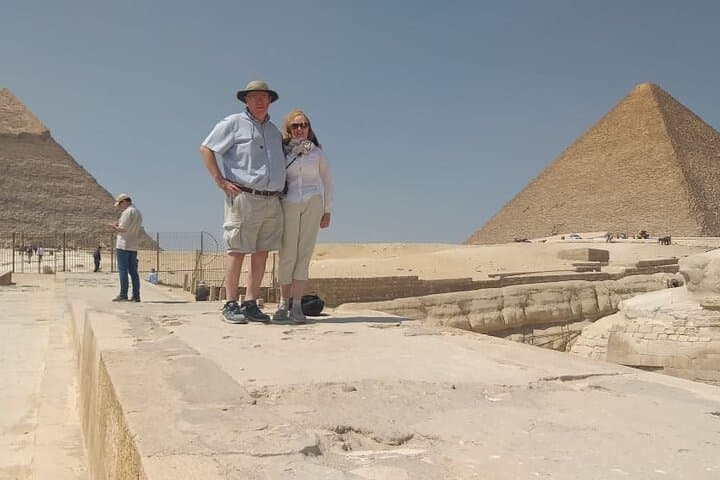

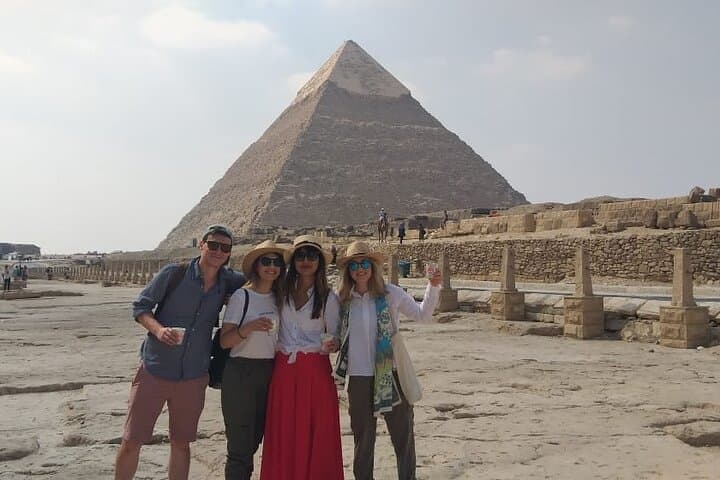
Dawn finds the Giza Plateau glowing gold while Cairo’s skyline sits like a distant city of industry beyond the sand. Visitors arrive by air-conditioned vehicle, step onto packed limestone, and confront the scale of the Great Pyramid of Cheops; wind and dust shape the moment into something immediate and physical. A 30-minute camel ride arcs across the plateau, the animal’s gait forcing a deliberate pace that encourages looking — at stone, at sky, at the Sphinx’s weathered gaze.
Dawn finds the Giza Plateau glowing gold while Cairo’s skyline sits like a distant city of industry beyond the sand. Visitors arrive by air-conditioned vehicle, step onto packed limestone, and confront the scale of the Great Pyramid of Cheops; wind and dust shape the moment into something immediate and physical. A 30-minute camel ride arcs across the plateau, the animal’s gait forcing a deliberate pace that encourages looking — at stone, at sky, at the Sphinx’s weathered gaze.
These monuments date to Egypt’s Fourth Dynasty; the three main pyramids were constructed as pharaonic tombs and align with ancient astronomical practices. The plateau itself is a band of Eocene limestone resting on older strata, a natural pedestal that held royal funerary architecture for millennia. Culture here blends antiquity and modernity: Egyptologist guides narrate burial rites and quarrying techniques while local handlers manage camels and photo opportunities.
On a practical level this is a compact, moderate outing: expect about five hours including hotel transfers, an expert guide, entrance fees, the Solar Boat Museum visit, and a local lunch. Mornings are cooler and offer optimal light for photography; midday can be intense and dusty. Bring sun protection, a small daypack, and cash for tips or small purchases. Watch your step on uneven stone; follow your guide in and around the Valley Temple and Sphinx to avoid sensitive excavation zones. The tour is ideal for travelers seeking a focused introduction to Egypt’s most iconic site with the convenience of pickup, a guided narrative, and a taste of desert pace across camel-backed views.