THE ADVENTURE COLLECTIVE® · Independent discovery and booking for outdoor travel

Explore the Giza Plateau in a focused half-day: enter a pyramid, ride a camel across the sands and stand before the Great Sphinx with an Egyptologist. This practical guide outlines what to expect, key history and how to prepare for the terrain and heat.
Explore the Giza Plateau in a focused half-day: enter a pyramid, ride a camel across the sands and stand before the Great Sphinx with an Egyptologist. This practical guide outlines what to expect, key history and how to prepare for the terrain and heat.
Sand dust lifts in slow eddies as your vehicle eases onto the broad plateau that holds the last ancient wonder. Sunlight angles across stepped limestone; the Great Pyramid looms with geological calm, its blocks still bearing the grainy fingerprints of millennia. A local Egyptologist guides you between monuments, pointing out aligning stones and the slow curve of weathered faces.
Verified experiences and guided adventures in the surrounding area.
Operated by Within Adventure · Giza, Cairo Governorate
Sand dust lifts in slow eddies as your vehicle eases onto the broad plateau that holds the last ancient wonder. Sunlight angles across stepped limestone; the Great Pyramid looms with geological calm, its blocks still bearing the grainy fingerprints of millennia. A local Egyptologist guides you between monuments, pointing out aligning stones and the slow curve of weathered faces.
The Giza complex preserves the royal ambitions of Khufu, Khafre and Menkaure and the Sphinx—likely carved to guard Khafre’s necropolis. The Valley Temple’s dressed stone and channels recall mummification rites and the logistical skill behind royal burials. Geologically, the plateau is Eocene limestone capped by wind-polished surfaces; you’ll notice different stone finishes where ancient builders reused quarry faces.
Culturally, the site sits at the edge of modern Cairo: vendors, camel handlers and mosque calls frame the ruins, creating a living border between past and present. Expect straightforward, tactile encounters—entering one of the accessible pyramids (low ceiling, steep passage), striding across packed sand, and pausing for wide-angle photos from the classic viewpoint.
Practical guidance: wear sturdy, closed shoes and a sun hat, carry water and sunscreen, and be prepared for uneven footing and narrow interior passages. Follow your guide’s route to avoid restricted areas, keep a moderate pace during climbs, and budget time for traffic back into Cairo. A short, focused half-day like this delivers dense history and desert ambience with minimal logistics—perfect if you want the essentials without a full-day drain.
moderate.
4–6 hours.
Requires moderate fitness—walking on uneven sand, short climbs and stooping in interior passages.
Yes—this tour includes entrance to one of the accessible pyramids; expect low, narrow passages and limited mobility inside.
Camel rides are included but not recommended for pregnant travelers or those with serious back or heart problems; handlers will assist mounting and dismounting.
Depending on traffic, door-to-door transfer typically takes 30–60 minutes each way from central Cairo or Giza hotels.
Photography is permitted at the open-air sites; drone use is prohibited and some interior spaces restrict flash and tripods.
The three main pyramids were built for Pharaohs Khufu, Khafre and Menkaure; the adjacent Sphinx likely served as a guardian monument tied to Khafre's complex.
The site faces erosion from wind, urban pollution and heavy visitation; follow signage, avoid touching exposed carved stone and use licensed guides to support conservation efforts.
Within Adventure operates guided outdoor trips and adventures with an emphasis on safety, stewardship, and memorable experiences.
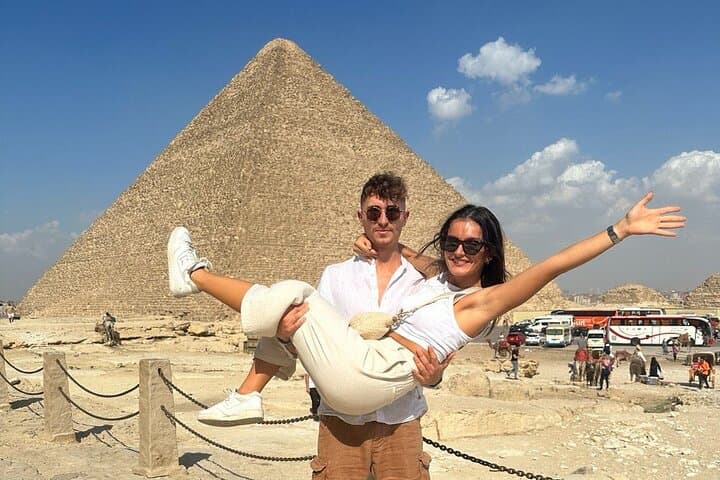
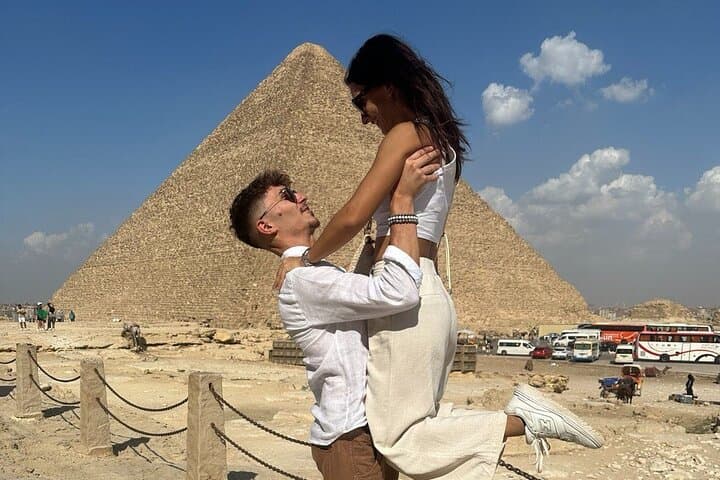
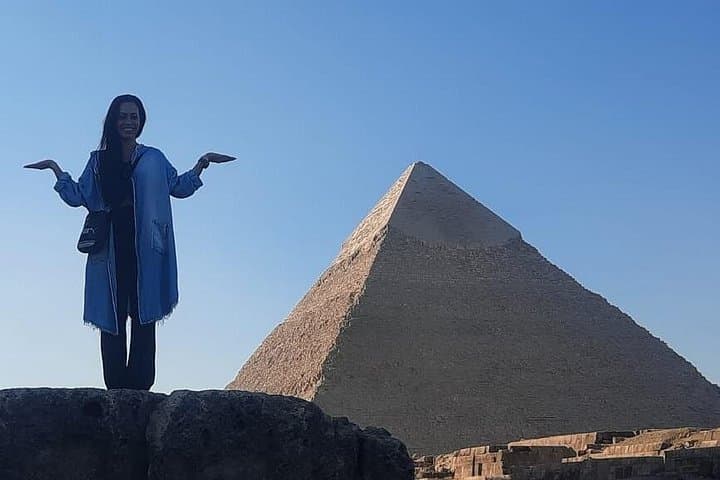

Sand dust lifts in slow eddies as your vehicle eases onto the broad plateau that holds the last ancient wonder. Sunlight angles across stepped limestone; the Great Pyramid looms with geological calm, its blocks still bearing the grainy fingerprints of millennia. A local Egyptologist guides you between monuments, pointing out aligning stones and the slow curve of weathered faces.
Sand dust lifts in slow eddies as your vehicle eases onto the broad plateau that holds the last ancient wonder. Sunlight angles across stepped limestone; the Great Pyramid looms with geological calm, its blocks still bearing the grainy fingerprints of millennia. A local Egyptologist guides you between monuments, pointing out aligning stones and the slow curve of weathered faces.
The Giza complex preserves the royal ambitions of Khufu, Khafre and Menkaure and the Sphinx—likely carved to guard Khafre’s necropolis. The Valley Temple’s dressed stone and channels recall mummification rites and the logistical skill behind royal burials. Geologically, the plateau is Eocene limestone capped by wind-polished surfaces; you’ll notice different stone finishes where ancient builders reused quarry faces.
Culturally, the site sits at the edge of modern Cairo: vendors, camel handlers and mosque calls frame the ruins, creating a living border between past and present. Expect straightforward, tactile encounters—entering one of the accessible pyramids (low ceiling, steep passage), striding across packed sand, and pausing for wide-angle photos from the classic viewpoint.
Practical guidance: wear sturdy, closed shoes and a sun hat, carry water and sunscreen, and be prepared for uneven footing and narrow interior passages. Follow your guide’s route to avoid restricted areas, keep a moderate pace during climbs, and budget time for traffic back into Cairo. A short, focused half-day like this delivers dense history and desert ambience with minimal logistics—perfect if you want the essentials without a full-day drain.