THE ADVENTURE COLLECTIVE® · Independent discovery and booking for outdoor travel

Spend a concentrated morning or afternoon on the Giza Plateau—see the Great Pyramid, the Sphinx and take a short camel ride while learning construction mysteries and local context from a guide. Ideal for travelers short on time who want a high-impact cultural encounter.
Spend a concentrated morning or afternoon on the Giza Plateau—see the Great Pyramid, the Sphinx and take a short camel ride while learning construction mysteries and local context from a guide. Ideal for travelers short on time who want a high-impact cultural encounter.
You step off an air-conditioned minivan and the desert opens like a page from a hard-won history book: wind-swept sand, the amber faces of limestone blocks, and the hulking silhouette of the Great Pyramid watching over the plateau.
Verified experiences and guided adventures in the surrounding area.
Operated by Traveler Egypt · Giza, Giza Governorate
You step off an air-conditioned minivan and the desert opens like a page from a hard-won history book: wind-swept sand, the amber faces of limestone blocks, and the hulking silhouette of the Great Pyramid watching over the plateau.
On a half-day tour visitors encounter the three main pyramids, the enigmatic Sphinx and the low scrub of desert that frames them. Guides explain construction theories, burial customs and the logistics of moving multi-ton stone—layers of practical engineering stacked atop spiritual purpose. Geologically, the plateau is a reef‑rock outcrop capped by quarried limestone; time and sand have smoothed some edges while leaving others sharp and abrupt. Culturally, this place has been a pilgrimage center for millennia and remains central to Egypt’s identity and tourism economy.
Expect close-up photo opportunities, a short camel ride across soft sand (about 20 minutes), and a brisk walk on uneven surfaces. The sun is a constant actor here: bring shade, hydrate, and plan mornings or late afternoons for softer light. Accessibility varies—paths around major viewpoints are generally manageable, but moving across sand or up toward viewing terraces requires steady footing.
Practical tips: allow 4–5 hours from pickup to drop-off, carry local currency for tips and small purchases, and respect signage—climbing on monuments is prohibited. With a knowledgeable guide, this condensed itinerary gives a focused, sensory introduction to one of the world’s oldest urban landscapes.
easy.
4–5 hours.
Suitable for most fitness levels; involves several short walks on uneven sand and some standing while exploring viewpoints.
Entrance to the Giza Plateau is typically included; access inside specific pyramids may require an additional ticket—confirm with the operator before booking.
The included camel experience is a short ride of about 15–25 minutes across the plateau—it's designed for photos and atmosphere, not long treks.
Basic facilities and a café area exist near visitor centers; bring small change as services are simple and can be busy.
Some areas and the transport vehicle are wheelchair accessible, but moving across sand to viewpoints may not be; check specific accessibility arrangements with the supplier.
The Giza Plateau dates to the Fourth Dynasty (c. 2600–2500 BCE); the Great Pyramid served as a monumental tomb and a demonstration of centralized royal power and engineering.
Heavy visitation stresses fragile surfaces and local ecosystems; visitors should stick to designated paths, avoid littering and support operators who follow park rules.
Traveler Egypt operates guided outdoor trips and adventures with an emphasis on safety, stewardship, and memorable experiences.
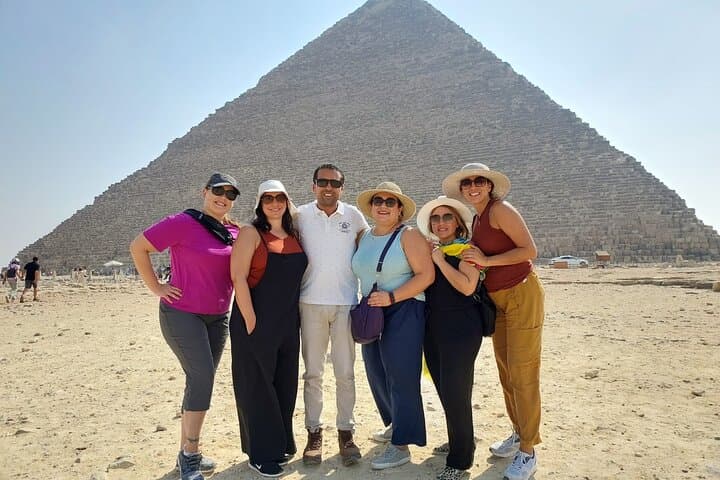
You step off an air-conditioned minivan and the desert opens like a page from a hard-won history book: wind-swept sand, the amber faces of limestone blocks, and the hulking silhouette of the Great Pyramid watching over the plateau.
You step off an air-conditioned minivan and the desert opens like a page from a hard-won history book: wind-swept sand, the amber faces of limestone blocks, and the hulking silhouette of the Great Pyramid watching over the plateau.
On a half-day tour visitors encounter the three main pyramids, the enigmatic Sphinx and the low scrub of desert that frames them. Guides explain construction theories, burial customs and the logistics of moving multi-ton stone—layers of practical engineering stacked atop spiritual purpose. Geologically, the plateau is a reef‑rock outcrop capped by quarried limestone; time and sand have smoothed some edges while leaving others sharp and abrupt. Culturally, this place has been a pilgrimage center for millennia and remains central to Egypt’s identity and tourism economy.
Expect close-up photo opportunities, a short camel ride across soft sand (about 20 minutes), and a brisk walk on uneven surfaces. The sun is a constant actor here: bring shade, hydrate, and plan mornings or late afternoons for softer light. Accessibility varies—paths around major viewpoints are generally manageable, but moving across sand or up toward viewing terraces requires steady footing.
Practical tips: allow 4–5 hours from pickup to drop-off, carry local currency for tips and small purchases, and respect signage—climbing on monuments is prohibited. With a knowledgeable guide, this condensed itinerary gives a focused, sensory introduction to one of the world’s oldest urban landscapes.