THE ADVENTURE COLLECTIVE® · Independent discovery and booking for outdoor travel

See the Great Pyramid up close, enter its narrow internal passage, and photograph all three Giza pyramids on a focused half-day tour with private transfers and a local guide. Ideal for travelers who want history and efficient logistics in one morning.
See the Great Pyramid up close, enter its narrow internal passage, and photograph all three Giza pyramids on a focused half-day tour with private transfers and a local guide. Ideal for travelers who want history and efficient logistics in one morning.
Walking onto the Giza Plateau feels like stepping onto a stage where wind and stone keep the lines of a very old story. Dust lifts underfoot, camels stand patient at the edge of the frame, and the Great Pyramid rises, sheer and deliberate, daring you to approach.
Verified experiences and guided adventures in the surrounding area.
Operated by Virtue Day Tours · Giza, Giza Governorate
Walking onto the Giza Plateau feels like stepping onto a stage where wind and stone keep the lines of a very old story. Dust lifts underfoot, camels stand patient at the edge of the frame, and the Great Pyramid rises, sheer and deliberate, daring you to approach.
This half-day tour moves fast: a panoramic stop for that classic three-pyramid shot, time at Khafre’s second pyramid, a visit to Menkaure, then the Sphinx and the Valley Temple. The Great Pyramid (Khufu), constructed around 2560 BCE, is the centerpiece — the only surviving structure of the ancient Seven Wonders — and the itinerary often includes the low, steep crawl into its internal passage for those comfortable with tight spaces.
Geologically the plateau is a mesa of limestone bedrock; the blocks you’ll see were quarried on nearby slopes and fitted with astonishing precision. Culturally, the site has been a focal point of Egyptian identity for millennia; local guides translate myths, funerary practice, and engineering theories into clear, on-the-ground context.
Practical guidance: expect uneven stone, desert heat, and short walks between stops. Bring sunscreen, a brimmed hat, and a reusable water bottle; photography is unrestricted in most outdoor areas but flash and drones are controlled. If you plan to enter the Great Pyramid, note the stooping and narrow passages — it’s not recommended for those with claustrophobia or limited mobility. The tour’s private-vehicle transfers make timing straightforward; aim for early morning or late afternoon to avoid peak sun and crowds.
moderate.
3–4 hours.
Basic walking fitness; able to manage short, uneven walks and low tunnel crawl if entering the pyramid
This tour typically offers the option to enter the Great Pyramid; confirm with the operator when booking since entry availability can be limited by daily caps and conservation rules.
No — the interior has low, steep passages and is not recommended for people with claustrophobia, spinal issues, or limited mobility; pregnant travelers should check with their doctor and the operator.
Early morning or late afternoon gives cooler temperatures, softer light for photographs, and fewer visitors on the plateau.
Yes for the outdoor sites and most temple areas; rules can be stricter inside enclosed or sensitive areas and flash or drone use is often restricted—follow your guide’s directions.
The Giza complex dates to Egypt’s Fourth Dynasty (c. 2600–2500 BCE); Khufu’s pyramid is the oldest and largest, reflecting centralized labor and monumental engineering.
Visitor pressure and pollution threaten fragile stone surfaces; stick to pathways, avoid touching carved faces, and follow guide instructions to minimize impact.
Virtue Day Tours operates guided outdoor trips and adventures with an emphasis on safety, stewardship, and memorable experiences.
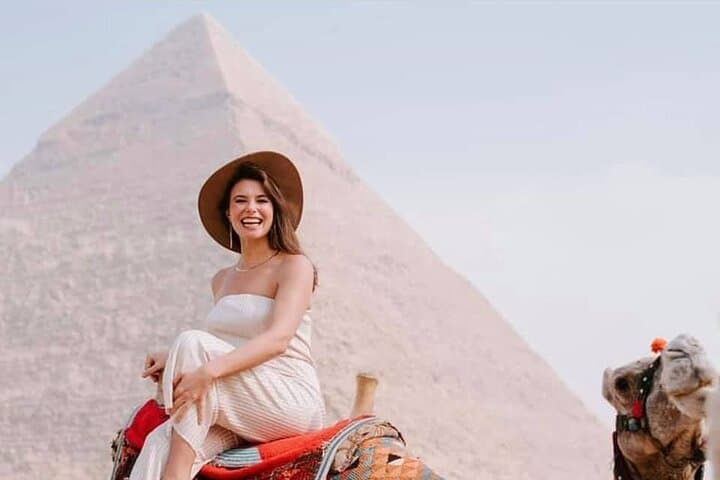
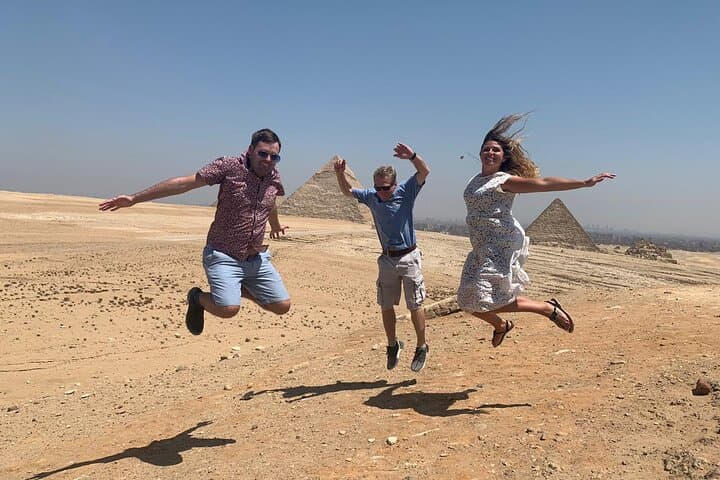
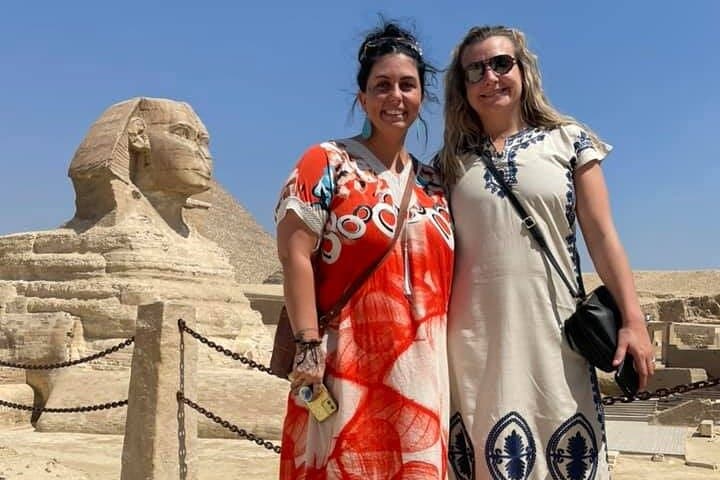
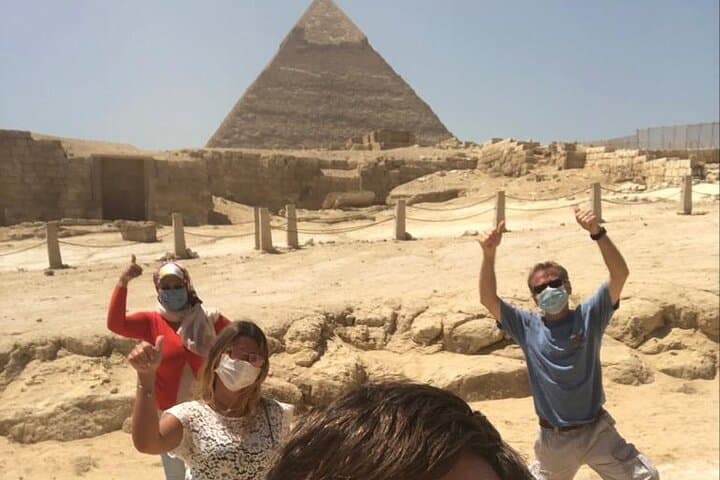
Walking onto the Giza Plateau feels like stepping onto a stage where wind and stone keep the lines of a very old story. Dust lifts underfoot, camels stand patient at the edge of the frame, and the Great Pyramid rises, sheer and deliberate, daring you to approach.
Walking onto the Giza Plateau feels like stepping onto a stage where wind and stone keep the lines of a very old story. Dust lifts underfoot, camels stand patient at the edge of the frame, and the Great Pyramid rises, sheer and deliberate, daring you to approach.
This half-day tour moves fast: a panoramic stop for that classic three-pyramid shot, time at Khafre’s second pyramid, a visit to Menkaure, then the Sphinx and the Valley Temple. The Great Pyramid (Khufu), constructed around 2560 BCE, is the centerpiece — the only surviving structure of the ancient Seven Wonders — and the itinerary often includes the low, steep crawl into its internal passage for those comfortable with tight spaces.
Geologically the plateau is a mesa of limestone bedrock; the blocks you’ll see were quarried on nearby slopes and fitted with astonishing precision. Culturally, the site has been a focal point of Egyptian identity for millennia; local guides translate myths, funerary practice, and engineering theories into clear, on-the-ground context.
Practical guidance: expect uneven stone, desert heat, and short walks between stops. Bring sunscreen, a brimmed hat, and a reusable water bottle; photography is unrestricted in most outdoor areas but flash and drones are controlled. If you plan to enter the Great Pyramid, note the stooping and narrow passages — it’s not recommended for those with claustrophobia or limited mobility. The tour’s private-vehicle transfers make timing straightforward; aim for early morning or late afternoon to avoid peak sun and crowds.