THE ADVENTURE COLLECTIVE® · Independent discovery and booking for outdoor travel

Experience the Great Pyramid, Khafre and Menkaure plus the Sphinx on a focused 2–3 hour tour with a camel ride and local guide. This half-day visit blends close-up views, cultural context, and practical logistics for first-time visitors.
Experience the Great Pyramid, Khafre and Menkaure plus the Sphinx on a focused 2–3 hour tour with a camel ride and local guide. This half-day visit blends close-up views, cultural context, and practical logistics for first-time visitors.
The morning opens on the Giza Plateau with wind-buffed sand underfoot and the blunt silhouettes of three ancient pyramids cutting the sky. You arrive to a terrain that feels both vast and intimate — the Great Pyramid rises like a deliberate geometry lesson, while the Sphinx watches the horizon with a carved, human gaze. A short camel ride along the base brings you close to the stones, each block marked by centuries of hands and weather.
Verified experiences and guided adventures in the surrounding area.
Operated by Mario Egypt Tours · Giza, Giza Governorate
The morning opens on the Giza Plateau with wind-buffed sand underfoot and the blunt silhouettes of three ancient pyramids cutting the sky. You arrive to a terrain that feels both vast and intimate — the Great Pyramid rises like a deliberate geometry lesson, while the Sphinx watches the horizon with a carved, human gaze. A short camel ride along the base brings you close to the stones, each block marked by centuries of hands and weather.
These monuments date to Egypt’s Fourth Dynasty (c. 2600–2500 BCE); the Great Pyramid of Khufu is the oldest surviving Wonder of the Ancient World. Geologically the plateau is a band of limestone and Nummulitic marl, quarried by pharaohs and later pilgrims. Around the site, Bedouin culture and modern Cairo life intersect — vendors selling papyrus and perfumes, guide narratives that thread archaeology with local stories.
Practically, this half-day tour runs about 2–3 hours and covers short, uneven walks, brief camel or horse exchanges, and close-up viewing areas (entry to pyramid interiors may be separate). Wear sturdy shoes for sand and limestone, sun protection, and carry water; mornings are cooler and clearer for photos. Expect accessible pickup in an air-conditioned vehicle and a paced visit that balances iconic viewpoints with time for a local lunch or shopping.
Respect site rules: do not climb the stones, keep to designated paths, and tip guides and handlers fairly. Arrive early to avoid the sun and crowds, and let the plateau’s scale sink in — the monuments reward a measured, ground-level appreciation.
easy.
2–3 hours.
Suitable for most fitness levels; requires short walks on sand and uneven stone and the ability to mount a camel if you choose.
Standard tours may include outdoor-area admissions; interior access to pyramids often requires a separate ticket—check your booking details.
Yes — handlers provide assistance and mounts are calm, but let your guide know if you have mobility concerns; mounting involves a sudden stand of the camel.
No — climbing is strictly prohibited for preservation and safety; stay on designated viewing areas and follow staff instructions.
Pickup and vehicle transport can be arranged as accessible, but the plateau has uneven surfaces; accessibility within close viewing zones varies by exact route.
The Great Pyramid of Khufu was built around 2560 BCE and remains the largest of the Giza pyramids; the Sphinx likely represents Pharaoh Khafre and dates to the same era.
Visitor pressure and sandblasting impact the limestone surfaces; stay on marked paths, avoid touching carved stone, and support licensed guides and local conservation fees when available.
Mario Egypt Tours operates guided outdoor trips and adventures with an emphasis on safety, stewardship, and memorable experiences.
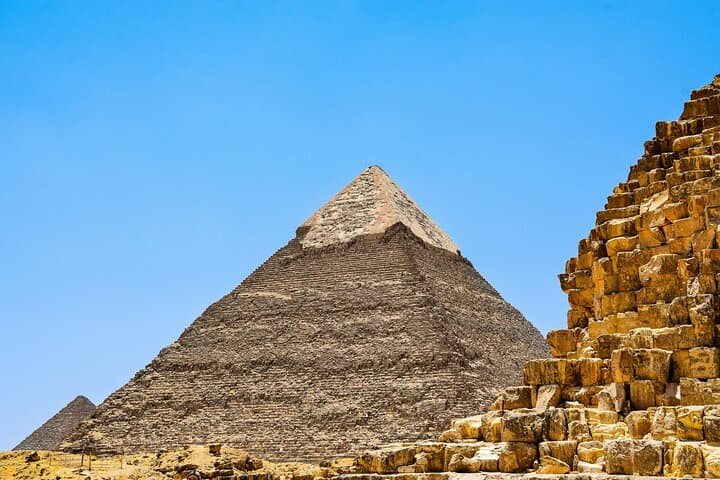
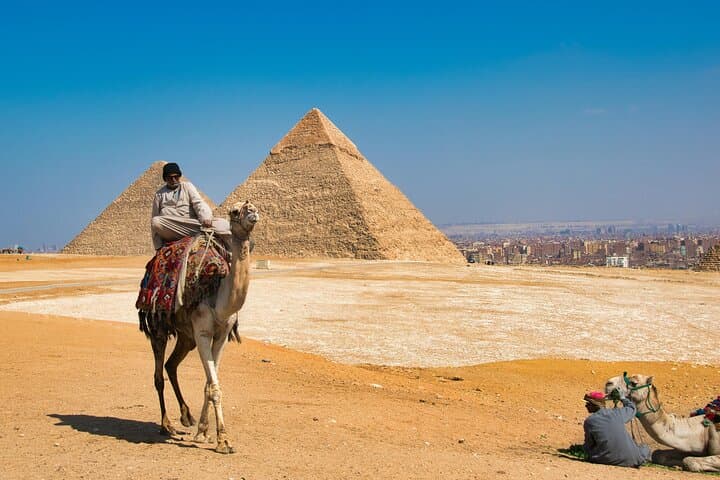
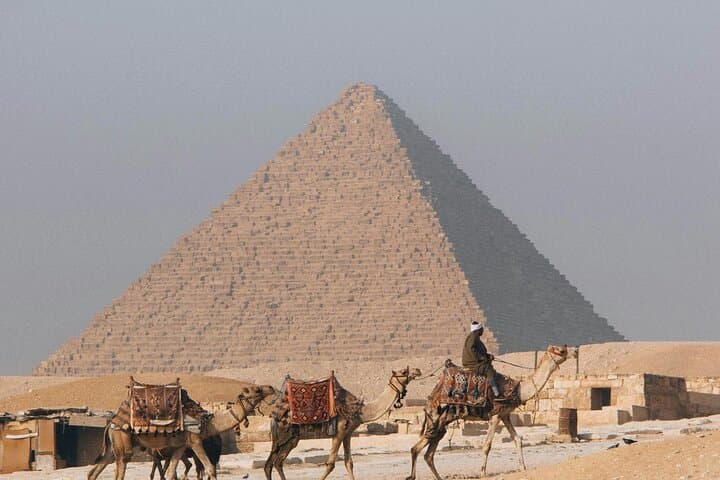
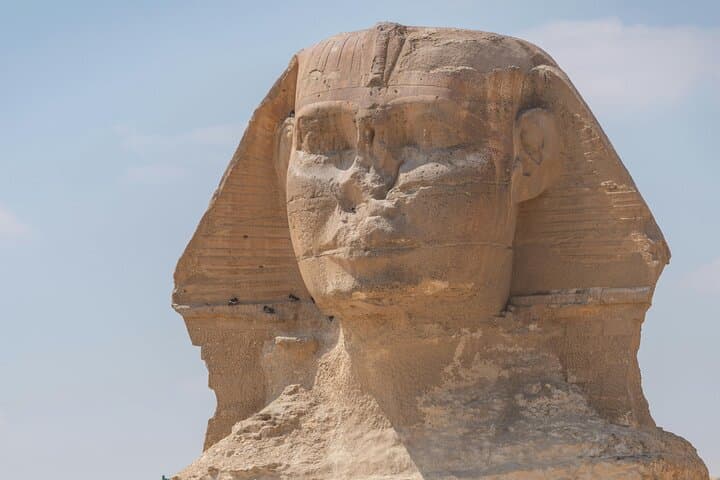
The morning opens on the Giza Plateau with wind-buffed sand underfoot and the blunt silhouettes of three ancient pyramids cutting the sky. You arrive to a terrain that feels both vast and intimate — the Great Pyramid rises like a deliberate geometry lesson, while the Sphinx watches the horizon with a carved, human gaze. A short camel ride along the base brings you close to the stones, each block marked by centuries of hands and weather.
The morning opens on the Giza Plateau with wind-buffed sand underfoot and the blunt silhouettes of three ancient pyramids cutting the sky. You arrive to a terrain that feels both vast and intimate — the Great Pyramid rises like a deliberate geometry lesson, while the Sphinx watches the horizon with a carved, human gaze. A short camel ride along the base brings you close to the stones, each block marked by centuries of hands and weather.
These monuments date to Egypt’s Fourth Dynasty (c. 2600–2500 BCE); the Great Pyramid of Khufu is the oldest surviving Wonder of the Ancient World. Geologically the plateau is a band of limestone and Nummulitic marl, quarried by pharaohs and later pilgrims. Around the site, Bedouin culture and modern Cairo life intersect — vendors selling papyrus and perfumes, guide narratives that thread archaeology with local stories.
Practically, this half-day tour runs about 2–3 hours and covers short, uneven walks, brief camel or horse exchanges, and close-up viewing areas (entry to pyramid interiors may be separate). Wear sturdy shoes for sand and limestone, sun protection, and carry water; mornings are cooler and clearer for photos. Expect accessible pickup in an air-conditioned vehicle and a paced visit that balances iconic viewpoints with time for a local lunch or shopping.
Respect site rules: do not climb the stones, keep to designated paths, and tip guides and handlers fairly. Arrive early to avoid the sun and crowds, and let the plateau’s scale sink in — the monuments reward a measured, ground-level appreciation.