THE ADVENTURE COLLECTIVE® · Independent discovery and booking for outdoor travel

Walk among 4,500-year-old pyramids with a private Egyptologist guiding you across the Giza Plateau. Learn the history, grab panoramic shots, and ride a camel—while practical tips keep your half-day efficient and comfortable.
Walk among 4,500-year-old pyramids with a private Egyptologist guiding you across the Giza Plateau. Learn the history, grab panoramic shots, and ride a camel—while practical tips keep your half-day efficient and comfortable.
You step out of the air-conditioned vehicle onto the hard-won sweep of the Giza Plateau: sun on limestone, a thin red wind that lifts sand across the stones, and the silhouettes of three pyramids cutting the horizon. Your Egyptologist guide leads the way, voice low with dates and dynasties, while camels stand patient in the heat and tourists arrange for the perfect frame.
Verified experiences and guided adventures in the surrounding area.
Operated by KEMET TOURS · Giza, Cairo Governorate
You step out of the air-conditioned vehicle onto the hard-won sweep of the Giza Plateau: sun on limestone, a thin red wind that lifts sand across the stones, and the silhouettes of three pyramids cutting the horizon. Your Egyptologist guide leads the way, voice low with dates and dynasties, while camels stand patient in the heat and tourists arrange for the perfect frame.
These stone giants—Khufu, Khafre and Menkaure—were raised roughly 4,500 years ago from quarried limestone and distant Aswan granite and still show the work of ancient engineers: casing stones, causeways and the Valley Temple used in mummification rites. The Great Sphinx, worn by wind and centuries, keeps its ancient watch close to Khafre’s complex.
Culture and archaeology are immediate here: your guide will explain burial rituals, builder logistics and modern conservation challenges. Geologically, the plateau is a limestone bench atop older sedimentary layers; quarry marks and tool scars are visible if you look closely.
Practicalities matter: the public areas are flat but sandy; interior pyramid access requires a separate ticket and is limited. Plan morning or late-afternoon timings to avoid the strongest sun and use the panoramic viewpoint for broad photos. Camel rides are optional—negotiate price first and keep valuables secure. Bring sun protection, a refillable water bottle, and small Egyptian pounds for tips or quick purchases. With a private guide and transport, you get context, timing and efficient access—turning an iconic sight into a manageable, unforgettable half-day adventure.
easy.
4–6 hours.
Light walking on sandy and paved surfaces; suitable for most fitness levels
Yes—entry to the general Giza Plateau is covered by the site ticket, but interior access to pyramids requires a separate, limited ticket purchased at the site or in advance.
Most private half-day tours run about 4–6 hours including hotel pickup, guided time on the plateau and return transport.
Camel rides are widely offered and generally safe, but operators vary; ask about harnesses, the camel’s temperament, and insist on a helper for children.
Key areas and viewing platforms are accessible, and many operators offer wheelchair-accessible transport—confirm when booking for specific assistance.
Khufu’s Great Pyramid is the only remaining structure of the ancient Seven Wonders and dates to roughly 2560 BCE, reflecting Old Kingdom funerary architecture.
High visitor numbers stress the plateau’s surfaces—stick to paths, avoid touching masonry and support licensed guides who follow preservation rules.
KEMET TOURS operates guided outdoor trips and adventures with an emphasis on safety, stewardship, and memorable experiences.
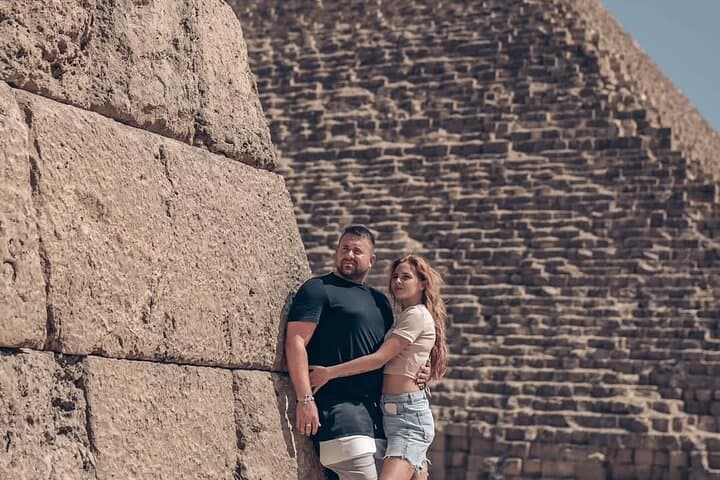
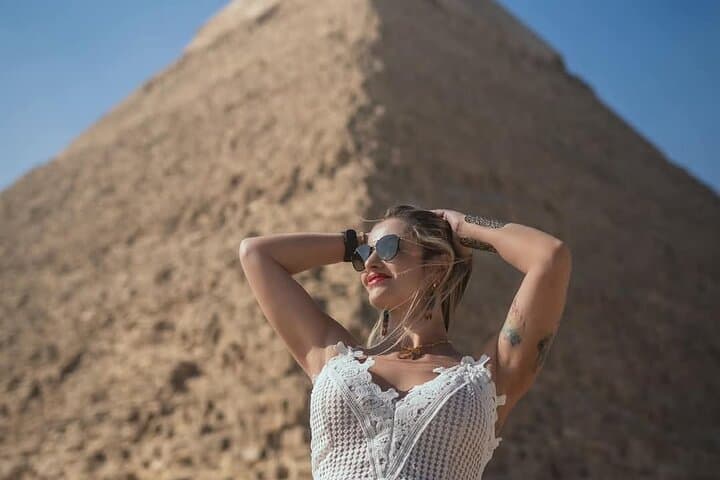
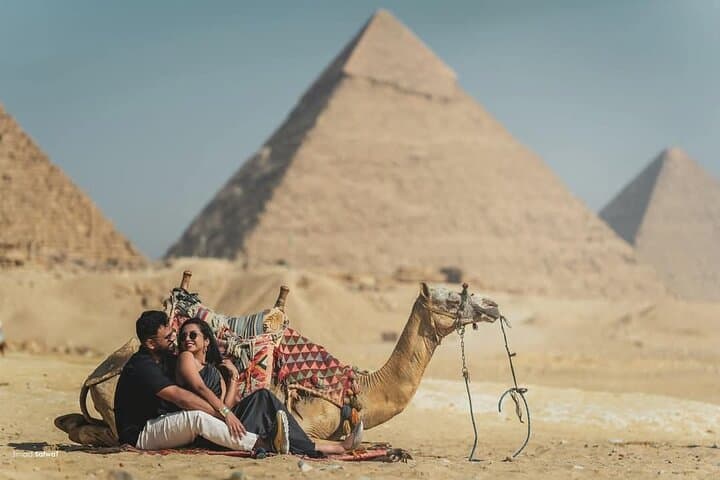
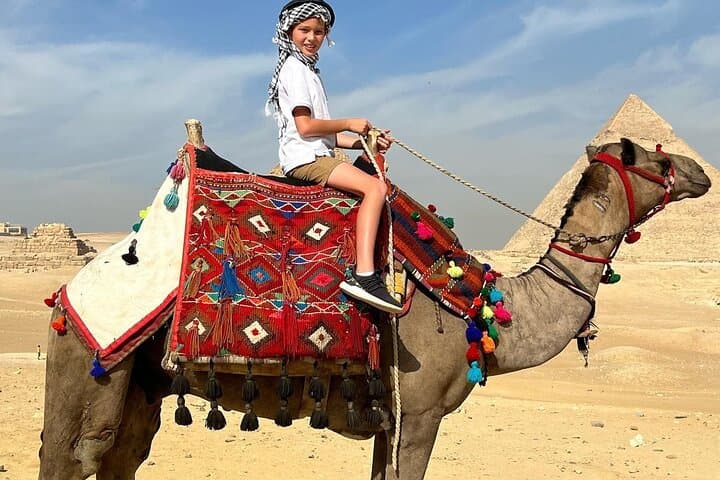
You step out of the air-conditioned vehicle onto the hard-won sweep of the Giza Plateau: sun on limestone, a thin red wind that lifts sand across the stones, and the silhouettes of three pyramids cutting the horizon. Your Egyptologist guide leads the way, voice low with dates and dynasties, while camels stand patient in the heat and tourists arrange for the perfect frame.
You step out of the air-conditioned vehicle onto the hard-won sweep of the Giza Plateau: sun on limestone, a thin red wind that lifts sand across the stones, and the silhouettes of three pyramids cutting the horizon. Your Egyptologist guide leads the way, voice low with dates and dynasties, while camels stand patient in the heat and tourists arrange for the perfect frame.
These stone giants—Khufu, Khafre and Menkaure—were raised roughly 4,500 years ago from quarried limestone and distant Aswan granite and still show the work of ancient engineers: casing stones, causeways and the Valley Temple used in mummification rites. The Great Sphinx, worn by wind and centuries, keeps its ancient watch close to Khafre’s complex.
Culture and archaeology are immediate here: your guide will explain burial rituals, builder logistics and modern conservation challenges. Geologically, the plateau is a limestone bench atop older sedimentary layers; quarry marks and tool scars are visible if you look closely.
Practicalities matter: the public areas are flat but sandy; interior pyramid access requires a separate ticket and is limited. Plan morning or late-afternoon timings to avoid the strongest sun and use the panoramic viewpoint for broad photos. Camel rides are optional—negotiate price first and keep valuables secure. Bring sun protection, a refillable water bottle, and small Egyptian pounds for tips or quick purchases. With a private guide and transport, you get context, timing and efficient access—turning an iconic sight into a manageable, unforgettable half-day adventure.