THE ADVENTURE COLLECTIVE® · Independent discovery and booking for outdoor travel

Walk among millennia-old stone and take a gentle camel ride on the Giza Plateau. This half-day, private tour pairs archaeological insight with practical tips for seeing the pyramids, Sphinx and Valley Temple without the crowds.
Walk among millennia-old stone and take a gentle camel ride on the Giza Plateau. This half-day, private tour pairs archaeological insight with practical tips for seeing the pyramids, Sphinx and Valley Temple without the crowds.
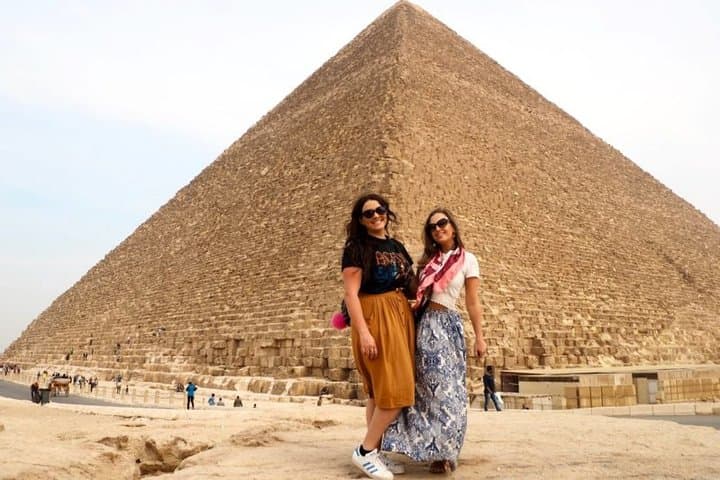
The wind off the desert pushes a fine spray of sand across the plateau as you step into the shadow of the Great Pyramid—its blocks rise like a stepped horizon against the bright Cairo sky.
Verified experiences and guided adventures in the surrounding area.
Operated by Grand Egypt Tours · Giza, Giza Governorate
The wind off the desert pushes a fine spray of sand across the plateau as you step into the shadow of the Great Pyramid—its blocks rise like a stepped horizon against the bright Cairo sky.
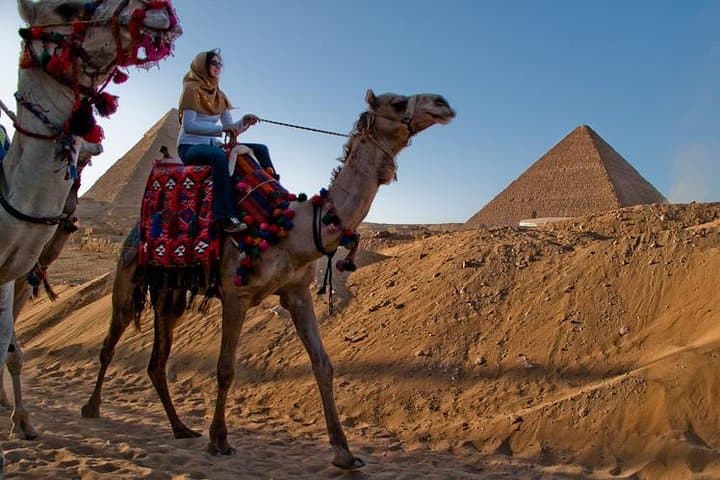
You begin in front of Khufu's pyramid, the largest of the three Giza monuments, moving on to Chephren and Mykerinos with a panoramic view that lets you take all three at once. The camel ride threads you around the base of the stones, offering an old-world pace to study weathered casing stones and the plateau's hard limestone underfoot.
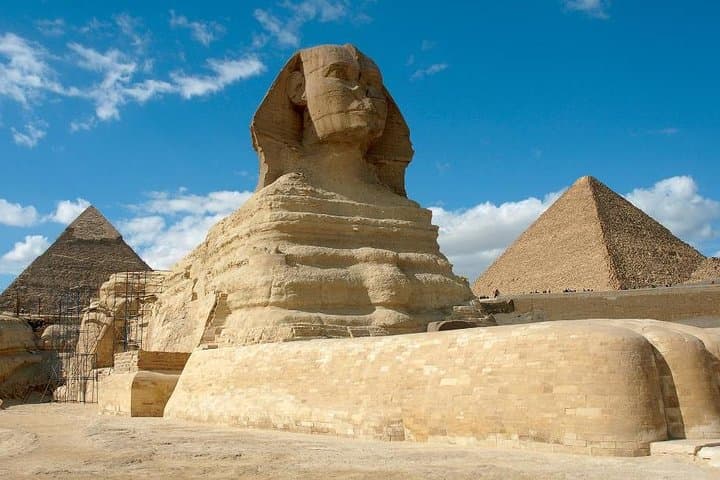
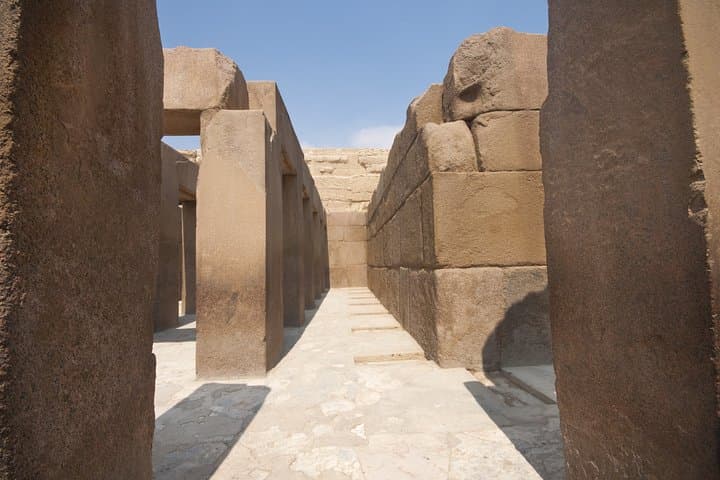
This landscape is pure Old Kingdom engineering: pyramids erected as tomb complexes, the Valley Temple used for purification and funerary rites, and the Sphinx—most scholars connect its face with Khafre—standing guard at the pyramid group's entrance. Geologically the plateau is Eocene limestone; centuries of wind and human activity have exposed its layered beds and block-cut scars.
Practicalities shape the visit: tours typically run 3–4 hours with hotel pickup and bottled water provided. Wear sturdy shoes for uneven, sandy surfaces, sun protection for intense midday rays, and plan for early morning to avoid heat and crowds. Respect conservation rules—do not climb the monuments—and follow your Egyptologist guide for context and safe photo opportunities.
A short camel ride adds local color but is optional; negotiate with guides and watch for animal welfare. Leave time afterward for a slower walk around the Valley Temple and the Sphinx esplanade to absorb scale and history without the rush.
easy.
3–4 hours.
Suitable for most fitness levels; requires walking on uneven, sandy and rocky surfaces and mounting a camel for a short ride.
The itinerary typically includes a 30-minute camel ride around the plateau; confirm duration with your guide before starting.
Access to pyramid interiors is restricted and limited tickets may be required; check with your operator and expect extra fees for interior entry.
Yes—this private tour is suitable for children when accompanied by adults; keep an eye around animals and uneven terrain.
Smart-casual dress is advised; breathable fabrics, closed-toe shoes, and sun protection will make your visit more comfortable.
The Giza complex was built during Egypt’s Old Kingdom as royal funerary complexes; the three main pyramids are attributed to Khufu, Khafre and Menkaure.
Visitor pressure, wind erosion and past restoration efforts affect the site; follow site rules, avoid touching fragile masonry and support licensed local guides to promote responsible tourism.
Grand Egypt Tours operates guided outdoor trips and adventures with an emphasis on safety, stewardship, and memorable experiences.
The wind off the desert pushes a fine spray of sand across the plateau as you step into the shadow of the Great Pyramid—its blocks rise like a stepped horizon against the bright Cairo sky.
The wind off the desert pushes a fine spray of sand across the plateau as you step into the shadow of the Great Pyramid—its blocks rise like a stepped horizon against the bright Cairo sky.
You begin in front of Khufu's pyramid, the largest of the three Giza monuments, moving on to Chephren and Mykerinos with a panoramic view that lets you take all three at once. The camel ride threads you around the base of the stones, offering an old-world pace to study weathered casing stones and the plateau's hard limestone underfoot.
This landscape is pure Old Kingdom engineering: pyramids erected as tomb complexes, the Valley Temple used for purification and funerary rites, and the Sphinx—most scholars connect its face with Khafre—standing guard at the pyramid group's entrance. Geologically the plateau is Eocene limestone; centuries of wind and human activity have exposed its layered beds and block-cut scars.
Practicalities shape the visit: tours typically run 3–4 hours with hotel pickup and bottled water provided. Wear sturdy shoes for uneven, sandy surfaces, sun protection for intense midday rays, and plan for early morning to avoid heat and crowds. Respect conservation rules—do not climb the monuments—and follow your Egyptologist guide for context and safe photo opportunities.
A short camel ride adds local color but is optional; negotiate with guides and watch for animal welfare. Leave time afterward for a slower walk around the Valley Temple and the Sphinx esplanade to absorb scale and history without the rush.