THE ADVENTURE COLLECTIVE® · Independent discovery and booking for outdoor travel

A focused half‑day private tour of the Giza Plateau that combines an Egyptologist’s narration with a relaxed 1‑hour camel ride. Perfect for travelers who want context and convenience while seeing the pyramids, Sphinx, and Valley Temple.
A focused half‑day private tour of the Giza Plateau that combines an Egyptologist’s narration with a relaxed 1‑hour camel ride. Perfect for travelers who want context and convenience while seeing the pyramids, Sphinx, and Valley Temple.
You step from an air‑conditioned car onto the sun-bright Giza Plateau and the scale of the place arrives before you: angular limestone faces, scattered blocks that have weathered millennia, and the Great Pyramid rising like a human-made mountain.
Verified experiences and guided adventures in the surrounding area.
Operated by Yalla Egypt Tours LLC · Giza, Giza Governorate
You step from an air‑conditioned car onto the sun-bright Giza Plateau and the scale of the place arrives before you: angular limestone faces, scattered blocks that have weathered millennia, and the Great Pyramid rising like a human-made mountain.
This half‑day private tour pairs a tight, interpretive walk with an easy camel loop. An Egyptologist guide explains the 4,500‑year history of Khufu’s tomb, the secondary pyramids, and the Valley Temple where mummification rituals took place, while geology lessons pop up in the field—limestone bedrock, wind‑blown sand, and the ancient Nile’s sediments beneath your feet.
Local culture is audible and visible: vendors calling out, camel handlers offering short rides, and the subtle presence of modern Cairo just beyond the plateau. The Solar Boat Museum and nearby workers’ tombs are quieter corners worth a quick detour if time allows.
Practical details matter here. Expect sandy, uneven ground and short stone steps; closed‑toe shoes make the flat walking and rocky edges far more comfortable. The camel ride (about an hour) is gentle but ask handlers about load and saddle comfort beforehand. Entering a pyramid requires a separate ticket and can involve low, steep passages; many visitors skip that for the broader viewpoint and the Sphinx causeway.
Best times are early morning or late afternoon for cooler temperatures and softer light. The tour includes private pickup and snacks, and runs roughly 3–4 hours—enough time to absorb big history without rushing, but short enough to return to Cairo the same day.
easy.
3–4 hours.
Suitable for most fitness levels; able to walk on uneven ground for up to a couple of hours.
Yes—entry to the interior is available but requires a separate ticket purchased on site; passages can be narrow and involve stooping and steps.
The advertised camel ride is about one hour and generally gentle; confirm saddle comfort and weight limits with the handler before mounting.
Main viewpoints, vehicle access, and some surfaces are wheelchair accessible, but expect uneven ground and limited access to interior spaces like pyramid passages.
Early morning and late afternoon offer cooler temperatures, fewer crowds, and better light for photos.
The Great Pyramid was built for Pharaoh Khufu around 4,500 years ago; the plateau later hosted funerary complexes and causeways linking tombs and temples.
High visitor numbers strain fragile stone and surrounding sand; follow guide instructions, avoid climbing masonry, and support on‑site conservation fees when possible.
Yalla Egypt Tours LLC operates guided outdoor trips and adventures with an emphasis on safety, stewardship, and memorable experiences.
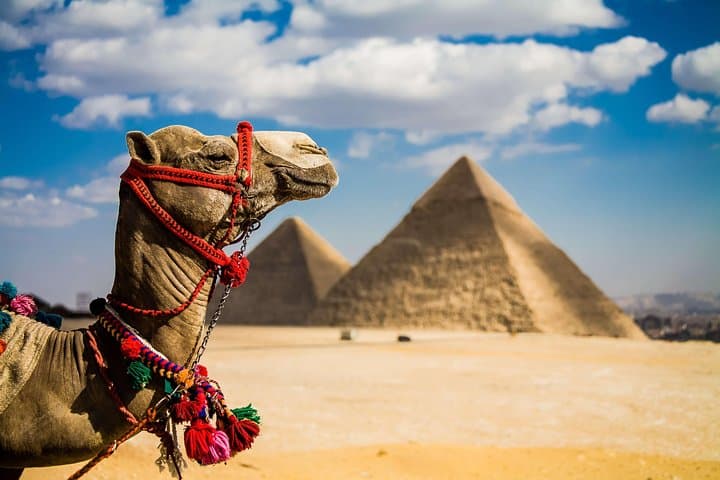
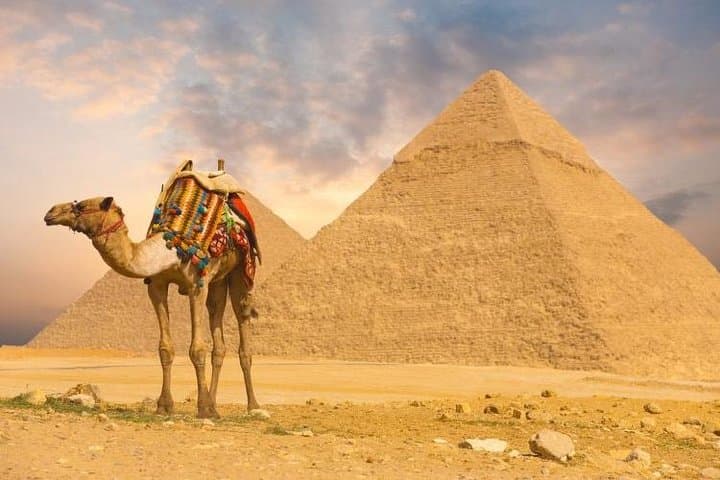
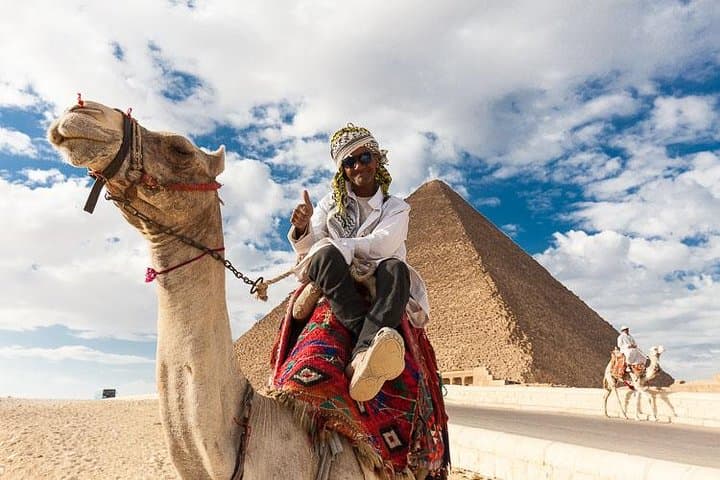
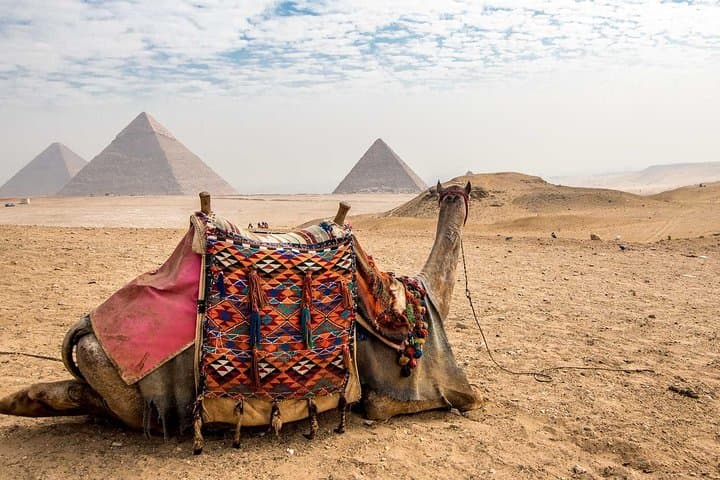
You step from an air‑conditioned car onto the sun-bright Giza Plateau and the scale of the place arrives before you: angular limestone faces, scattered blocks that have weathered millennia, and the Great Pyramid rising like a human-made mountain.
You step from an air‑conditioned car onto the sun-bright Giza Plateau and the scale of the place arrives before you: angular limestone faces, scattered blocks that have weathered millennia, and the Great Pyramid rising like a human-made mountain.
This half‑day private tour pairs a tight, interpretive walk with an easy camel loop. An Egyptologist guide explains the 4,500‑year history of Khufu’s tomb, the secondary pyramids, and the Valley Temple where mummification rituals took place, while geology lessons pop up in the field—limestone bedrock, wind‑blown sand, and the ancient Nile’s sediments beneath your feet.
Local culture is audible and visible: vendors calling out, camel handlers offering short rides, and the subtle presence of modern Cairo just beyond the plateau. The Solar Boat Museum and nearby workers’ tombs are quieter corners worth a quick detour if time allows.
Practical details matter here. Expect sandy, uneven ground and short stone steps; closed‑toe shoes make the flat walking and rocky edges far more comfortable. The camel ride (about an hour) is gentle but ask handlers about load and saddle comfort beforehand. Entering a pyramid requires a separate ticket and can involve low, steep passages; many visitors skip that for the broader viewpoint and the Sphinx causeway.
Best times are early morning or late afternoon for cooler temperatures and softer light. The tour includes private pickup and snacks, and runs roughly 3–4 hours—enough time to absorb big history without rushing, but short enough to return to Cairo the same day.