THE ADVENTURE COLLECTIVE® · Independent discovery and booking for outdoor travel

Stand at the base of the Great Pyramid, feel the desert wind, and meet the Sphinx on a guided half-day tour from Cairo. This private, accessible outing includes hotel pickup, an Egyptologist guide and optional camel rides.
Stand at the base of the Great Pyramid, feel the desert wind, and meet the Sphinx on a guided half-day tour from Cairo. This private, accessible outing includes hotel pickup, an Egyptologist guide and optional camel rides.
Stepping onto the Giza Plateau feels like walking into a living ledger of human ambition: wind brushes across stepped limestone, and the Great Pyramid rises, indifferent and immense. You’ll stand with the three royal pyramids—Khufu, Khafre and Menkaure—on one side and the Sphinx’s watchful profile on the other, while the city’s hum recedes to a distant pulse.
Verified experiences and guided adventures in the surrounding area.
Operated by Upper Egypt Services · Giza, Giza Governorate
Stepping onto the Giza Plateau feels like walking into a living ledger of human ambition: wind brushes across stepped limestone, and the Great Pyramid rises, indifferent and immense. You’ll stand with the three royal pyramids—Khufu, Khafre and Menkaure—on one side and the Sphinx’s watchful profile on the other, while the city’s hum recedes to a distant pulse.
The pyramids date to Egypt’s Old Kingdom (c. 2600–2500 BCE) and are carved from local limestone and seasoned bedrock; the Great Pyramid originally wore a polished Tura casing that reflected the sun. The Sphinx is hewn from a single ridge of limestone and has been repaired repeatedly across dynasties, making the site as much a record of restoration as of creation. Local culture is present in small ways: camel handlers, craft sellers, and guides who read the stones as a living archive.
Practically, this is a half-day, low-impact outing with short walks across uneven desert pavement, some sandy slopes and significant sunlight exposure. Entrance fees for pyramid interiors are extra; the tour provides hotel pickup, an Egyptologist guide and optional camel rides. Best times are early morning or late afternoon for softer light and cooler temperatures.
Bring sturdy shoes, sun protection and small cash for tips; respect barriers and staff directions—climbing is both illegal and destructive. Photography is straightforward, but be mindful of other visitors and follow your guide’s route. The plateau rewards patience: shift your stance, watch the light travel down the stones, and let the scale of the place reframe your sense of time.
easy.
4 hours.
Suitable for all fitness levels; involves short walks on uneven sandy and limestone surfaces
No — entrance fees for going inside any pyramid or the Solar Boat Museum are typically paid separately at the site.
Yes — camel rides are offered as an optional extra during most tours; negotiate price and time before setting off.
Parts of the plateau and the provided transport can be wheelchair accessible, but some areas have uneven surfaces; notify the operator ahead for arrangements.
Expect roughly 2.5–3 hours on the plateau within the 4-hour tour, including stops at the pyramids, the Sphinx and short photo breaks.
The Great Pyramid of Khufu dates to around 2560 BCE and was the tallest human-made structure for millennia; the Sphinx was carved from a single limestone ridge and altered over centuries.
The site faces wear from tourism and environmental exposure; visitors are asked to avoid touching stones and to follow marked paths to protect fragile surfaces.
Upper Egypt Services operates guided outdoor trips and adventures with an emphasis on safety, stewardship, and memorable experiences.
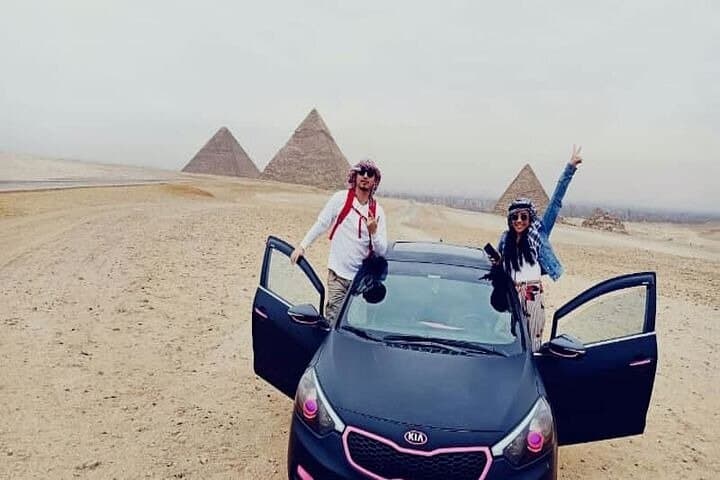
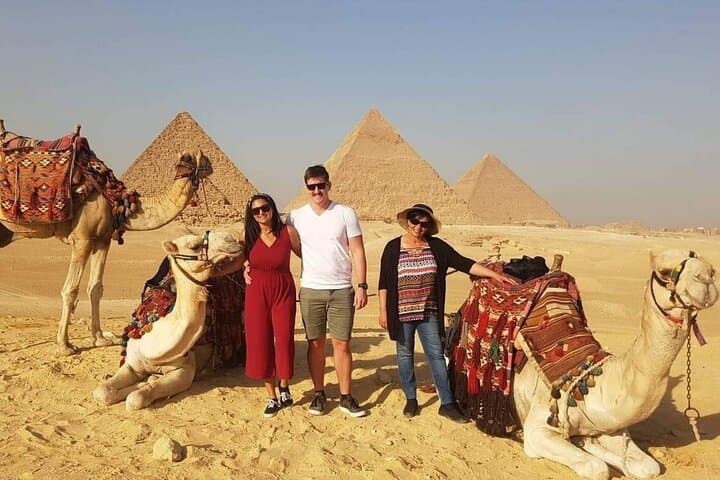
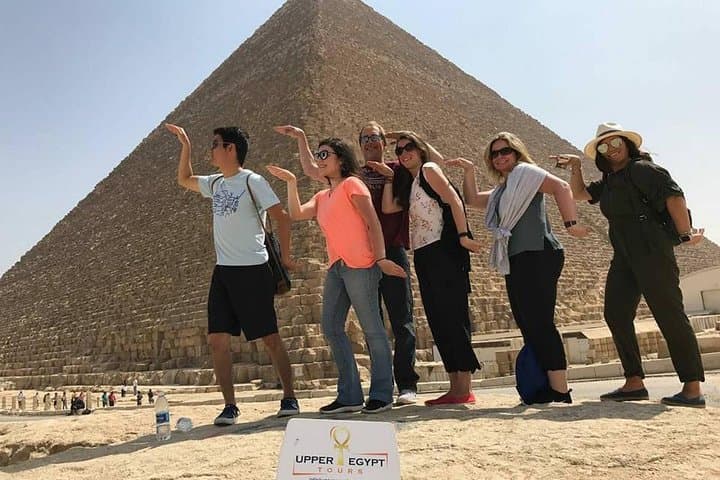
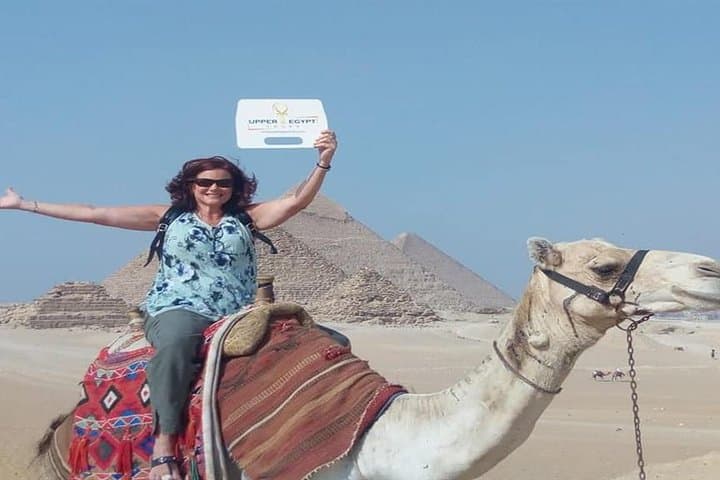
Stepping onto the Giza Plateau feels like walking into a living ledger of human ambition: wind brushes across stepped limestone, and the Great Pyramid rises, indifferent and immense. You’ll stand with the three royal pyramids—Khufu, Khafre and Menkaure—on one side and the Sphinx’s watchful profile on the other, while the city’s hum recedes to a distant pulse.
Stepping onto the Giza Plateau feels like walking into a living ledger of human ambition: wind brushes across stepped limestone, and the Great Pyramid rises, indifferent and immense. You’ll stand with the three royal pyramids—Khufu, Khafre and Menkaure—on one side and the Sphinx’s watchful profile on the other, while the city’s hum recedes to a distant pulse.
The pyramids date to Egypt’s Old Kingdom (c. 2600–2500 BCE) and are carved from local limestone and seasoned bedrock; the Great Pyramid originally wore a polished Tura casing that reflected the sun. The Sphinx is hewn from a single ridge of limestone and has been repaired repeatedly across dynasties, making the site as much a record of restoration as of creation. Local culture is present in small ways: camel handlers, craft sellers, and guides who read the stones as a living archive.
Practically, this is a half-day, low-impact outing with short walks across uneven desert pavement, some sandy slopes and significant sunlight exposure. Entrance fees for pyramid interiors are extra; the tour provides hotel pickup, an Egyptologist guide and optional camel rides. Best times are early morning or late afternoon for softer light and cooler temperatures.
Bring sturdy shoes, sun protection and small cash for tips; respect barriers and staff directions—climbing is both illegal and destructive. Photography is straightforward, but be mindful of other visitors and follow your guide’s route. The plateau rewards patience: shift your stance, watch the light travel down the stones, and let the scale of the place reframe your sense of time.