THE ADVENTURE COLLECTIVE® · Independent discovery and booking for outdoor travel

Stand within sight of 5,000 years of human ambition on a focused half-day tour of Giza. Ride a camel, visit the Great Pyramids and Sphinx, and learn ancient funerary practices from a private Egyptologist guide.
Stand within sight of 5,000 years of human ambition on a focused half-day tour of Giza. Ride a camel, visit the Great Pyramids and Sphinx, and learn ancient funerary practices from a private Egyptologist guide.
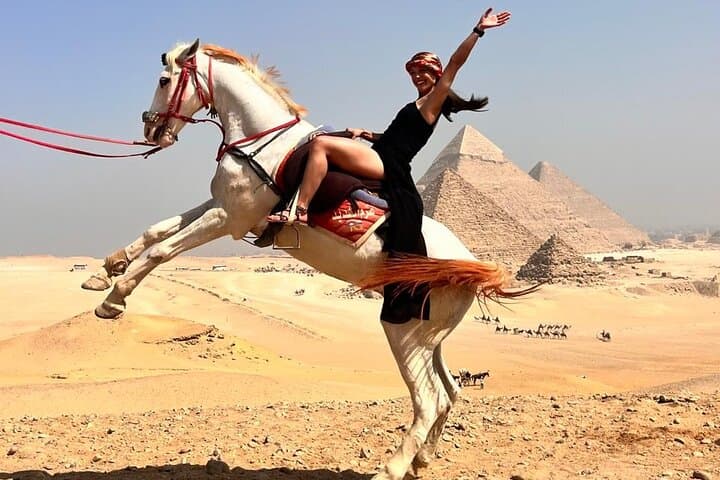
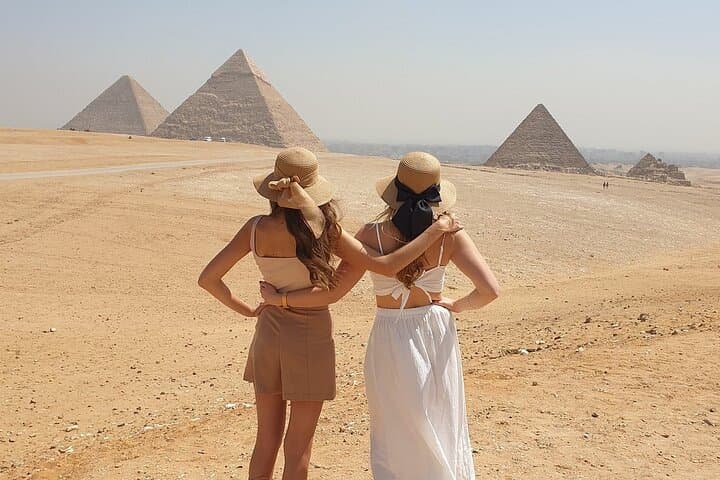
You step off an air-conditioned vehicle and the plateau opens: a low, bright horizon, limestone blocks stacked like a human-made cliff, and the Sphinx’s silhouette watching the world change around it. Wind lifts sand in thin ribbons; the camels nearby give a soft, rhythmic chew that punctuates the silence.
Verified experiences and guided adventures in the surrounding area.
Operated by Gate 2 Egypt · Giza, Giza Governorate
You step off an air-conditioned vehicle and the plateau opens: a low, bright horizon, limestone blocks stacked like a human-made cliff, and the Sphinx’s silhouette watching the world change around it. Wind lifts sand in thin ribbons; the camels nearby give a soft, rhythmic chew that punctuates the silence.
These stone giants date to roughly 4,500 years ago. Khufu’s Great Pyramid, Khafre’s slightly shorter monument, and the modest Menkaure mark a period when royal tomb-building reshaped the Nile floodplain. The plateau sits on Eocene limestones — quarried and dressed on site — so you’ll feel the geology underfoot as much as you see it in the blocks.
Locally, the site remains a living landscape: camel handlers, guides trained in Egyptology, and small vendors who sell bottles of water and postcards. The Sphinx and the adjacent Valley Temple connect funerary ritual to the daily life of ancient Giza; modern conservation efforts try to balance that history with millions of annual visitors.
On a half-day guided tour you’ll cover the main pyramids, ride a camel for about 20 minutes around the plateau, and visit the Sphinx and Valley Temple. Expect flat but uneven walking, strong sun, and crowds near the primary viewpoints. Practical notes: carry ID for tickets, wear sun protection, and keep to guided paths—climbing the monuments is prohibited. Morning and late afternoon light are best for photos and cooler temperatures. This tour typically includes hotel pickup, bottled water, entrance fees, and a private English-speaking Egyptologist to frame the stones with context and facts that bring the plateau to life.
easy.
4–5 hours.
Suitable for most fitness levels; requires short walks on uneven ground and standing for extended periods.
Yes—this tour includes entrance fees to the mentioned sites as listed in the itinerary.
Camel handlers manage short rides around the plateau; children should be supervised and follow handler instructions—inform the operator of ages when booking.
Yes, bring a passport or a clear photocopy for ticketing and identification during pickup or park entry.
Internal pyramid entry requires a specific additional ticket and is limited; this standard half-day tour focuses on exterior viewpoints, the Sphinx, and the Valley Temple.
The Giza pyramids were built during Egypt’s Fourth Dynasty (c. 2600–2500 BCE) as monumental royal tombs, with the Sphinx likely carved during Khafre’s reign.
High visitor numbers and air pollution strain the site; stay on marked paths, avoid touching masonry, and follow guide directions to reduce impact.
Gate 2 Egypt operates guided outdoor trips and adventures with an emphasis on safety, stewardship, and memorable experiences.

You step off an air-conditioned vehicle and the plateau opens: a low, bright horizon, limestone blocks stacked like a human-made cliff, and the Sphinx’s silhouette watching the world change around it. Wind lifts sand in thin ribbons; the camels nearby give a soft, rhythmic chew that punctuates the silence.
You step off an air-conditioned vehicle and the plateau opens: a low, bright horizon, limestone blocks stacked like a human-made cliff, and the Sphinx’s silhouette watching the world change around it. Wind lifts sand in thin ribbons; the camels nearby give a soft, rhythmic chew that punctuates the silence.
These stone giants date to roughly 4,500 years ago. Khufu’s Great Pyramid, Khafre’s slightly shorter monument, and the modest Menkaure mark a period when royal tomb-building reshaped the Nile floodplain. The plateau sits on Eocene limestones — quarried and dressed on site — so you’ll feel the geology underfoot as much as you see it in the blocks.
Locally, the site remains a living landscape: camel handlers, guides trained in Egyptology, and small vendors who sell bottles of water and postcards. The Sphinx and the adjacent Valley Temple connect funerary ritual to the daily life of ancient Giza; modern conservation efforts try to balance that history with millions of annual visitors.
On a half-day guided tour you’ll cover the main pyramids, ride a camel for about 20 minutes around the plateau, and visit the Sphinx and Valley Temple. Expect flat but uneven walking, strong sun, and crowds near the primary viewpoints. Practical notes: carry ID for tickets, wear sun protection, and keep to guided paths—climbing the monuments is prohibited. Morning and late afternoon light are best for photos and cooler temperatures. This tour typically includes hotel pickup, bottled water, entrance fees, and a private English-speaking Egyptologist to frame the stones with context and facts that bring the plateau to life.