THE ADVENTURE COLLECTIVE® · Independent discovery and booking for outdoor travel

Spend a focused half-day on the Giza plateau with a private Egyptologist—walk among the pyramids, study the Valley Temple, and stand before the Great Sphinx. Practical tips on timing, tickets, and what to bring keep this ancient visit smooth and memorable.
Spend a focused half-day on the Giza plateau with a private Egyptologist—walk among the pyramids, study the Valley Temple, and stand before the Great Sphinx. Practical tips on timing, tickets, and what to bring keep this ancient visit smooth and memorable.
You step from the shaded car into a sweep of ochre sand and stone, the sun drawing hard edges on the three great pyramids that rise from the Giza plateau. Wind carries the dry, mineral scent of limestone while the city of Cairo hums beyond the horizon; the Sphinx sits nearby, its profile caught in a long, watchful gaze.
Verified experiences and guided adventures in the surrounding area.
Operated by Egypt Holiday Makers Travel · Giza, Giza Governorate
You step from the shaded car into a sweep of ochre sand and stone, the sun drawing hard edges on the three great pyramids that rise from the Giza plateau. Wind carries the dry, mineral scent of limestone while the city of Cairo hums beyond the horizon; the Sphinx sits nearby, its profile caught in a long, watchful gaze.
These monuments date to the Fourth Dynasty—roughly 4,500 years ago—and were quarried and set with engineering that still challenges modern builders. The plateau’s bedrock and the white Tura limestone facing tell a geological story of ancient seas, now hardened into blocks that measure tens of meters across.
Culturally the site is both living and curated: local camel handlers, modern Egyptologists, and conservation teams coexist where funerary temples and causeways once supported royal processions. Your private Egyptologist guide will place Khufu, Khafre and Menkaure into context—explaining pyramid construction theories, the role of the Valley Temple, and the carved fusion of lion and king in the Sphinx.
Practically: the half-day itinerary runs about 4–5 hours with hotel pickup and drop-off. Expect paved walkways, areas of soft sand, and short uphill approaches to viewpoints. Interior pyramid access requires a special ticket; ask your guide in advance. Bring sun protection, a refillable water bottle, sturdy shoes, small cash for tips and optional camel rides, and a camera with a polarizer for clearer sky contrasts. Many parts are wheelchair accessible but surfaces can be uneven; check with your operator if mobility is a concern.
This tour gives concentrated access to the plateau’s highlights while leaving time for photos, questions, and a short camel ride—an efficient way to meet one of the oldest outdoor museums on Earth.
easy.
4–5 hours.
Suitable for most fitness levels; involves short walks on uneven or sandy surfaces and brief uphill viewpoints
Interior access requires a special ticket in limited numbers; your guide can arrange it but you should request it before arrival.
Many viewpoints, the visitor areas and parts of the plateau are accessible, but some routes include uneven stone and sand—confirm mobility needs with the operator ahead of time.
Tipping is customary for guides and handlers; plan small local-currency notes for gratuities and optional services like photography assistance.
Photography for personal use is allowed; drone flights are prohibited without special permits—ask your guide to avoid fines or confiscation.
The Giza complex dates to Egypt’s Old Kingdom; Khufu’s Great Pyramid was the tallest man-made structure for millennia and the Sphinx likely represents King Khafre’s protective image.
Ongoing conservation balances visitor access with preservation—stay on marked paths, avoid touching ancient stone, and minimize plastic waste to reduce impact.
Egypt Holiday Makers Travel operates guided outdoor trips and adventures with an emphasis on safety, stewardship, and memorable experiences.
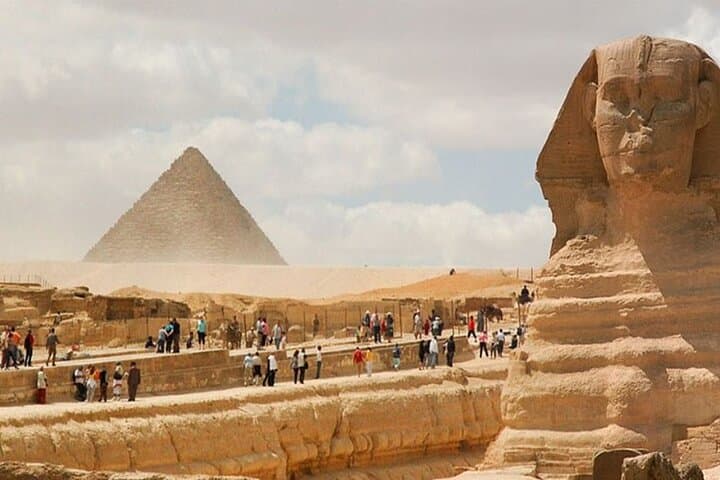
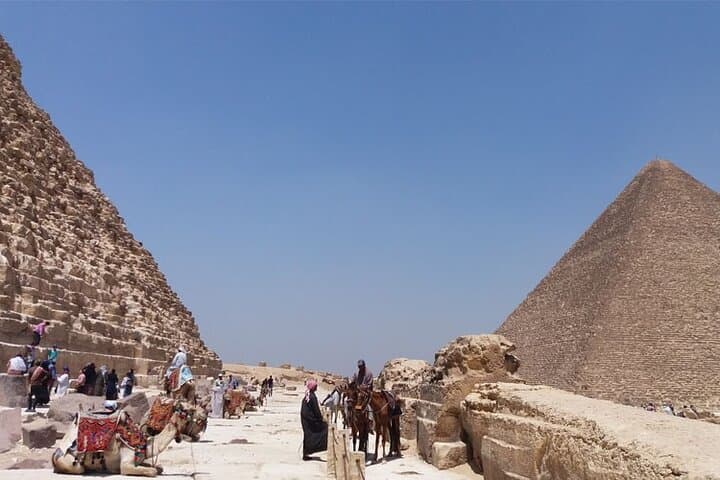
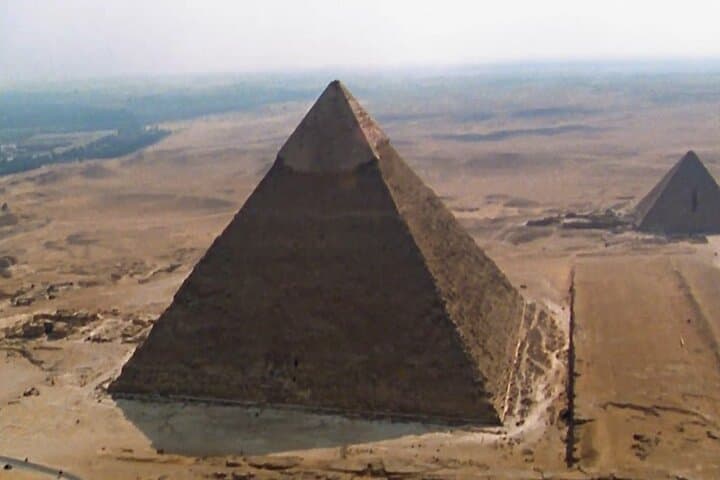
You step from the shaded car into a sweep of ochre sand and stone, the sun drawing hard edges on the three great pyramids that rise from the Giza plateau. Wind carries the dry, mineral scent of limestone while the city of Cairo hums beyond the horizon; the Sphinx sits nearby, its profile caught in a long, watchful gaze.
You step from the shaded car into a sweep of ochre sand and stone, the sun drawing hard edges on the three great pyramids that rise from the Giza plateau. Wind carries the dry, mineral scent of limestone while the city of Cairo hums beyond the horizon; the Sphinx sits nearby, its profile caught in a long, watchful gaze.
These monuments date to the Fourth Dynasty—roughly 4,500 years ago—and were quarried and set with engineering that still challenges modern builders. The plateau’s bedrock and the white Tura limestone facing tell a geological story of ancient seas, now hardened into blocks that measure tens of meters across.
Culturally the site is both living and curated: local camel handlers, modern Egyptologists, and conservation teams coexist where funerary temples and causeways once supported royal processions. Your private Egyptologist guide will place Khufu, Khafre and Menkaure into context—explaining pyramid construction theories, the role of the Valley Temple, and the carved fusion of lion and king in the Sphinx.
Practically: the half-day itinerary runs about 4–5 hours with hotel pickup and drop-off. Expect paved walkways, areas of soft sand, and short uphill approaches to viewpoints. Interior pyramid access requires a special ticket; ask your guide in advance. Bring sun protection, a refillable water bottle, sturdy shoes, small cash for tips and optional camel rides, and a camera with a polarizer for clearer sky contrasts. Many parts are wheelchair accessible but surfaces can be uneven; check with your operator if mobility is a concern.
This tour gives concentrated access to the plateau’s highlights while leaving time for photos, questions, and a short camel ride—an efficient way to meet one of the oldest outdoor museums on Earth.