THE ADVENTURE COLLECTIVE® · Independent discovery and booking for outdoor travel

A concentrated, guided visit to the Giza Plateau that brings you face-to-face with the Great Pyramid, Khafre and Menkaure, and the Great Sphinx. Ideal for travelers short on time who want expert context and close-up views of Egypt’s oldest monuments.
A concentrated, guided visit to the Giza Plateau that brings you face-to-face with the Great Pyramid, Khafre and Menkaure, and the Great Sphinx. Ideal for travelers short on time who want expert context and close-up views of Egypt’s oldest monuments.
You step from air-conditioned transport into dry wind and a sea of sand that seems to push back against the city—then the Great Pyramid rises, blunt and immense, like memory made stone.
Verified experiences and guided adventures in the surrounding area.
Operated by King Travel · Giza, Cairo Governorate
You step from air-conditioned transport into dry wind and a sea of sand that seems to push back against the city—then the Great Pyramid rises, blunt and immense, like memory made stone.
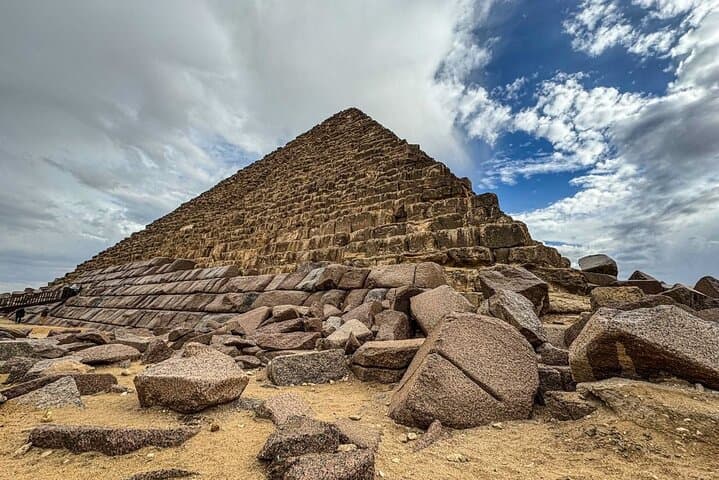
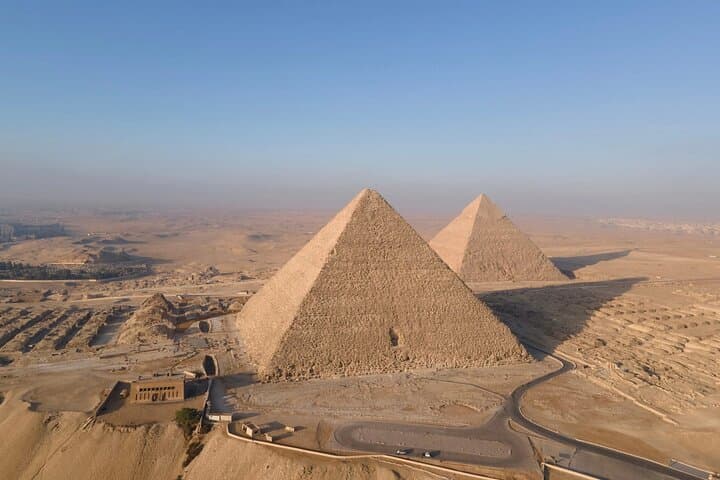
This half-day tour carries you across the Giza Plateau to the three main pyramids of Khufu, Khafre and Menkaure and to the reclining Great Sphinx. These structures date to Egypt’s Fourth Dynasty (c. 2600–2500 BCE); the plateau sits on Eocene limestone that ancient builders levered into precise courses and monumental silhouettes. An Egyptologist guide outlines funerary rites, quarry logistics and the workers’ village that supplied this state enterprise, while noting later repairs and modern conservation efforts.
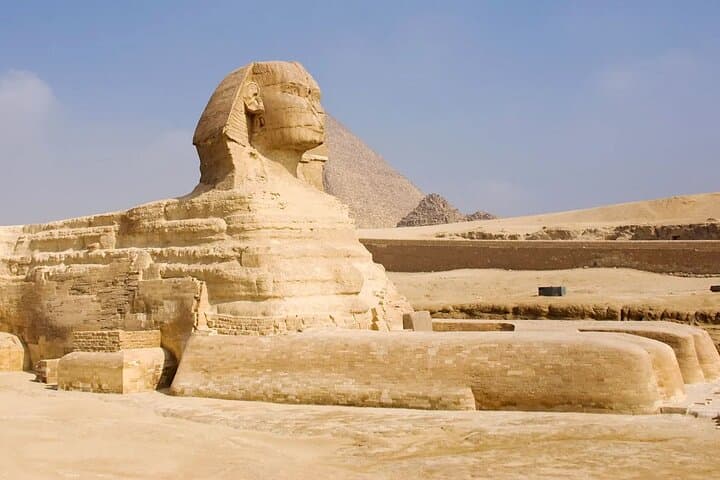
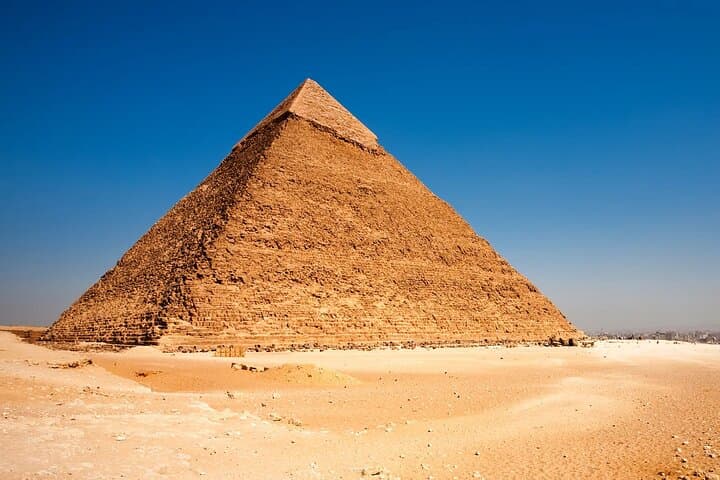
Expect close-up study rather than deep archaeology: the experience is visual and contextual—standing at the pyramid bases, tracing the angled faces, and learning why Khafre’s pyramid still wears casing at its apex. The Sphinx, hewn from bedrock, confronts dawn and the Nile floodplain beyond, a cultural icon that channels religious authority across millennia.
Practical guidance: arrive early to avoid midday heat, wear closed shoes for uneven limestone and sand, and carry sun protection and plenty of water. Photography is excellent but obey barrier rules—climbing monuments is prohibited. The tour’s pace is moderate and accessible, with short walks between sites and wheelchair-accessible options for roaded areas. This is a compact, high-impact cultural outing—perfect if you want archaeological context without a full-day excavation itinerary.
easy.
4 hours.
Suitable for travelers in average physical condition; involves short walks on uneven ground and some standing.
The tour is approximately four hours and covers the Giza Plateau’s three main pyramids (Khufu, Khafre, Menkaure) and the Great Sphinx with guided commentary.
Access to the Great Pyramid’s interior requires a separate ticket and may be limited; many half-day tours provide exterior visits only—ask your operator if interior entry is included.
Main viewing areas and some paved pathways are accessible, and many operators provide wheelchair-accessible transport, but interior pyramid access is not wheelchair-friendly.
Camel rides are often offered at the plateau by local vendors and may be optional or included depending on your booking—confirm with your tour provider and agree a price beforehand.
The main pyramids were built during Egypt’s Fourth Dynasty (c. 2600–2500 BCE); the plateau formed part of a larger necropolis linked to Memphis and royal funerary complexes.
The Giza Plateau is a UNESCO World Heritage area; visitors should stick to paths, avoid touching carved surfaces and follow guides’ directions to limit erosion and wear.
King Travel operates guided outdoor trips and adventures with an emphasis on safety, stewardship, and memorable experiences.
You step from air-conditioned transport into dry wind and a sea of sand that seems to push back against the city—then the Great Pyramid rises, blunt and immense, like memory made stone.
You step from air-conditioned transport into dry wind and a sea of sand that seems to push back against the city—then the Great Pyramid rises, blunt and immense, like memory made stone.
This half-day tour carries you across the Giza Plateau to the three main pyramids of Khufu, Khafre and Menkaure and to the reclining Great Sphinx. These structures date to Egypt’s Fourth Dynasty (c. 2600–2500 BCE); the plateau sits on Eocene limestone that ancient builders levered into precise courses and monumental silhouettes. An Egyptologist guide outlines funerary rites, quarry logistics and the workers’ village that supplied this state enterprise, while noting later repairs and modern conservation efforts.
Expect close-up study rather than deep archaeology: the experience is visual and contextual—standing at the pyramid bases, tracing the angled faces, and learning why Khafre’s pyramid still wears casing at its apex. The Sphinx, hewn from bedrock, confronts dawn and the Nile floodplain beyond, a cultural icon that channels religious authority across millennia.
Practical guidance: arrive early to avoid midday heat, wear closed shoes for uneven limestone and sand, and carry sun protection and plenty of water. Photography is excellent but obey barrier rules—climbing monuments is prohibited. The tour’s pace is moderate and accessible, with short walks between sites and wheelchair-accessible options for roaded areas. This is a compact, high-impact cultural outing—perfect if you want archaeological context without a full-day excavation itinerary.