THE ADVENTURE COLLECTIVE® · Independent discovery and booking for outdoor travel

Compress days of Georgian culture into one immersive half-day: a weapons museum, a folk-dance master class, and a family supra where you learn to cook khinkali and deliver a toast. Practical, hands-on, and rooted in local tradition.
Compress days of Georgian culture into one immersive half-day: a weapons museum, a folk-dance master class, and a family supra where you learn to cook khinkali and deliver a toast. Practical, hands-on, and rooted in local tradition.
You step from a sun-warmed alley onto a wide square where the Kura River nudges the city, and the hum of Tbilisi folds into the crack of a wooden spoon against a ceramic pot. In one half-day this experience threads public squares, a private ethnographic weapons collection and a family home, so you leave with more than snapshots — you leave with new toasts and a few dance steps.
Verified experiences and guided adventures in the surrounding area.
Operated by Georgian Promenade · Tbilisi, Tbilisi
You step from a sun-warmed alley onto a wide square where the Kura River nudges the city, and the hum of Tbilisi folds into the crack of a wooden spoon against a ceramic pot. In one half-day this experience threads public squares, a private ethnographic weapons collection and a family home, so you leave with more than snapshots — you leave with new toasts and a few dance steps.
Tbilisi sits at the edge of the Caucasus foothills and has been a crossroads since medieval times; echoes of Silk Road trade mingle with modern life. Georgian polyphonic singing is recognized by UNESCO, and the supra — the ceremonial feast with a tamada leading toasts — is central to social life. The small weapons museum highlights regional craft and medieval defensive culture; nearby, a dance school keeps dynamic footwork and traditional martial forms like chidaoba alive.
Practical guidance follows the pageantry: expect about six hours of mixed walking, standing, and seated workshops. You’ll try two folk-dance steps under a choreographer, handle basic khinkali shaping in a kitchen master class, and sit down to a family-style feast with homemade wine and chacha. Wear comfortable shoes for uneven cobbles, bring a reusable water bottle (bottled water is provided), and note that portions are generous — inform hosts about dietary needs before arrival.
This is a cultural sprint rather than a passive tour: it prioritizes hands-on learning, local hospitality and small-group interaction. Come ready to move, taste, and raise your glass.
easy.
6 hours.
Light to moderate activity: able to stand, walk short distances and participate in simple dance movements.
Yes; the program is family-friendly but includes hands-on activities and alcohol at the feast — guardians should supervise and inform the operator of minors.
Yes; you should note dietary restrictions when booking so hosts can adjust dishes where possible.
Accessibility varies by private home and older buildings; contact the operator ahead to discuss specific needs and locations.
Yes; guides and hosts commonly work with international visitors and can conduct activities in English.
Tbilisi’s location on trade routes shaped its mix of architecture and customs; Georgian polyphonic singing and the supra ceremony are longstanding cultural pillars.
Support small family hosts and local workshops to keep intangible heritage alive; minimize food waste at shared meals and follow hosts’ guidance on cultural etiquette.
Georgian Promenade operates guided outdoor trips and adventures with an emphasis on safety, stewardship, and memorable experiences.


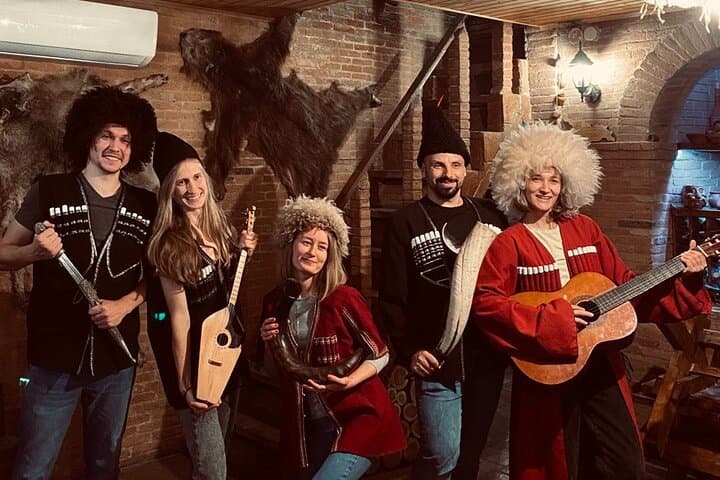

You step from a sun-warmed alley onto a wide square where the Kura River nudges the city, and the hum of Tbilisi folds into the crack of a wooden spoon against a ceramic pot. In one half-day this experience threads public squares, a private ethnographic weapons collection and a family home, so you leave with more than snapshots — you leave with new toasts and a few dance steps.
You step from a sun-warmed alley onto a wide square where the Kura River nudges the city, and the hum of Tbilisi folds into the crack of a wooden spoon against a ceramic pot. In one half-day this experience threads public squares, a private ethnographic weapons collection and a family home, so you leave with more than snapshots — you leave with new toasts and a few dance steps.
Tbilisi sits at the edge of the Caucasus foothills and has been a crossroads since medieval times; echoes of Silk Road trade mingle with modern life. Georgian polyphonic singing is recognized by UNESCO, and the supra — the ceremonial feast with a tamada leading toasts — is central to social life. The small weapons museum highlights regional craft and medieval defensive culture; nearby, a dance school keeps dynamic footwork and traditional martial forms like chidaoba alive.
Practical guidance follows the pageantry: expect about six hours of mixed walking, standing, and seated workshops. You’ll try two folk-dance steps under a choreographer, handle basic khinkali shaping in a kitchen master class, and sit down to a family-style feast with homemade wine and chacha. Wear comfortable shoes for uneven cobbles, bring a reusable water bottle (bottled water is provided), and note that portions are generous — inform hosts about dietary needs before arrival.
This is a cultural sprint rather than a passive tour: it prioritizes hands-on learning, local hospitality and small-group interaction. Come ready to move, taste, and raise your glass.