THE ADVENTURE COLLECTIVE® · Independent discovery and booking for outdoor travel

Spend a focused half-day in Punta Gorda learning Garifuna rhythms, building a drum by hand and sharing a traditional hudut fish stew. This hands-on cultural session combines music, craft and community in about three hours.
Spend a focused half-day in Punta Gorda learning Garifuna rhythms, building a drum by hand and sharing a traditional hudut fish stew. This hands-on cultural session combines music, craft and community in about three hours.
You arrive at an open-air thatched palapa in Punta Gorda as the Caribbean humidity hangs like a warm promise. Timber frames creak gently and the scent of coconut oil and freshly cut wood hangs in the air; the primera drum answers a call and the segunda invites your hands. For the next three hours you move between rhythm, craft and cuisine — learning up to six traditional beats, assembling a Garifuna drum, and finishing with a bowl of hudut fish stew.
Verified experiences and guided adventures in the surrounding area.
Operated by Warasa Garifuna Drum School · Punta Gorda, Toledo District
You arrive at an open-air thatched palapa in Punta Gorda as the Caribbean humidity hangs like a warm promise. Timber frames creak gently and the scent of coconut oil and freshly cut wood hangs in the air; the primera drum answers a call and the segunda invites your hands. For the next three hours you move between rhythm, craft and cuisine — learning up to six traditional beats, assembling a Garifuna drum, and finishing with a bowl of hudut fish stew.
The Garifuna people are descendants of West and Central African, Arawak and Carib peoples who settled along the Belizean coast in the 18th century. Their music is built on layered percussion and call-and-response songs that carry community history. Punta Gorda sits where the lowland rainforest meets mangrove-lined coastline; local lumber like mahogany and cedar historically shaped drum-making and boat-building traditions.
Practical guidance: this is a low-impact, hands-on cultural experience suitable for most visitors. Expect standing, some stooping during drum assembly, and shared performance time. Wear closed-toe shoes you don’t mind getting dusty, bring sun protection, and arrive hydrated. A vegetarian lunch option is available if requested when booking.
Local hosts emphasize respect — ask before photographing, accept songs as part of living culture, and support small artisans if you can. The session is private and runs about 195 minutes, making it a compact yet immersive taste of Garifuna music, craft and food in southern Belize.
easy.
3–3.5 hours.
Suitable for most fitness levels; requires standing and light manual activity for up to an hour during drum-making.
No — the session is designed for beginners; instructors guide you through basic strokes and rhythms.
This offering meets at Warasa Garifuna Drum School in Punta Gorda; confirm local pickup separately if needed.
Yes, the activity is family-friendly and accessible to most ages, though young children should be supervised during the drum-making portion.
Minimum numbers apply; if the operator cancels due to insufficient participants you will be offered an alternative date or a full refund.
The Garifuna established coastal communities in the 18th century; their music and cuisine preserve African and indigenous influences central to Toledo District identity.
Support local guides and artisans to direct tourism dollars into the community; avoid single-use plastics and respect protected mangrove habitats.
Warasa Garifuna Drum School operates guided outdoor trips and adventures with an emphasis on safety, stewardship, and memorable experiences.

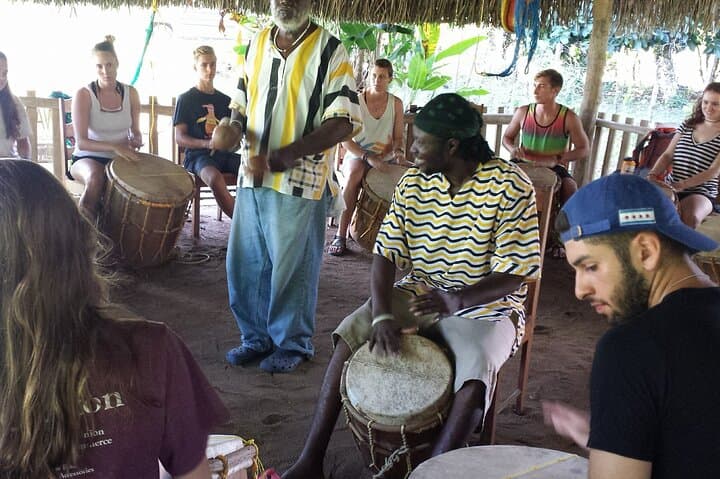


You arrive at an open-air thatched palapa in Punta Gorda as the Caribbean humidity hangs like a warm promise. Timber frames creak gently and the scent of coconut oil and freshly cut wood hangs in the air; the primera drum answers a call and the segunda invites your hands. For the next three hours you move between rhythm, craft and cuisine — learning up to six traditional beats, assembling a Garifuna drum, and finishing with a bowl of hudut fish stew.
You arrive at an open-air thatched palapa in Punta Gorda as the Caribbean humidity hangs like a warm promise. Timber frames creak gently and the scent of coconut oil and freshly cut wood hangs in the air; the primera drum answers a call and the segunda invites your hands. For the next three hours you move between rhythm, craft and cuisine — learning up to six traditional beats, assembling a Garifuna drum, and finishing with a bowl of hudut fish stew.
The Garifuna people are descendants of West and Central African, Arawak and Carib peoples who settled along the Belizean coast in the 18th century. Their music is built on layered percussion and call-and-response songs that carry community history. Punta Gorda sits where the lowland rainforest meets mangrove-lined coastline; local lumber like mahogany and cedar historically shaped drum-making and boat-building traditions.
Practical guidance: this is a low-impact, hands-on cultural experience suitable for most visitors. Expect standing, some stooping during drum assembly, and shared performance time. Wear closed-toe shoes you don’t mind getting dusty, bring sun protection, and arrive hydrated. A vegetarian lunch option is available if requested when booking.
Local hosts emphasize respect — ask before photographing, accept songs as part of living culture, and support small artisans if you can. The session is private and runs about 195 minutes, making it a compact yet immersive taste of Garifuna music, craft and food in southern Belize.