THE ADVENTURE COLLECTIVE® · Independent discovery and booking for outdoor travel

See Faial’s most striking geology in one efficient loop: Horta viewpoints, Varadouro’s natural pools and the lunar fields of Capelinhos, with an optional stop at the Caldeira. A private half‑day tour for travelers short on time who want a clear introduction to the island.
See Faial’s most striking geology in one efficient loop: Horta viewpoints, Varadouro’s natural pools and the lunar fields of Capelinhos, with an optional stop at the Caldeira. A private half‑day tour for travelers short on time who want a clear introduction to the island.
You step out in front of Casa da Baia, Horta's harbor square, the Atlantic wind cutting clean across the marina where painted hulls and travel-stained sailors crowd the quay.
Verified experiences and guided adventures in the surrounding area.
Operated by Visitfaial · Horta, Azores
You step out in front of Casa da Baia, Horta's harbor square, the Atlantic wind cutting clean across the marina where painted hulls and travel-stained sailors crowd the quay.
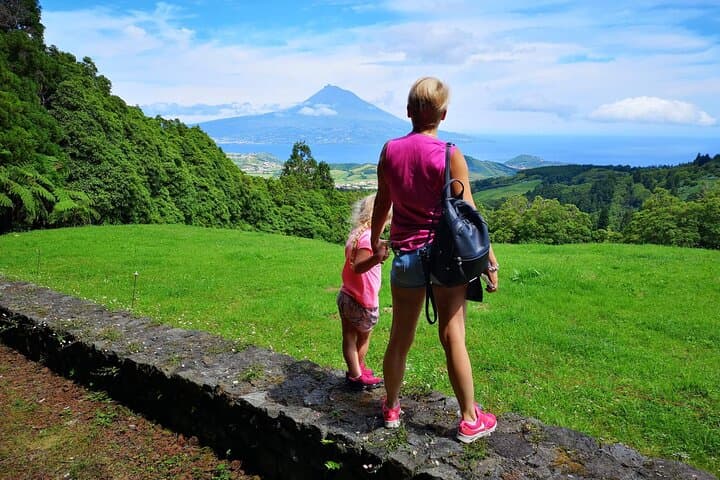
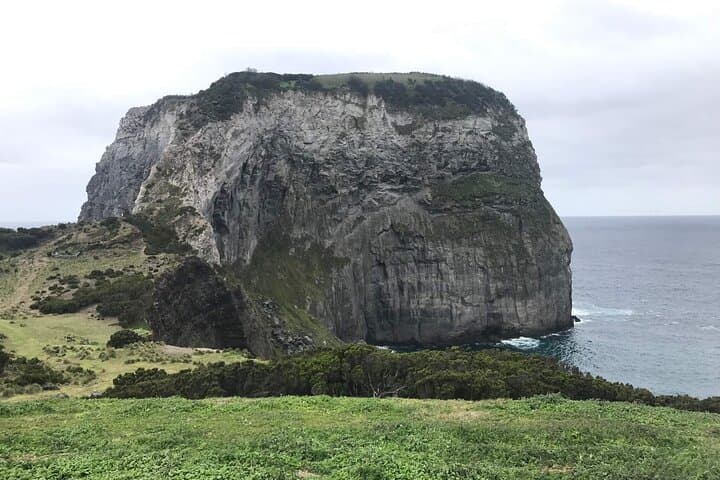
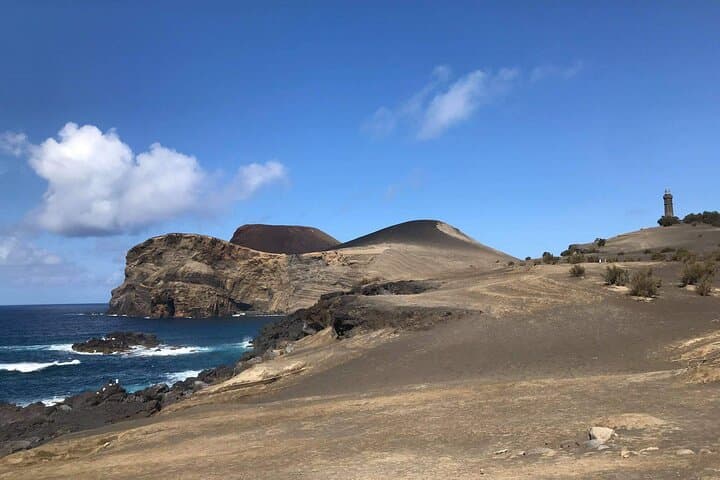
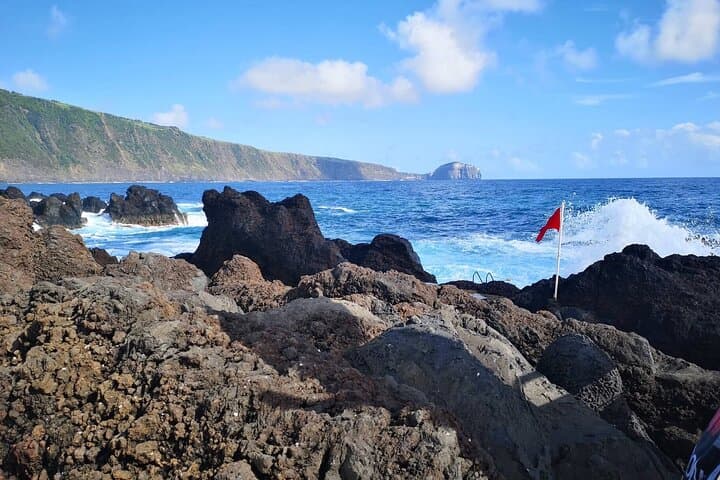
In three to four hours a compact circuit traces Faial’s southern flank: the chalky white outcrop of Morro de Castelo Branco that catches the eye on approach, the quiet coves and natural pools at Varadouro, and then the basalt moonscape of Capelinhos where the 1957–58 eruption remade the shoreline. The guide will often pause at viewpoints on a minor road high above the villages, or—weather permitting—at the Caldeira do Cabeço Gordo, a dramatic crater roughly 2 km across and some 400 m deep that anchors the island’s volcanic story.
Geology here is recent and loud: fresh ash deposits at Capelinhos, layered lavas around the caldera, and coastal erosion that constantly reshapes the west end. Culture is compact and maritime—Horta’s cafes and yacht graffiti reflect a long history of sailors, whalers and islanders trading stories and supplies.
Practical notes: the tour is private, in an air-conditioned vehicle with bottled water and snacks included, and involves short walks on uneven volcanic ground. Dress in windproof layers and sturdy shoes; weather shifts fast and the west tip can be exposed. Morning light favors photographs at Capelinhos; afternoons can bring low cloud into the caldera. If you’re short on time but want a tangible taste of Azorean volcanism, this half‑day run delivers concentrated scenery with local context.
easy.
3–4 hours.
Suitable for most fitness levels; involves short easy walks and standing at viewpoints
The tour lasts about 3–4 hours and starts in front of the Casa da Baia tourist information building in Horta.
Depending on weather the tour may include short walks to viewpoints at the Caldeira; major stretches are viewed from vehicle stops with only light walking required.
Yes—there is usually a stop at the Capelinhos visitor center and the lunar landscape created by the 1957–58 eruption.
Yes—the tour is described as physically easy and the vehicle is air-conditioned; however, some stops have uneven ground and short steps.
Faial’s west end was dramatically reshaped by the 1957–58 Capelinhos eruption, and Horta has long served as a key Atlantic stop for trans‑ocean sailors.
Volcanic soils and coastal habitats are fragile—stay on marked roads and paths, avoid removing rocks or plants, and follow local guidance to limit erosion and disturbance.
Visitfaial operates guided outdoor trips and adventures with an emphasis on safety, stewardship, and memorable experiences.
You step out in front of Casa da Baia, Horta's harbor square, the Atlantic wind cutting clean across the marina where painted hulls and travel-stained sailors crowd the quay.
You step out in front of Casa da Baia, Horta's harbor square, the Atlantic wind cutting clean across the marina where painted hulls and travel-stained sailors crowd the quay.
In three to four hours a compact circuit traces Faial’s southern flank: the chalky white outcrop of Morro de Castelo Branco that catches the eye on approach, the quiet coves and natural pools at Varadouro, and then the basalt moonscape of Capelinhos where the 1957–58 eruption remade the shoreline. The guide will often pause at viewpoints on a minor road high above the villages, or—weather permitting—at the Caldeira do Cabeço Gordo, a dramatic crater roughly 2 km across and some 400 m deep that anchors the island’s volcanic story.
Geology here is recent and loud: fresh ash deposits at Capelinhos, layered lavas around the caldera, and coastal erosion that constantly reshapes the west end. Culture is compact and maritime—Horta’s cafes and yacht graffiti reflect a long history of sailors, whalers and islanders trading stories and supplies.
Practical notes: the tour is private, in an air-conditioned vehicle with bottled water and snacks included, and involves short walks on uneven volcanic ground. Dress in windproof layers and sturdy shoes; weather shifts fast and the west tip can be exposed. Morning light favors photographs at Capelinhos; afternoons can bring low cloud into the caldera. If you’re short on time but want a tangible taste of Azorean volcanism, this half‑day run delivers concentrated scenery with local context.