THE ADVENTURE COLLECTIVE® · Independent discovery and booking for outdoor travel

Discover east Dhofar in a compact, 4-hour loop: perennial springs at Ain Razat, the waterfall-fed Wadi Darbat, the coastal castle of Taqah and the archaeological site of Sumhuram (Khor Rori). Ideal for travelers who want dramatic scenery and cultural context without a long trek.
Discover east Dhofar in a compact, 4-hour loop: perennial springs at Ain Razat, the waterfall-fed Wadi Darbat, the coastal castle of Taqah and the archaeological site of Sumhuram (Khor Rori). Ideal for travelers who want dramatic scenery and cultural context without a long trek.
You step out of an air-conditioned vehicle into a wind that smells faintly of salt and frankincense. The road east of Salalah drops toward low mountains and sudden green: Ain Razat's perennial springs, the wide pool at Wadi Darbat, and the cliff-backed fishing village of Taqah give the landscape a brisk, unexpected flush. Water moves here with intent—pools that invite a careful approach and a river that dares you to follow its course toward Khor Rori.
Verified experiences and guided adventures in the surrounding area.
Operated by Marhaba Dhofar · Salalah, Dhofar
You step out of an air-conditioned vehicle into a wind that smells faintly of salt and frankincense. The road east of Salalah drops toward low mountains and sudden green: Ain Razat's perennial springs, the wide pool at Wadi Darbat, and the cliff-backed fishing village of Taqah give the landscape a brisk, unexpected flush. Water moves here with intent—pools that invite a careful approach and a river that dares you to follow its course toward Khor Rori.
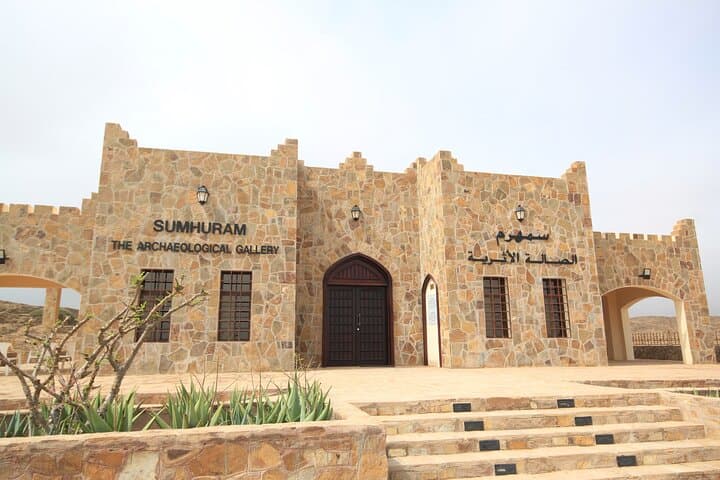
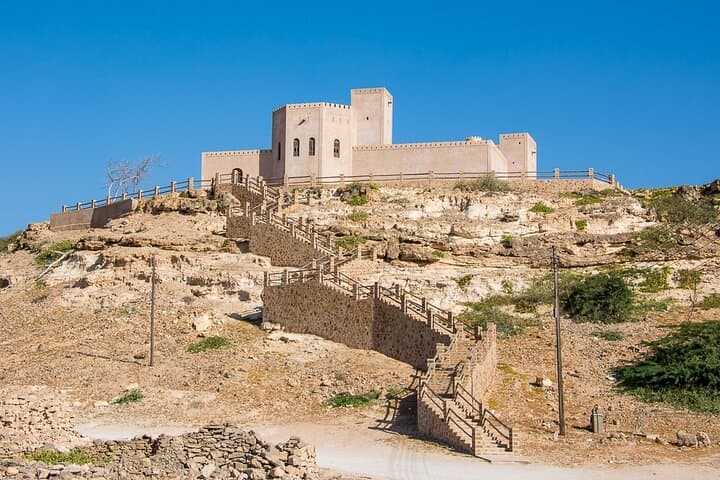
This half-day route threads together natural history and human trade routes. Sumhuram (Khor Rori) was a hub of the frankincense trade; archaeological remains and the on-site museum trace commerce between Arabia, India and the Mediterranean. Geologically, the limestone escarpments funnel monsoon water into seasonal waterfalls; during Khareef those falls can reach roughly 30 meters. Culturally, Taqah’s castle and stone houses reflect a long coastal life built around fishing, frankincense and lookouts.
Expect short, easy walks, viewpoints and photo stops rather than long hikes—this is a sightseeing loop tuned to variety more than exertion. Guides typically provide bottled water and private transport; wear sturdy shoes for uneven ground around springs and ruins, and bring sun protection. Timing matters: Khareef (summer monsoon) transforms dry gullies into cataracts, while the rest of the year keeps the scene arid and bright. Plan for a 4-hour outing with pickup from Salalah, and budget a little extra time if you want to linger at the beach or museum.
easy.
4 hours.
Light activity; short walks on mostly flat terrain with occasional uneven surfaces—suitable for most fitness levels
The tour is approximately 4 hours including hotel pickup and drop-off; it includes private transport, bottled water, guide services and fees and taxes.
Yes—site admissions referenced in the itinerary are covered as part of the tour's fees.
Yes—walks are short and the tour is rated easy, but some areas have uneven ground; contact the operator ahead for specific accessibility needs.
During Khareef (roughly June to September) monsoon rains replenish streams and produce the most dramatic waterfalls.
Sumhuram (Khor Rori) served as an ancient port and frankincense trade center; remnants and a small museum illustrate its role tying Dhofar to ancient trade routes.
Khareef season draws many visitors—stick to marked paths, avoid disturbing vegetation near springs, and pack out waste to protect fragile riparian zones.
Marhaba Dhofar operates guided outdoor trips and adventures with an emphasis on safety, stewardship, and memorable experiences.
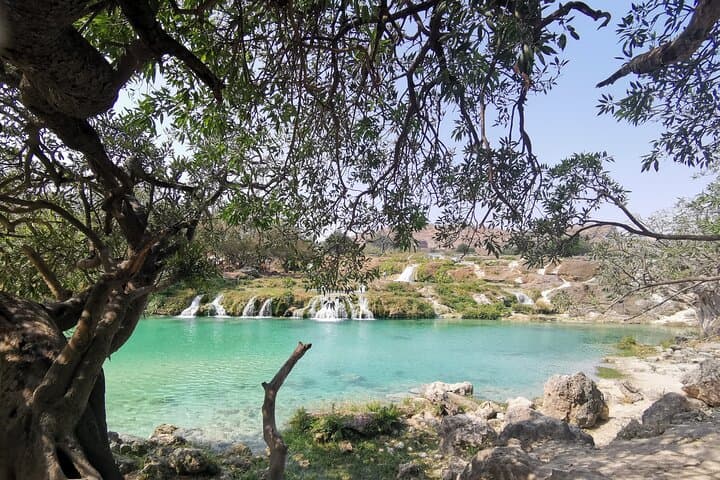
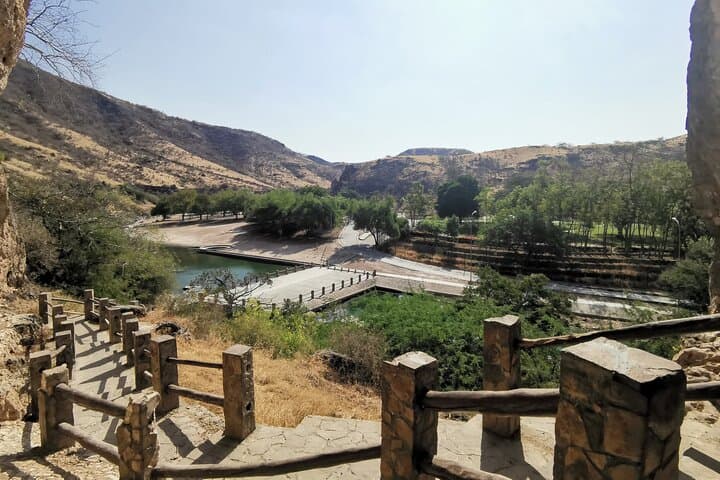
You step out of an air-conditioned vehicle into a wind that smells faintly of salt and frankincense. The road east of Salalah drops toward low mountains and sudden green: Ain Razat's perennial springs, the wide pool at Wadi Darbat, and the cliff-backed fishing village of Taqah give the landscape a brisk, unexpected flush. Water moves here with intent—pools that invite a careful approach and a river that dares you to follow its course toward Khor Rori.
You step out of an air-conditioned vehicle into a wind that smells faintly of salt and frankincense. The road east of Salalah drops toward low mountains and sudden green: Ain Razat's perennial springs, the wide pool at Wadi Darbat, and the cliff-backed fishing village of Taqah give the landscape a brisk, unexpected flush. Water moves here with intent—pools that invite a careful approach and a river that dares you to follow its course toward Khor Rori.
This half-day route threads together natural history and human trade routes. Sumhuram (Khor Rori) was a hub of the frankincense trade; archaeological remains and the on-site museum trace commerce between Arabia, India and the Mediterranean. Geologically, the limestone escarpments funnel monsoon water into seasonal waterfalls; during Khareef those falls can reach roughly 30 meters. Culturally, Taqah’s castle and stone houses reflect a long coastal life built around fishing, frankincense and lookouts.
Expect short, easy walks, viewpoints and photo stops rather than long hikes—this is a sightseeing loop tuned to variety more than exertion. Guides typically provide bottled water and private transport; wear sturdy shoes for uneven ground around springs and ruins, and bring sun protection. Timing matters: Khareef (summer monsoon) transforms dry gullies into cataracts, while the rest of the year keeps the scene arid and bright. Plan for a 4-hour outing with pickup from Salalah, and budget a little extra time if you want to linger at the beach or museum.