THE ADVENTURE COLLECTIVE® · Independent discovery and booking for outdoor travel

A full morning and afternoon away from Durban leads to Monks Cowl in the Drakensberg—steep escarpments, ancient rock, and a two-hour guided hike that showcases the range’s geology and wildlife. Practical details and local context prepare you for the drive, trail conditions, and what to pack.
A full morning and afternoon away from Durban leads to Monks Cowl in the Drakensberg—steep escarpments, ancient rock, and a two-hour guided hike that showcases the range’s geology and wildlife. Practical details and local context prepare you for the drive, trail conditions, and what to pack.
You step out of the vehicle into a cooler, thinner air; a ridgeline rises ahead and the trail threads between outcrops and grassland. The Drakensberg’s cliffs press skyward, and Monks Cowl’s folded buttresses offer close-up geology—banded basalt and ancient sandstone—while the forested gullies below crowd with ferns and protea.
Verified experiences and guided adventures in the surrounding area.
Operated by African Cape Safaris · Durban, KwaZulu-Natal
You step out of the vehicle into a cooler, thinner air; a ridgeline rises ahead and the trail threads between outcrops and grassland. The Drakensberg’s cliffs press skyward, and Monks Cowl’s folded buttresses offer close-up geology—banded basalt and ancient sandstone—while the forested gullies below crowd with ferns and protea.
This half-day safari follows routes used for generations: San (Bushman) hunters left rock art across the range, and later Zulu and Sotho communities grazed stock on the lower slopes. The mountains themselves are a dramatic escarpment formed as rivers carved valleys through uplifted basalt and sedimentary layers; expect steep buttresses, sheltered valleys, and streams that dare you to follow them downstream.
Culturally, guides will point out place names and pastoral histories; wildlife is unobtrusive but present—eland browse on plateau grass, baboons probe the rocks, and raptors ride the thermals.
Practically, this tour is a long day from Durban—about a 2.5-hour drive each way with roughly two hours of guided hiking near Monks Cowl. Trails are mixed: compact dirt, grassy benches, and short rocky scrambles. Wear supportive footwear, carry 1–2 liters of water, and layer for sudden weather shifts: mountain sun can burn fast, and clouds can bring drizzle.
Timing matters—start early to avoid heat and afternoon cloud buildup. Bring a camera, a lightweight rain shell, and a small pack for snacks; lunch is usually in a nearby village or picnic spot at your own expense. For first-time visitors this is an accessible, vivid introduction to the Drakensberg’s scale and stories—short on technical difficulty, big on scenery.
moderate.
6–7 hours.
Suitable for people comfortable walking 2–4 miles on uneven ground and able to manage short, steep sections.
Expect about a 2.5-hour drive each way depending on traffic—this is a full-day outing from Durban even though the hiking portion is roughly two hours.
Yes; the itinerary is rated easy to moderate and the guided walk is accessible for many ages, but participants should be able to walk on uneven surfaces for two hours.
No—lunch is at your own expense after the hike; guides usually stop at a café or picnic area where you can buy food.
Common sightings include eland, baboons, and various raptors; wildlife is wild and sightings cannot be guaranteed.
The Drakensberg holds abundant San rock art and was historically used by Sotho and Zulu communities for grazing and seasonal travel, leaving place names and stories tied to the ridges.
Trail erosion and fragile alpine plants are ongoing concerns—stay on trails, pack out waste, and follow your guide’s instructions to minimize impact.
African Cape Safaris operates guided outdoor trips and adventures with an emphasis on safety, stewardship, and memorable experiences.


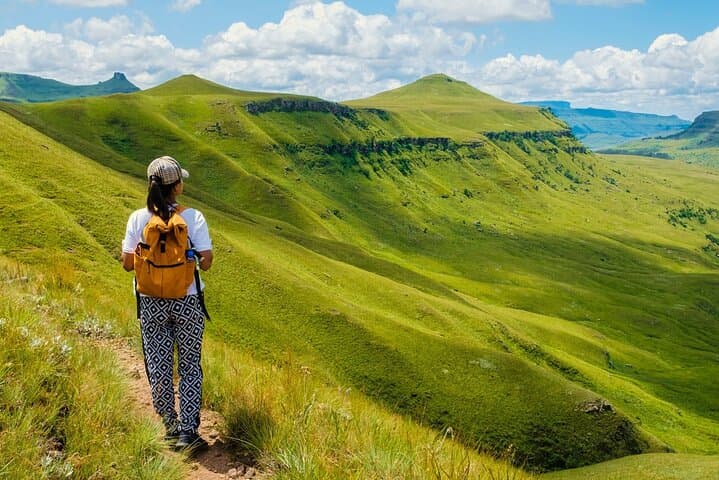

You step out of the vehicle into a cooler, thinner air; a ridgeline rises ahead and the trail threads between outcrops and grassland. The Drakensberg’s cliffs press skyward, and Monks Cowl’s folded buttresses offer close-up geology—banded basalt and ancient sandstone—while the forested gullies below crowd with ferns and protea.
You step out of the vehicle into a cooler, thinner air; a ridgeline rises ahead and the trail threads between outcrops and grassland. The Drakensberg’s cliffs press skyward, and Monks Cowl’s folded buttresses offer close-up geology—banded basalt and ancient sandstone—while the forested gullies below crowd with ferns and protea.
This half-day safari follows routes used for generations: San (Bushman) hunters left rock art across the range, and later Zulu and Sotho communities grazed stock on the lower slopes. The mountains themselves are a dramatic escarpment formed as rivers carved valleys through uplifted basalt and sedimentary layers; expect steep buttresses, sheltered valleys, and streams that dare you to follow them downstream.
Culturally, guides will point out place names and pastoral histories; wildlife is unobtrusive but present—eland browse on plateau grass, baboons probe the rocks, and raptors ride the thermals.
Practically, this tour is a long day from Durban—about a 2.5-hour drive each way with roughly two hours of guided hiking near Monks Cowl. Trails are mixed: compact dirt, grassy benches, and short rocky scrambles. Wear supportive footwear, carry 1–2 liters of water, and layer for sudden weather shifts: mountain sun can burn fast, and clouds can bring drizzle.
Timing matters—start early to avoid heat and afternoon cloud buildup. Bring a camera, a lightweight rain shell, and a small pack for snacks; lunch is usually in a nearby village or picnic spot at your own expense. For first-time visitors this is an accessible, vivid introduction to the Drakensberg’s scale and stories—short on technical difficulty, big on scenery.