THE ADVENTURE COLLECTIVE® · Independent discovery and booking for outdoor travel

Swap Durban’s coastline for the high, rugged edges of the Drakensberg on a guided half-day hike. Expect sandstone cliffs, San rock art, and sweeping valley views with practical transport and a local guide.
Swap Durban’s coastline for the high, rugged edges of the Drakensberg on a guided half-day hike. Expect sandstone cliffs, San rock art, and sweeping valley views with practical transport and a local guide.
Morning light slices the escarpment as a minibus winds away from Durban’s humid coast toward the Drakensberg’s stone ribs. On this half-day outing you trade surf breeze for a cooler, highland air; cliffs loom, streams push past your boots, and the trail unfolds in alternately grassy slopes and stony ledges.
Verified experiences and guided adventures in the surrounding area.
Operated by Cape Touring · Winterton, KwaZulu-Natal
Morning light slices the escarpment as a minibus winds away from Durban’s humid coast toward the Drakensberg’s stone ribs. On this half-day outing you trade surf breeze for a cooler, highland air; cliffs loom, streams push past your boots, and the trail unfolds in alternately grassy slopes and stony ledges.
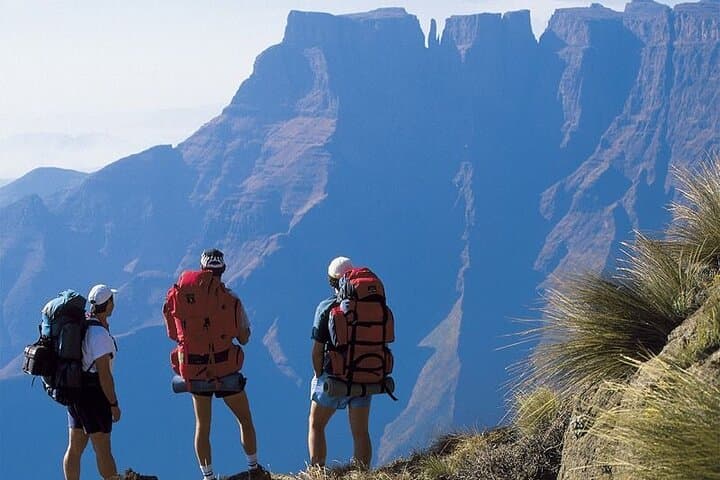
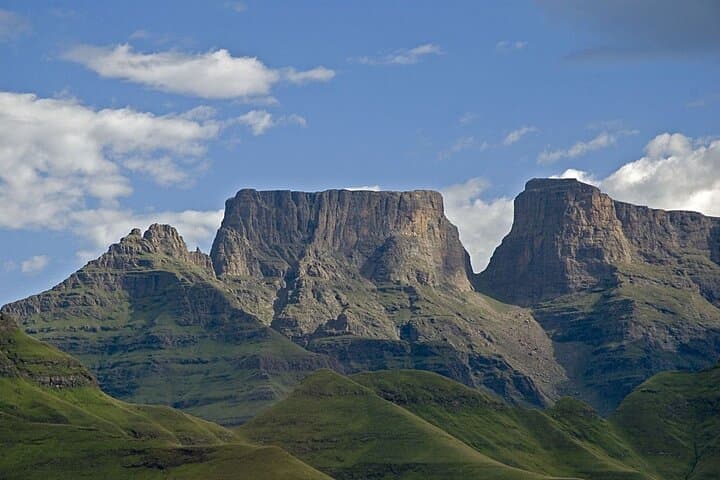
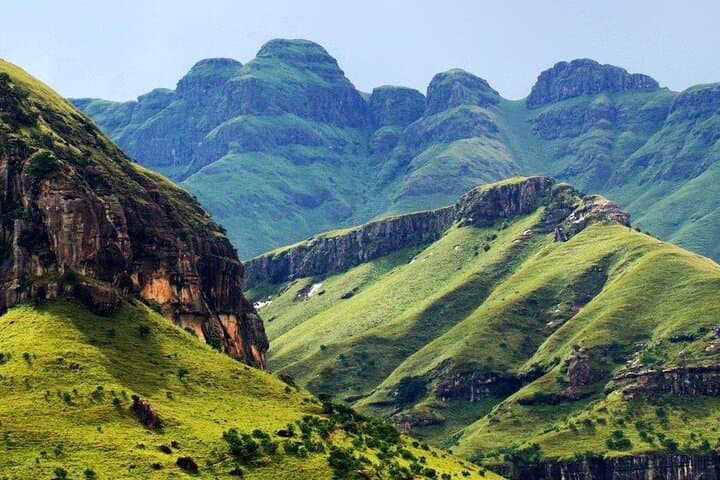
Geology here reads like a long, folded book—sandstone cliffs laid over dolerite sills, eroded into buttresses and amphitheatres. The range, called uKhahlamba or “Barrier of Spears” in Zulu, marks a boundary with Lesotho and holds San rock art panels that attach human stories to the rocks. Birdlife and small ungulates punctuate the slope; streams carve gullies that become jumping points for hikers.
Expect a balanced half-day: transport from Durban, a guided hike on trails that vary from easy paths to moderate, uneven sections, a short lunch, then return. Guides point out rock art, local plants, and safe routes through gullies. Trails are compact but can be steep in places; the reward is broad valley views and the chance to stand beneath vertical cliffs where the wind feels like a living thing.
Practical advice: wear sturdy shoes with grip, layer for a quick temperature swing, carry at least 1–2 liters of water, and bring sun protection. Start early to avoid afternoon cloud build-up and plan for limited mobile signal once you leave the highway. The route suits beginners comfortable walking 2–4 miles over mixed terrain and anyone wanting a concentrated taste of the Drakensberg’s wild character.
moderate.
7 hours (including transport).
Suitable for people who can walk 2–4 miles over mixed, sometimes uneven terrain; basic aerobic fitness recommended.
The full activity is approximately 7 hours, which includes round-trip transport and a guided hike with a short lunch break.
Yes—routes are chosen for broad accessibility, but participants should be comfortable walking on uneven ground; infants must sit on laps in vehicles.
Guides often point out or stop at nearby San rock art panels where accessible, but access depends on the specific trail chosen that day.
Typical inclusions are guide services, hiking in the Drakensberg, and Durban pick-up/drop-off; check your booking for exact details, including lunch arrangements.
The Drakensberg contains hundreds of San rock art sites and sits on ancestral routes; uKhahlamba means "Barrier of Spears" in Zulu.
The range is part of a UNESCO World Heritage Site—stay on trails, pack out waste, and avoid disturbing rock art or wildlife to reduce impact.
Cape Touring operates guided outdoor trips and adventures with an emphasis on safety, stewardship, and memorable experiences.

Morning light slices the escarpment as a minibus winds away from Durban’s humid coast toward the Drakensberg’s stone ribs. On this half-day outing you trade surf breeze for a cooler, highland air; cliffs loom, streams push past your boots, and the trail unfolds in alternately grassy slopes and stony ledges.
Morning light slices the escarpment as a minibus winds away from Durban’s humid coast toward the Drakensberg’s stone ribs. On this half-day outing you trade surf breeze for a cooler, highland air; cliffs loom, streams push past your boots, and the trail unfolds in alternately grassy slopes and stony ledges.
Geology here reads like a long, folded book—sandstone cliffs laid over dolerite sills, eroded into buttresses and amphitheatres. The range, called uKhahlamba or “Barrier of Spears” in Zulu, marks a boundary with Lesotho and holds San rock art panels that attach human stories to the rocks. Birdlife and small ungulates punctuate the slope; streams carve gullies that become jumping points for hikers.
Expect a balanced half-day: transport from Durban, a guided hike on trails that vary from easy paths to moderate, uneven sections, a short lunch, then return. Guides point out rock art, local plants, and safe routes through gullies. Trails are compact but can be steep in places; the reward is broad valley views and the chance to stand beneath vertical cliffs where the wind feels like a living thing.
Practical advice: wear sturdy shoes with grip, layer for a quick temperature swing, carry at least 1–2 liters of water, and bring sun protection. Start early to avoid afternoon cloud build-up and plan for limited mobile signal once you leave the highway. The route suits beginners comfortable walking 2–4 miles over mixed terrain and anyone wanting a concentrated taste of the Drakensberg’s wild character.