THE ADVENTURE COLLECTIVE® · Independent discovery and booking for outdoor travel

Ascend to the golden chedi of Wat Phra That Doi Suthep and visit a nearby Hmong village on a compact half-day tour from Chiang Mai. Expect panoramic views, cultural encounters, and practical tips for temple etiquette and hill-tribe visits.
Ascend to the golden chedi of Wat Phra That Doi Suthep and visit a nearby Hmong village on a compact half-day tour from Chiang Mai. Expect panoramic views, cultural encounters, and practical tips for temple etiquette and hill-tribe visits.
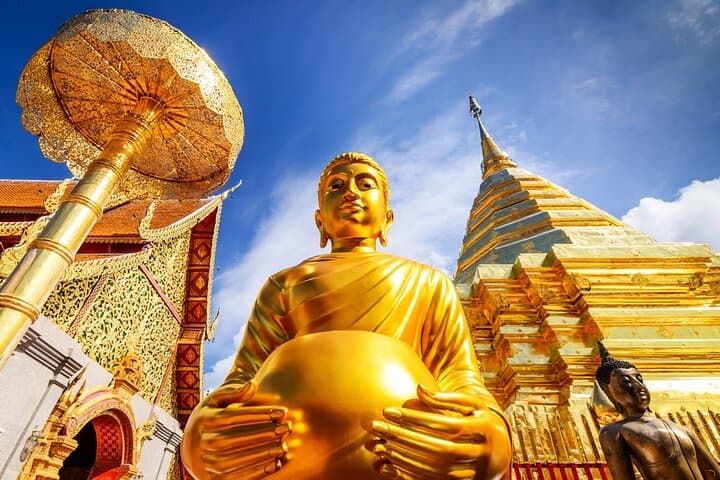
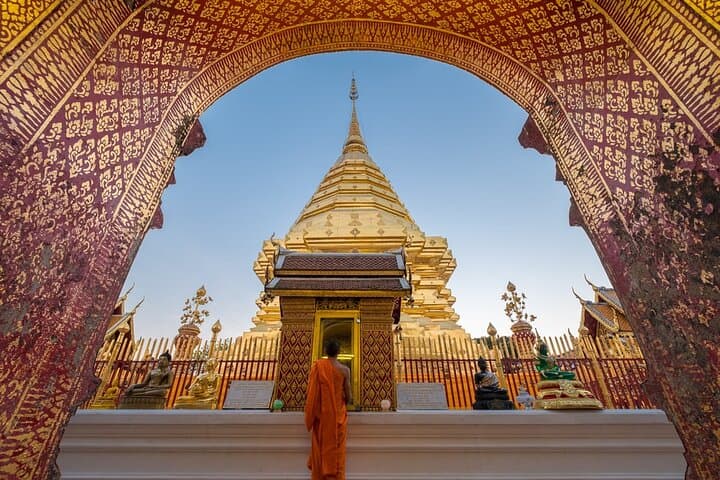
A cool mountain wind meets the city heat as the minivan climbs the narrow switchbacks toward Doi Suthep. By the time the golden chedi appears above the treeline, the city has shrunk into a patchwork of roofs and rice fields; prayer flags and the Naga-guarded staircase mark the threshold between urban Chiang Mai and the highland world beyond.
Verified experiences and guided adventures in the surrounding area.
Operated by Parallel Tour · Chiang Mai, Chiang Mai Province
A cool mountain wind meets the city heat as the minivan climbs the narrow switchbacks toward Doi Suthep. By the time the golden chedi appears above the treeline, the city has shrunk into a patchwork of roofs and rice fields; prayer flags and the Naga-guarded staircase mark the threshold between urban Chiang Mai and the highland world beyond.
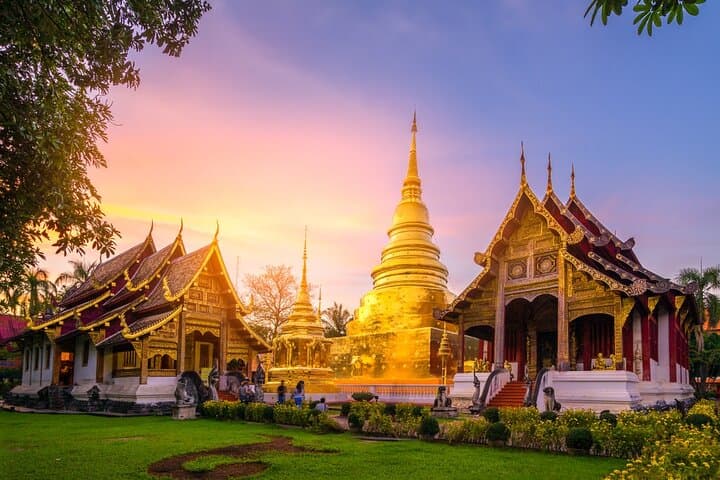
Wat Phra That Doi Suthep has been a focal point of northern Thai devotion since the 14th century, its gilded stupa catching sunlight that travelers say carries a quiet urgency. The mountain itself is part of Doi Suthep–Pui National Park, a ridge of forested slopes that hosts seasonal streams, native birds, and the occasional macaque that tests visitors' pockets.
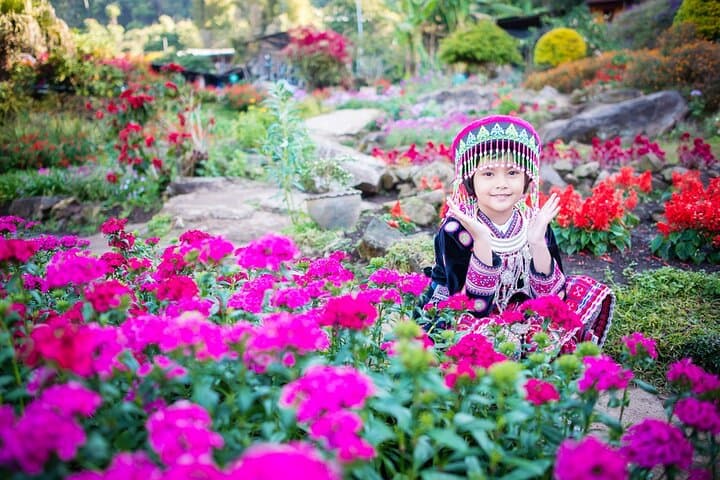
A short drive down the same road leads to a Hmong hill-tribe village, where woven textiles and hand-carved trinkets display patterns and techniques passed through generations. The village offers an unvarnished look at subsistence farming, dyeing methods, and daily routines shaped by altitude and monsoon cycles.
Practically, the half-day format fits into a single morning: hotel pickup in Chiang Mai, 45–60 minutes of ascent, time to climb the 306-step Naga staircase or take the funicular, then an hour among the village pathways before descent and return. Visitors should wear modest clothing for temple entry, bring water and cash for small purchases, and allow time for photography and quiet observation. The route is accessible and suitable for most fitness levels, but weather can change quickly—plan layers and a lightweight rain shell during the wet season.
This is a compact cultural loop: high-altitude panoramas and sacred architecture followed by close-up encounters with hill-country life.
easy.
4–5 hours.
Suitable for most fitness levels; involves short walks and optional stair climbing.
Yes — pickup and drop-off in Chiang Mai city center are included in the tour price.
Yes — a funicular is available for those who prefer not to climb the 306 steps up to the temple.
The tour lists wheelchair accessibility; however, access within the temple complex may involve uneven surfaces—check with the operator for specific assistance needs.
Handicrafts are made using traditional techniques; bargaining is common but modest offers are respectful—use small bills and expect to support household income directly.
Wat Phra That Doi Suthep dates back to the 14th century and became a major religious site for the Lanna Kingdom; the stupa houses relics that draw pilgrims from across northern Thailand.
Doi Suthep–Pui National Park balances visitor access with conservation—stick to trails, avoid feeding wildlife, and patronize local artisans to support sustainable livelihoods.
Parallel Tour operates guided outdoor trips and adventures with an emphasis on safety, stewardship, and memorable experiences.
A cool mountain wind meets the city heat as the minivan climbs the narrow switchbacks toward Doi Suthep. By the time the golden chedi appears above the treeline, the city has shrunk into a patchwork of roofs and rice fields; prayer flags and the Naga-guarded staircase mark the threshold between urban Chiang Mai and the highland world beyond.
A cool mountain wind meets the city heat as the minivan climbs the narrow switchbacks toward Doi Suthep. By the time the golden chedi appears above the treeline, the city has shrunk into a patchwork of roofs and rice fields; prayer flags and the Naga-guarded staircase mark the threshold between urban Chiang Mai and the highland world beyond.
Wat Phra That Doi Suthep has been a focal point of northern Thai devotion since the 14th century, its gilded stupa catching sunlight that travelers say carries a quiet urgency. The mountain itself is part of Doi Suthep–Pui National Park, a ridge of forested slopes that hosts seasonal streams, native birds, and the occasional macaque that tests visitors' pockets.
A short drive down the same road leads to a Hmong hill-tribe village, where woven textiles and hand-carved trinkets display patterns and techniques passed through generations. The village offers an unvarnished look at subsistence farming, dyeing methods, and daily routines shaped by altitude and monsoon cycles.
Practically, the half-day format fits into a single morning: hotel pickup in Chiang Mai, 45–60 minutes of ascent, time to climb the 306-step Naga staircase or take the funicular, then an hour among the village pathways before descent and return. Visitors should wear modest clothing for temple entry, bring water and cash for small purchases, and allow time for photography and quiet observation. The route is accessible and suitable for most fitness levels, but weather can change quickly—plan layers and a lightweight rain shell during the wet season.
This is a compact cultural loop: high-altitude panoramas and sacred architecture followed by close-up encounters with hill-country life.