THE ADVENTURE COLLECTIVE® · Independent discovery and booking for outdoor travel

Cover Doha’s waterfront, souq alleys, and cultural village in a focused four-hour private tour. This half-day route gives newcomers a concentrated look at the city’s coast, markets, and modern cultural landmarks.
Cover Doha’s waterfront, souq alleys, and cultural village in a focused four-hour private tour. This half-day route gives newcomers a concentrated look at the city’s coast, markets, and modern cultural landmarks.
A winter-blue sky hangs over the Doha Corniche as air, warmed by the Persian Gulf, pushes salt and city sounds toward the promenade. The tour begins with a drive along the curved waterfront—skyscrapers in West Bay tilt like a modern skyline choir—then slows to the human pulse at Souq Waqif where spices and falcons share tight alleys.
Verified experiences and guided adventures in the surrounding area.
Operated by 365 Adventures · Doha, Doha
A winter-blue sky hangs over the Doha Corniche as air, warmed by the Persian Gulf, pushes salt and city sounds toward the promenade. The tour begins with a drive along the curved waterfront—skyscrapers in West Bay tilt like a modern skyline choir—then slows to the human pulse at Souq Waqif where spices and falcons share tight alleys.
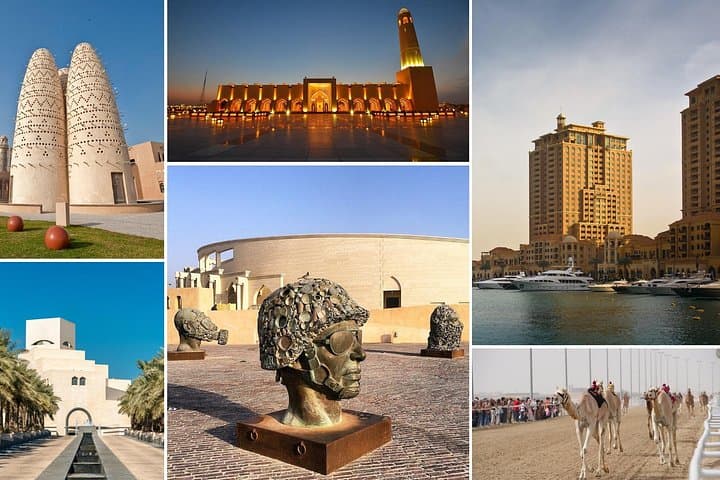
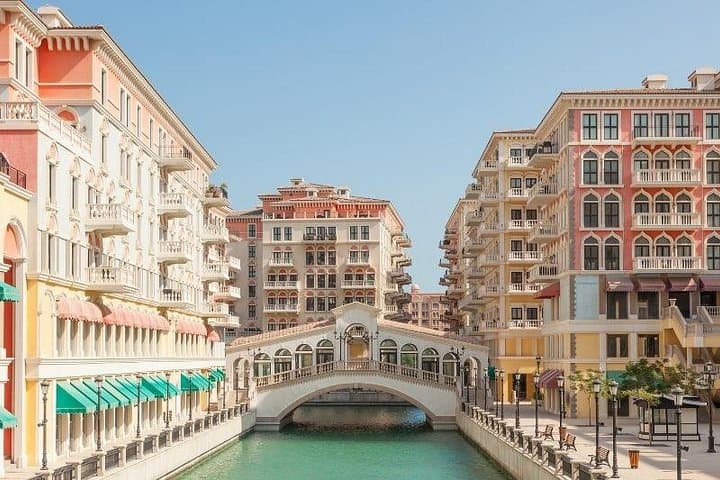
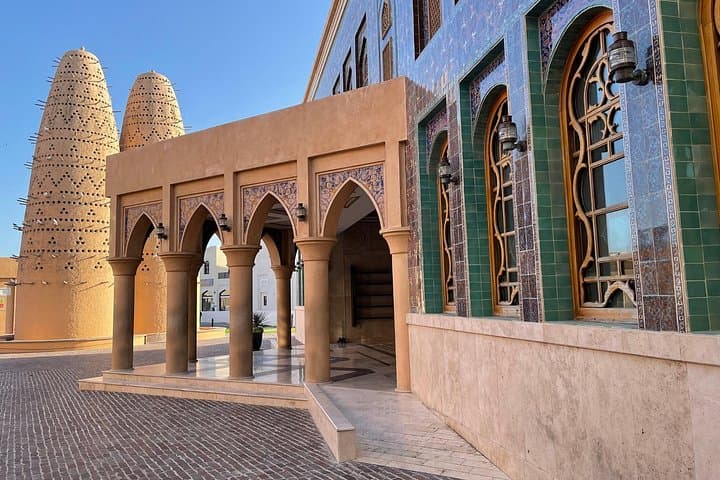
This half-day route threads through Qatar’s recent urban story: rapid coastal reclamation at The Pearl, the modernist lines of the Museum of Islamic Art (placed on an artificial island in 2008), and the cultural reclamation visible in Katara Cultural Village’s amphitheater and galleries. Geologically the peninsula is low and flat limestone, its desert edges meeting the Gulf; culturally, Doha mixes Bedouin traditions, pearl-diving legacy, and oil-era globalization.
Expect short stops—photo pulls at Dhow Harbour and The Pearl, 20–30 minute walks at Souq Waqif and Katara—and commentary that frames rituals like daily prayer, the significance of dhow boats, and how sea trade shaped the city.
Practical guidance: the four-hour private tour covers transport and bottled water; wear sun-protective clothing, comfortable shoes for paved promenades and cobbled souq alleys, and bring a camera with charged batteries. Mornings or late afternoons are best to avoid summer heat; modest dress is required at religious and traditional sites. Language-guided options may incur extra charges—confirm when booking. For newcomers, this itinerary is an efficient and grounded introduction to Doha’s waterfront, markets, and cultural agenda without getting lost in the urban sprawl.
easy.
4 hours.
Suitable for most fitness levels; the tour involves short, paved walks and some curb-to-cobblestone transitions.
Private transportation is included; confirm your pickup point when booking and provide arrival flight details if applicable.
Standard tour pricing typically covers transport and commentary; specific museum admissions are usually not included—verify at booking.
Yes—it's rated easy for all fitness levels; infants must sit on a lap and family-friendly pacing is maintained.
English guides are common; other languages may be available for an additional charge—request language preferences in advance.
Doha evolved from a small fishing and pearling port into Qatar’s capital over the 20th century, accelerated by oil and gas wealth that reshaped its coastline and skyline.
Coastal development has altered natural shorelines; choose operators who minimize plastic use and respect protected coastal habitats.
365 Adventures operates guided outdoor trips and adventures with an emphasis on safety, stewardship, and memorable experiences.
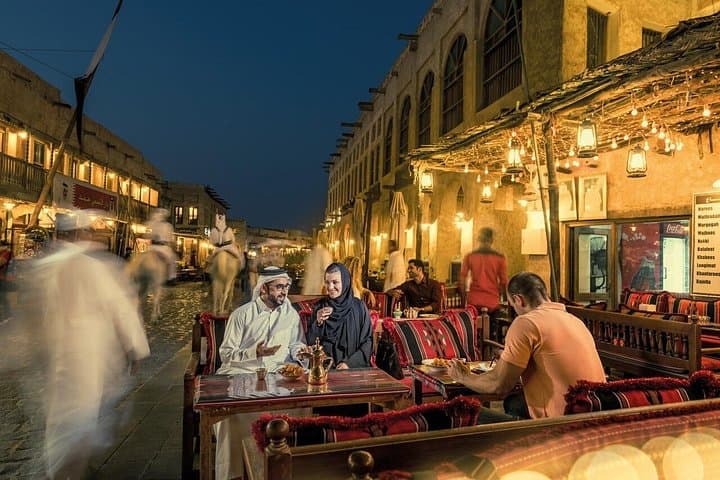
A winter-blue sky hangs over the Doha Corniche as air, warmed by the Persian Gulf, pushes salt and city sounds toward the promenade. The tour begins with a drive along the curved waterfront—skyscrapers in West Bay tilt like a modern skyline choir—then slows to the human pulse at Souq Waqif where spices and falcons share tight alleys.
A winter-blue sky hangs over the Doha Corniche as air, warmed by the Persian Gulf, pushes salt and city sounds toward the promenade. The tour begins with a drive along the curved waterfront—skyscrapers in West Bay tilt like a modern skyline choir—then slows to the human pulse at Souq Waqif where spices and falcons share tight alleys.
This half-day route threads through Qatar’s recent urban story: rapid coastal reclamation at The Pearl, the modernist lines of the Museum of Islamic Art (placed on an artificial island in 2008), and the cultural reclamation visible in Katara Cultural Village’s amphitheater and galleries. Geologically the peninsula is low and flat limestone, its desert edges meeting the Gulf; culturally, Doha mixes Bedouin traditions, pearl-diving legacy, and oil-era globalization.
Expect short stops—photo pulls at Dhow Harbour and The Pearl, 20–30 minute walks at Souq Waqif and Katara—and commentary that frames rituals like daily prayer, the significance of dhow boats, and how sea trade shaped the city.
Practical guidance: the four-hour private tour covers transport and bottled water; wear sun-protective clothing, comfortable shoes for paved promenades and cobbled souq alleys, and bring a camera with charged batteries. Mornings or late afternoons are best to avoid summer heat; modest dress is required at religious and traditional sites. Language-guided options may incur extra charges—confirm when booking. For newcomers, this itinerary is an efficient and grounded introduction to Doha’s waterfront, markets, and cultural agenda without getting lost in the urban sprawl.