THE ADVENTURE COLLECTIVE® · Independent discovery and booking for outdoor travel

Spend a focused half-day from Luxor exploring Dendera’s Temple of Hathor—its vivid ceiling paintings, rooftop zodiac, and underground crypts—guided by a professional Egyptologist. Expect a scenic Nile-side drive, compact on-site exploration, and practical tips for beating the heat and crowds.
Spend a focused half-day from Luxor exploring Dendera’s Temple of Hathor—its vivid ceiling paintings, rooftop zodiac, and underground crypts—guided by a professional Egyptologist. Expect a scenic Nile-side drive, compact on-site exploration, and practical tips for beating the heat and crowds.
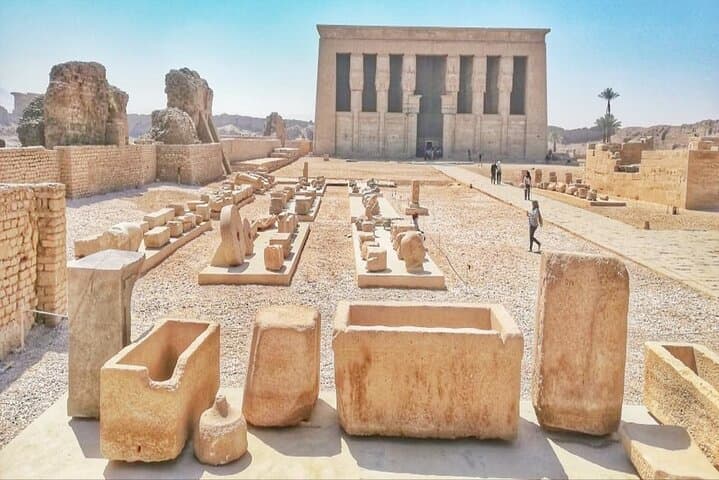
You step from the air-conditioned vehicle into dry Nile air, the sun sharpening the edges of carved stone as the rural road hums behind you. Fields ribbon the horizon and a small village watches the road; ahead, the Temple of Hathor rises in layered reliefs and a ceiling painted with constellations that have outlived empires.
Verified experiences and guided adventures in the surrounding area.
Operated by Hurghada Tours Plus · Dendera, Qena Governorate
You step from the air-conditioned vehicle into dry Nile air, the sun sharpening the edges of carved stone as the rural road hums behind you. Fields ribbon the horizon and a small village watches the road; ahead, the Temple of Hathor rises in layered reliefs and a ceiling painted with constellations that have outlived empires.
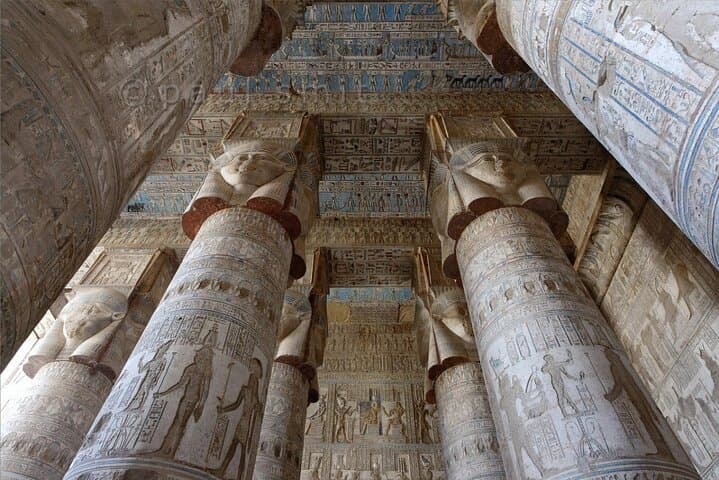
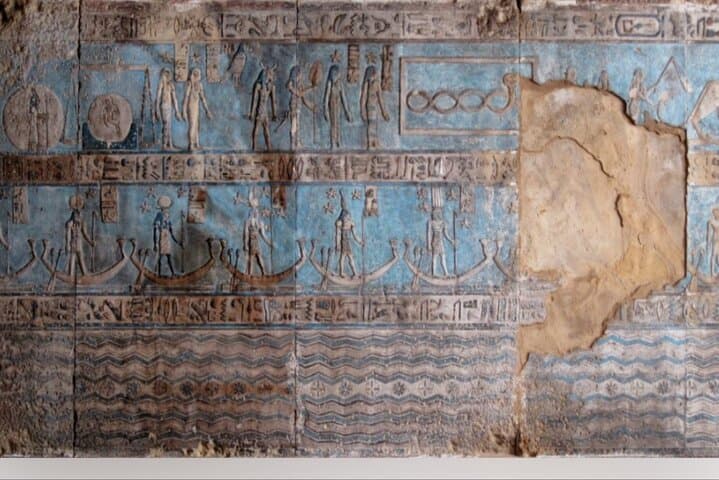
Built largely during the Ptolemaic era atop earlier religious foundations, Dendera is a rare intact complex where Greco-Roman, Egyptian and later influences overlap. The famed Dendera Zodiac—a circular star map carved into the temple’s ceiling—speaks to ancient astronomy, while the underground crypts still hold pigments and inscriptions that hint at ritual life. Columns carved with Hathor’s face lean like quiet hosts; the rooftop offers a close view of the zodiac and a sweeping sweep of the Nile plain.
On this half-day run from Luxor you’ll trace a scenic drive through villages and date palms, arrive with an Egyptologist guide, and move through the main hypostyle hall, roof terrace, and subterranean chambers. Practicalities matter: plan for bright sun and heat, modest dress inside sacred spaces, and uneven stone underfoot. Early morning or late afternoon pickups reduce crowds and soften light for photography.
Bring water, a wide-brim hat, and a respectful curiosity. The site rewards patient viewing: small details in reliefs, astronomical symbols, and the quiet of a rooftop that has watched the river for millennia.
easy.
4–5 hours.
Suitable for travelers of average fitness; requires walking on uneven stone and climbing to a rooftop.
The tour is approximately 4–5 hours (about 300 minutes) and includes hotel pickup and drop-off in Luxor in an air‑conditioned vehicle.
Admission is not included in the base description—confirm at booking; photography is generally allowed but avoid flash in sensitive areas and follow guide instructions.
The site has uneven stone surfaces, stairs to the rooftop and low passages in crypts; it may be challenging for those with limited mobility—check with the operator about alternatives.
Dress conservatively (shoulders and knees covered); basic toilets and small vendor stalls are available near the site, but bring hand sanitizer and cash for extras.
Dendera’s main temple was built during the Ptolemaic period and dedicated to Hathor; its zodiac ceiling is a rare carved celestial map reflecting Hellenistic-Egyptian astronomy.
Ongoing preservation focuses on stabilizing pigments and protecting carvings from humidity and visitor impact—follow pathways and avoid touching reliefs to support conservation.
Hurghada Tours Plus operates guided outdoor trips and adventures with an emphasis on safety, stewardship, and memorable experiences.

You step from the air-conditioned vehicle into dry Nile air, the sun sharpening the edges of carved stone as the rural road hums behind you. Fields ribbon the horizon and a small village watches the road; ahead, the Temple of Hathor rises in layered reliefs and a ceiling painted with constellations that have outlived empires.
You step from the air-conditioned vehicle into dry Nile air, the sun sharpening the edges of carved stone as the rural road hums behind you. Fields ribbon the horizon and a small village watches the road; ahead, the Temple of Hathor rises in layered reliefs and a ceiling painted with constellations that have outlived empires.
Built largely during the Ptolemaic era atop earlier religious foundations, Dendera is a rare intact complex where Greco-Roman, Egyptian and later influences overlap. The famed Dendera Zodiac—a circular star map carved into the temple’s ceiling—speaks to ancient astronomy, while the underground crypts still hold pigments and inscriptions that hint at ritual life. Columns carved with Hathor’s face lean like quiet hosts; the rooftop offers a close view of the zodiac and a sweeping sweep of the Nile plain.
On this half-day run from Luxor you’ll trace a scenic drive through villages and date palms, arrive with an Egyptologist guide, and move through the main hypostyle hall, roof terrace, and subterranean chambers. Practicalities matter: plan for bright sun and heat, modest dress inside sacred spaces, and uneven stone underfoot. Early morning or late afternoon pickups reduce crowds and soften light for photography.
Bring water, a wide-brim hat, and a respectful curiosity. The site rewards patient viewing: small details in reliefs, astronomical symbols, and the quiet of a rooftop that has watched the river for millennia.