THE ADVENTURE COLLECTIVE® · Independent discovery and booking for outdoor travel

See Dakar’s highlights in a compact 3–4 hour loop — from the towering African Renaissance monument and Great Mosque to bustling markets and a coastal Corniche drive. Practical for first-time visitors who want context, views, and local flavor.
See Dakar’s highlights in a compact 3–4 hour loop — from the towering African Renaissance monument and Great Mosque to bustling markets and a coastal Corniche drive. Practical for first-time visitors who want context, views, and local flavor.
You step out of the van as the Atlantic wind pushes the heat off your face and the Mamelles hills rise to the east — the Monument of the African Renaissance cuts a copper silhouette against an open sky.
Verified experiences and guided adventures in the surrounding area.
Operated by Senegal Global Tours · Dakar, Dakar Region
You step out of the van as the Atlantic wind pushes the heat off your face and the Mamelles hills rise to the east — the Monument of the African Renaissance cuts a copper silhouette against an open sky.
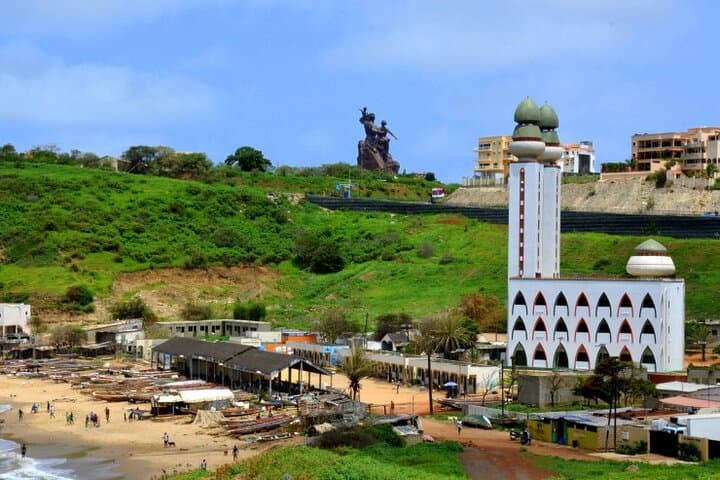
This half-day circuit threads Dakar’s civic spine: Independence Square and the obelisk where national celebrations unfold; the French-era Palace of the Republic; the rhythm and scent of Sandaga and Kermel markets; and the ceremonial minaret of the Great Mosque. The Corniche-Ouest drive offers water-splashed views and the Mosque of Divinity perched near the shore, while the IFAN museum and the Village des Artisans put contemporary and traditional craft within arm’s reach.
Dakar’s story is layered: colonial planning from the early 20th century, post-independence nation-building visible in public monuments, and a living coastal culture shaped by fishing, trade, and the Atlantic. The geology is simple — low volcanic ridges like the Mamelles and a sandy Atlantic edge — but the city’s character is in its streets, markets, and shore.
Practically: expect 3–4 hours with short walks between viewpoints and market stops; comfortable walking shoes and a sun hat make a big difference. Bring CFA francs for small purchases, keep valuables secure in markets, and plan morning or late-afternoon departures to avoid peak heat. Guides on this route offer local context, transport, and a manageable pace for visitors who want a concentrated, on-the-ground primer to Dakar’s downtown and coastline.
moderate.
3–4 hours.
Moderate — able to walk short distances (up to 1–2 km total) and stand during market stops
The tour runs approximately 3–4 hours, depending on traffic and time spent at each stop.
Most stops are viewed from outside; museum entry is typically not included — check with the operator if you want to add IFAN museum admission.
Transportation between sites is included; specify pickup point when booking and confirm any airport transfers separately.
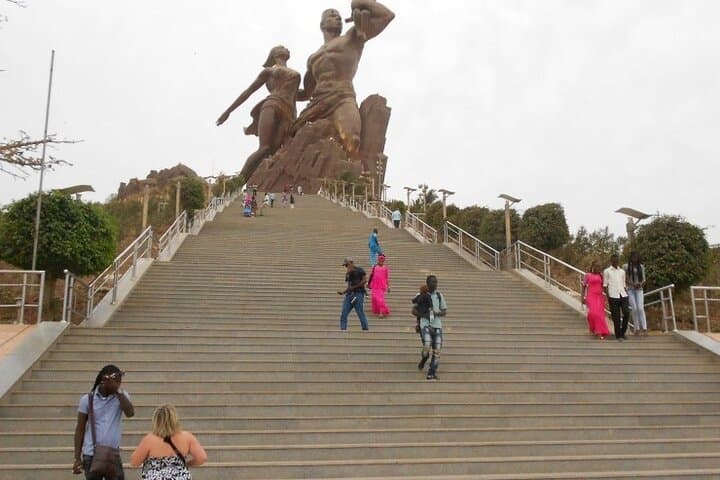
The tour is stroller- and wheelchair-accessible in parts, but some market areas and stairways (e.g., Monument steps) may be challenging; contact the operator about specific access needs.
Dakar was the administrative center of French West Africa; Independence Square, the Palace, and public monuments reflect the city’s colonial layers and post-independence identity.
Coastal erosion and plastic pollution are local concerns — avoid single-use plastics, respect fishing areas, and follow guide advice to reduce impact.
Senegal Global Tours operates guided outdoor trips and adventures with an emphasis on safety, stewardship, and memorable experiences.
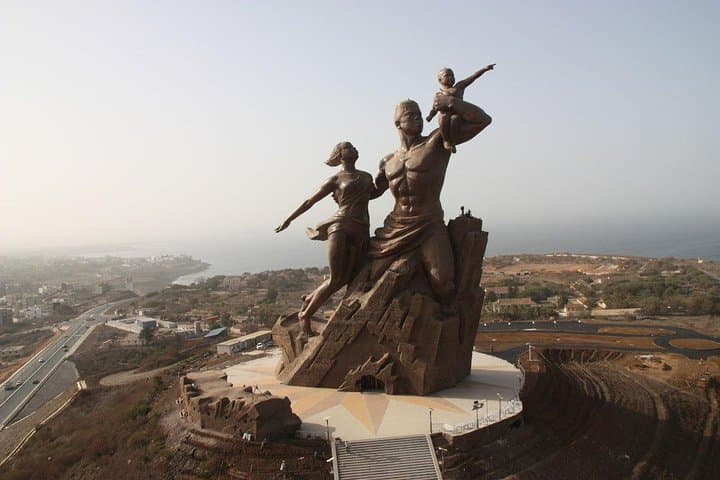
You step out of the van as the Atlantic wind pushes the heat off your face and the Mamelles hills rise to the east — the Monument of the African Renaissance cuts a copper silhouette against an open sky.
You step out of the van as the Atlantic wind pushes the heat off your face and the Mamelles hills rise to the east — the Monument of the African Renaissance cuts a copper silhouette against an open sky.
This half-day circuit threads Dakar’s civic spine: Independence Square and the obelisk where national celebrations unfold; the French-era Palace of the Republic; the rhythm and scent of Sandaga and Kermel markets; and the ceremonial minaret of the Great Mosque. The Corniche-Ouest drive offers water-splashed views and the Mosque of Divinity perched near the shore, while the IFAN museum and the Village des Artisans put contemporary and traditional craft within arm’s reach.
Dakar’s story is layered: colonial planning from the early 20th century, post-independence nation-building visible in public monuments, and a living coastal culture shaped by fishing, trade, and the Atlantic. The geology is simple — low volcanic ridges like the Mamelles and a sandy Atlantic edge — but the city’s character is in its streets, markets, and shore.
Practically: expect 3–4 hours with short walks between viewpoints and market stops; comfortable walking shoes and a sun hat make a big difference. Bring CFA francs for small purchases, keep valuables secure in markets, and plan morning or late-afternoon departures to avoid peak heat. Guides on this route offer local context, transport, and a manageable pace for visitors who want a concentrated, on-the-ground primer to Dakar’s downtown and coastline.