THE ADVENTURE COLLECTIVE® · Independent discovery and booking for outdoor travel

Spend two focused hours exploring the ruins of Dadan and the open-air inscription panels of Jabal Ikmah near AlUla. This half-day tour delivers a concise, interpretive look at Lihyanite history and rock art with short walks and expert context.
Spend two focused hours exploring the ruins of Dadan and the open-air inscription panels of Jabal Ikmah near AlUla. This half-day tour delivers a concise, interpretive look at Lihyanite history and rock art with short walks and expert context.
You step from the bus into a pale sandstone amphitheater where wind-sculpted cliffs guard centuries of stone-cut memory. The air smells of warm dust; the canyon’s walls seem to hold conversations in the form of carved letters and weathered reliefs. This half-day tour moves briskly—two hours to move between the archaeological remains of Dadan and the open-air library of inscriptions at Jabal Ikmah.
Verified experiences and guided adventures in the surrounding area.
Operated by Gray Line - Kurban Tours · AlUla, Al Madinah
You step from the bus into a pale sandstone amphitheater where wind-sculpted cliffs guard centuries of stone-cut memory. The air smells of warm dust; the canyon’s walls seem to hold conversations in the form of carved letters and weathered reliefs. This half-day tour moves briskly—two hours to move between the archaeological remains of Dadan and the open-air library of inscriptions at Jabal Ikmah.
Dadan was the political center of the Lihyanite and Dadanite kingdoms between the 8th century BCE and the 1st century CE. The site’s carved facades and foundation stones reveal a trading culture that sat along incense and caravan routes; nearby, Jabal Ikmah’s sheltered panels preserve inscriptions and petroglyphs in Aramaic, Thamudic and Arabic scripts, records left by travelers and local scribes across millennia.
Geologically, both sites sit where soft sandstone cliffs fracture into canyons and natural alcoves—ideal canvases for rock art but also fragile surfaces that erode under foot traffic and touch. Culturally, the experience is quietly reverent: visitors narrate a past where desert routes shaped politics, faith and commerce.
Practical guidance: plan for strong sun and uneven walking surfaces—most viewing is short walking and standing at interpretive points. Wear closed-toe shoes with grip, bring at least one liter of water, and allow the guide to navigate narrow ledges and protected panels. Photography is allowed, but avoid touching inscriptions. The tour’s pace is moderate and interpretive; it’s a concentrated, sensory snapshot of AlUla’s deep history rather than a long trek.
easy.
2 hours.
Suitable for most fitness levels; involves short periods of walking and standing on uneven ground.
The tour runs about 2 hours total, including a short bus transfer between Dadan and Jabal Ikmah.
Yes—this tour includes admission to the archaeological sites as part of the booking.
The experience involves uneven ground and some short walks; it may be challenging for people using wheelchairs or with significant mobility restrictions.
Photography is generally permitted, but touching or leaning on carved panels is prohibited to protect the rock art.
Dadan was a regional capital for the Lihyanite and Dadanite kingdoms; many inscriptions reflect trade and legal customs from the 1st millennium BCE through the early Common Era.
Sites are vulnerable to erosion and human impact; visitors are asked to stay on designated paths, avoid touching carvings, and follow local guide instructions to minimize damage.
Gray Line - Kurban Tours operates guided outdoor trips and adventures with an emphasis on safety, stewardship, and memorable experiences.
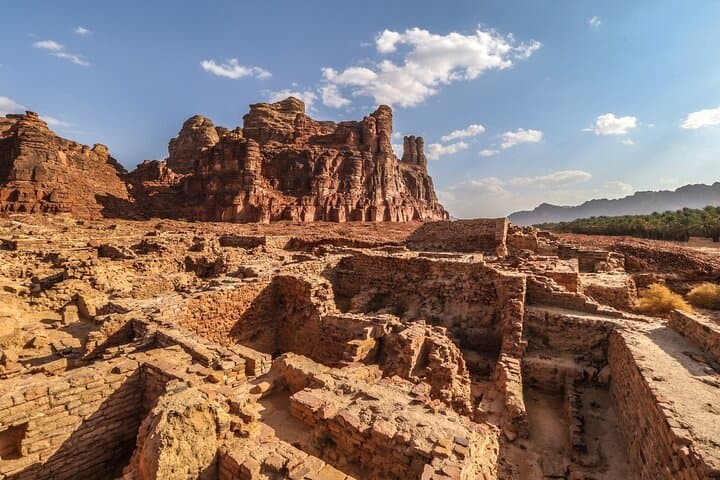
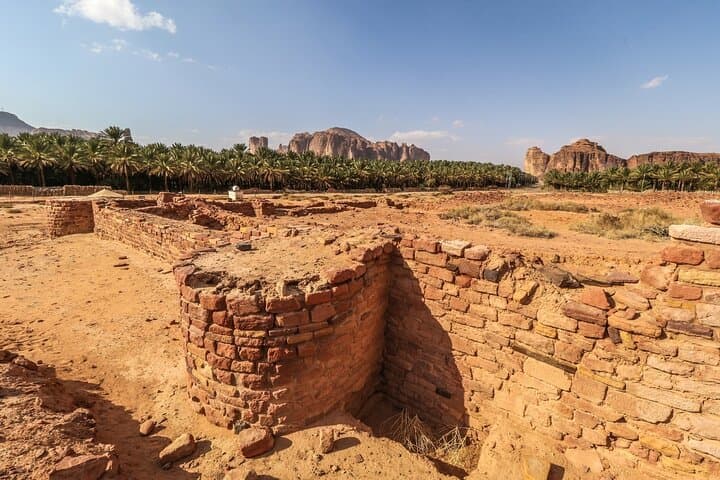
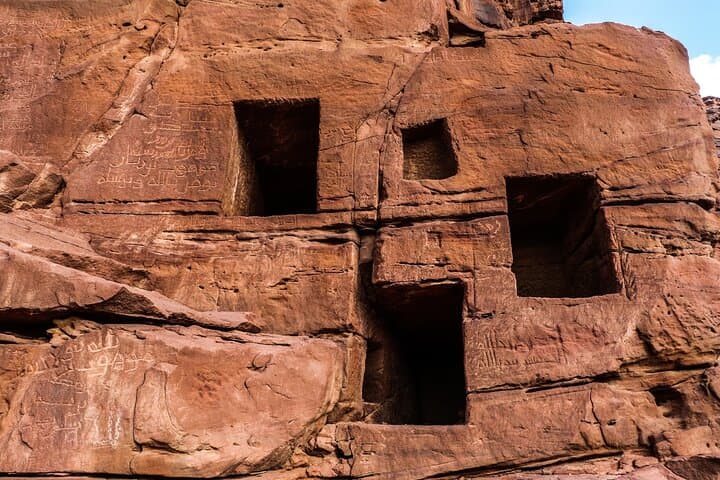
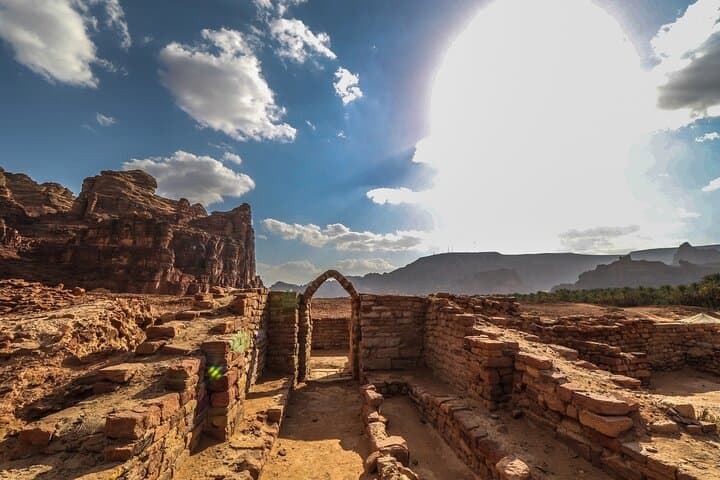
You step from the bus into a pale sandstone amphitheater where wind-sculpted cliffs guard centuries of stone-cut memory. The air smells of warm dust; the canyon’s walls seem to hold conversations in the form of carved letters and weathered reliefs. This half-day tour moves briskly—two hours to move between the archaeological remains of Dadan and the open-air library of inscriptions at Jabal Ikmah.
You step from the bus into a pale sandstone amphitheater where wind-sculpted cliffs guard centuries of stone-cut memory. The air smells of warm dust; the canyon’s walls seem to hold conversations in the form of carved letters and weathered reliefs. This half-day tour moves briskly—two hours to move between the archaeological remains of Dadan and the open-air library of inscriptions at Jabal Ikmah.
Dadan was the political center of the Lihyanite and Dadanite kingdoms between the 8th century BCE and the 1st century CE. The site’s carved facades and foundation stones reveal a trading culture that sat along incense and caravan routes; nearby, Jabal Ikmah’s sheltered panels preserve inscriptions and petroglyphs in Aramaic, Thamudic and Arabic scripts, records left by travelers and local scribes across millennia.
Geologically, both sites sit where soft sandstone cliffs fracture into canyons and natural alcoves—ideal canvases for rock art but also fragile surfaces that erode under foot traffic and touch. Culturally, the experience is quietly reverent: visitors narrate a past where desert routes shaped politics, faith and commerce.
Practical guidance: plan for strong sun and uneven walking surfaces—most viewing is short walking and standing at interpretive points. Wear closed-toe shoes with grip, bring at least one liter of water, and allow the guide to navigate narrow ledges and protected panels. Photography is allowed, but avoid touching inscriptions. The tour’s pace is moderate and interpretive; it’s a concentrated, sensory snapshot of AlUla’s deep history rather than a long trek.