THE ADVENTURE COLLECTIVE® · Independent discovery and booking for outdoor travel

Venture 60 km northwest of Ho Chi Minh City into the Cu Chi tunnel network: a half-day tour that pairs guided history with hands-on perspectives of wartime life. Expect low tunnels, countryside views and practical tips for navigating the site.
Venture 60 km northwest of Ho Chi Minh City into the Cu Chi tunnel network: a half-day tour that pairs guided history with hands-on perspectives of wartime life. Expect low tunnels, countryside views and practical tips for navigating the site.
You step off an air-conditioned van into a strip of scrub and laterite, the heat of the Mekong plain pressing at the edges of the concrete lane. Rice paddies glint in the distance and the countryside hums with motorbikes; a narrow path leads toward low, camouflaged entrances that once hid an underground world.
Verified experiences and guided adventures in the surrounding area.
Operated by Authentic Hanoi Homestay & Travel · Cu Chi District, Ho Chi Minh City
You step off an air-conditioned van into a strip of scrub and laterite, the heat of the Mekong plain pressing at the edges of the concrete lane. Rice paddies glint in the distance and the countryside hums with motorbikes; a narrow path leads toward low, camouflaged entrances that once hid an underground world.
The Cu Chi Tunnels grew from necessity during the Vietnam War: hundreds of kilometres of hand-dug galleries, booby traps and hidden rooms carved through soft alluvium and clay. Geology here is forgiving to tunnellers—easily worked soil that still holds narrow airways—but the tunnels’ true story is cultural. They were living quarters, field hospitals and command posts, symbols of resilience and local ingenuity.
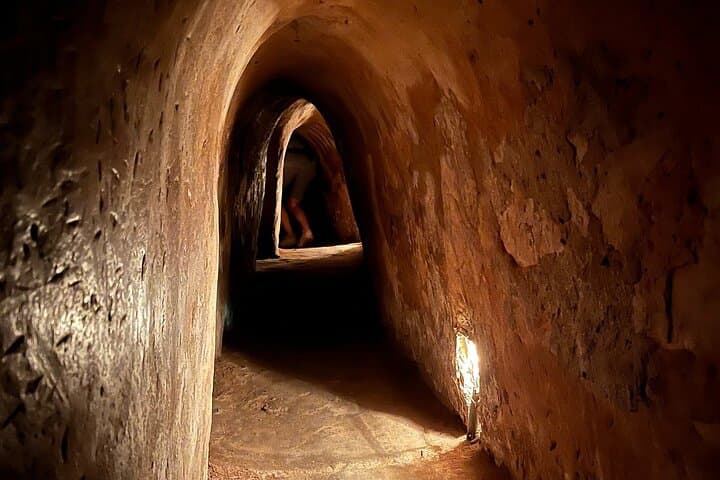
On a half-day tour from Ho Chi Minh City (about 60 km), expect a guided walkthrough of preserved sections, demonstrations of period tools and a chance to crawl through widened visitor shafts. Guides frame wartime anecdotes with present-day details: how villagers rebuilt life around paddy fields, and how the landscape now supports quiet agriculture and small workshops.
Practical notes: wear long pants and closed-toe shoes for low, dusty passages and short climbs. Bring water and sun protection for the short walks between exhibits—bottled water is usually provided. The trip is accessible to most fitness levels but requires stooping and brief crawling; it’s not recommended for people with significant back or heart problems or for pregnant travelers.
Timing your visit for an early pickup avoids midday heat and gives you a clearer sense of how ordinary daily rhythm met extraordinary history in this compact, powerful site.
moderate.
6–7 hours (including transport).
Reasonable mobility for short crouches, climbs and 1–2 hours of walking; suitable for most active travelers
The Cu Chi Tunnels are roughly 60 km northwest of central Ho Chi Minh City; travel time is about 1.5–2 hours each way by air-conditioned vehicle.
Some sections are widened for visitors and allow short crawling or stooping; those with mobility, back, or heart issues should avoid going underground.
Most half-day tours include bottled water; meals are not typically included on this brief itinerary—bring snacks if needed.
Yes—this tour includes an English-speaking guide who explains the site’s history, tactics and local context.
Cu Chi’s tunnel networks expanded over decades and played a strategic role during the Vietnam War as living bases, supply routes and defensive positions built by local villagers and fighters.
The site balances preservation of wartime structures with visitor safety; stay on marked paths and avoid removing artifacts to protect archaeological and cultural integrity.
Authentic Hanoi Homestay & Travel operates guided outdoor trips and adventures with an emphasis on safety, stewardship, and memorable experiences.


You step off an air-conditioned van into a strip of scrub and laterite, the heat of the Mekong plain pressing at the edges of the concrete lane. Rice paddies glint in the distance and the countryside hums with motorbikes; a narrow path leads toward low, camouflaged entrances that once hid an underground world.
You step off an air-conditioned van into a strip of scrub and laterite, the heat of the Mekong plain pressing at the edges of the concrete lane. Rice paddies glint in the distance and the countryside hums with motorbikes; a narrow path leads toward low, camouflaged entrances that once hid an underground world.
The Cu Chi Tunnels grew from necessity during the Vietnam War: hundreds of kilometres of hand-dug galleries, booby traps and hidden rooms carved through soft alluvium and clay. Geology here is forgiving to tunnellers—easily worked soil that still holds narrow airways—but the tunnels’ true story is cultural. They were living quarters, field hospitals and command posts, symbols of resilience and local ingenuity.
On a half-day tour from Ho Chi Minh City (about 60 km), expect a guided walkthrough of preserved sections, demonstrations of period tools and a chance to crawl through widened visitor shafts. Guides frame wartime anecdotes with present-day details: how villagers rebuilt life around paddy fields, and how the landscape now supports quiet agriculture and small workshops.
Practical notes: wear long pants and closed-toe shoes for low, dusty passages and short climbs. Bring water and sun protection for the short walks between exhibits—bottled water is usually provided. The trip is accessible to most fitness levels but requires stooping and brief crawling; it’s not recommended for people with significant back or heart problems or for pregnant travelers.
Timing your visit for an early pickup avoids midday heat and gives you a clearer sense of how ordinary daily rhythm met extraordinary history in this compact, powerful site.